






Deciding when to replace commercial coffee grinder burrs starts with the exact manufacturer’s guidance, cleaning and calibration, not the grinder’s age alone. Use a service inspection and an itemised quotation in INR to determine whether you need new burrs, another repair or a grinder better suited to your workload.
A slower grind or unpredictable espresso does not tell you which part to replace. Ordering burrs before diagnosing the fault risks paying for a component that leaves the original problem unresolved.
The useful distinction is between restoring performance and adding capacity. Work through five checks in order:
- Cleaning
- Calibration
- Burr condition
- Motor and mechanical condition
- Peak-hour demand
When Do Burrs Need Replacing?
For café owners asking when to replace commercial coffee grinder burrs, the first reference should be the manual for the exact model and installed burr set.
An inspection checkpoint is not the same as a compulsory replacement interval. Follow the wording applicable to your grinder rather than transferring another model’s kilogram figure to it.
Keep a record of the burr installation date, part number and estimated coffee processed, including dial-in and purge coffee where practicable. Treat this as maintenance-planning information, not proof that the cutting surfaces are healthy.
Diagnose Before Ordering Parts
Start with Cleaning
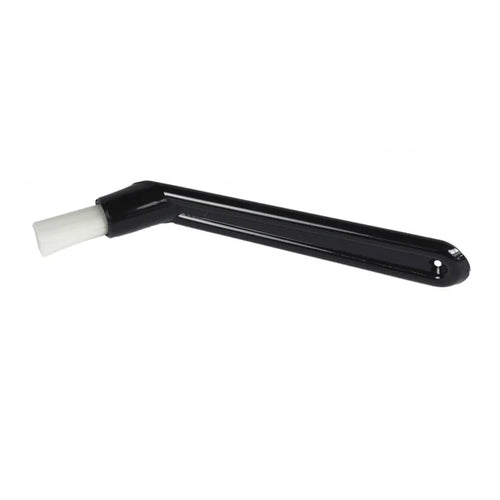
First, unplug the grinder and follow its approved cleaning procedure. Distinguish operator-accessible cleaning from internal maintenance reserved for qualified personnel.
Have the chamber, discharge path and accessible components checked before attributing inconsistent output to wear. The same manual lists an obstructed discharge opening separately from burr-related grinding problems.
Do not introduce water, steam or improvised cleaning materials into the grinding mechanism. Follow the manufacturer’s instructions for removable components, approved cleaning products and reassembly.
Separate Calibration from Alignment
Calibration means setting grind size and dosing to achieve your espresso recipe. Alignment concerns how accurately the opposing burrs sit relative to one another; it is a mechanical service question, not simply another adjustment-knob position.
Before the retest, standardise:
- The coffee batch and approximate hopper level
- Dry dose and target beverage weight
- Basket and puck-preparation method
- Espresso-machine settings
- The person performing the test
Then record several consecutive doses, their grinding times and the resulting extractions. Compare against a known good baseline, not an internet claim about how quickly every grinder should deliver a shot.
For the daily workflow, use Coffee.Plus’s opening-shift espresso grinder calibration guide.
On timed grinders, recheck dose weight after changing grind size. Ceado’s manual specifically requires grinding-time adjustment when coarseness changes; a different dose is not automatically evidence of coffee grinder burr wear.
Inspect the Burrs Professionally
If cleaning and dial-in do not resolve the problem, request inspection of both burrs, their mounting surfaces and carriers.
Ask the technician to distinguish cutting-edge wear from impact damage, incorrect seating, carrier damage and bearing play. Request photographs and a written explanation of what replacement is expected to correct.
Taste, clumping or one slow dose cannot identify the failed component. Use those observations to guide inspection, rather than treating them as a conclusive diagnosis.
Which Problem Are You Seeing?
Use this table to structure a service enquiry. It identifies the next check, not a guaranteed diagnosis.
| Observation | What to investigate | Decision implication |
|---|---|---|
| Output improves after cleaning | Coffee accumulation or a restricted discharge path | Retest before buying parts |
| Dose changes after adjusting grind size | Dosing calibration | Reprogramme and weigh doses first |
| Performance remains poor after cleaning and calibration | Burr condition, seating and alignment | Obtain a documented inspection |
| Starting problems, unusual vibration or repeated stoppages | Electrical supply, obstruction, bearings and motor components | Diagnose the fault separately from burr wear |
| Acceptable performance off-peak, delays during rush | Duty cycle, cooling conditions and required throughput | Check whether the existing grinder is undersized |
Stop operation and seek authorised assistance for a suspected obstruction, electrical fault or abnormal mechanical behaviour. Do not repeatedly restart a stalled grinder or bypass safety devices.
Could It Be Another Fault?
A service inspection should establish whether the grinder can start, run and grind correctly under load, not merely whether its display switches on.
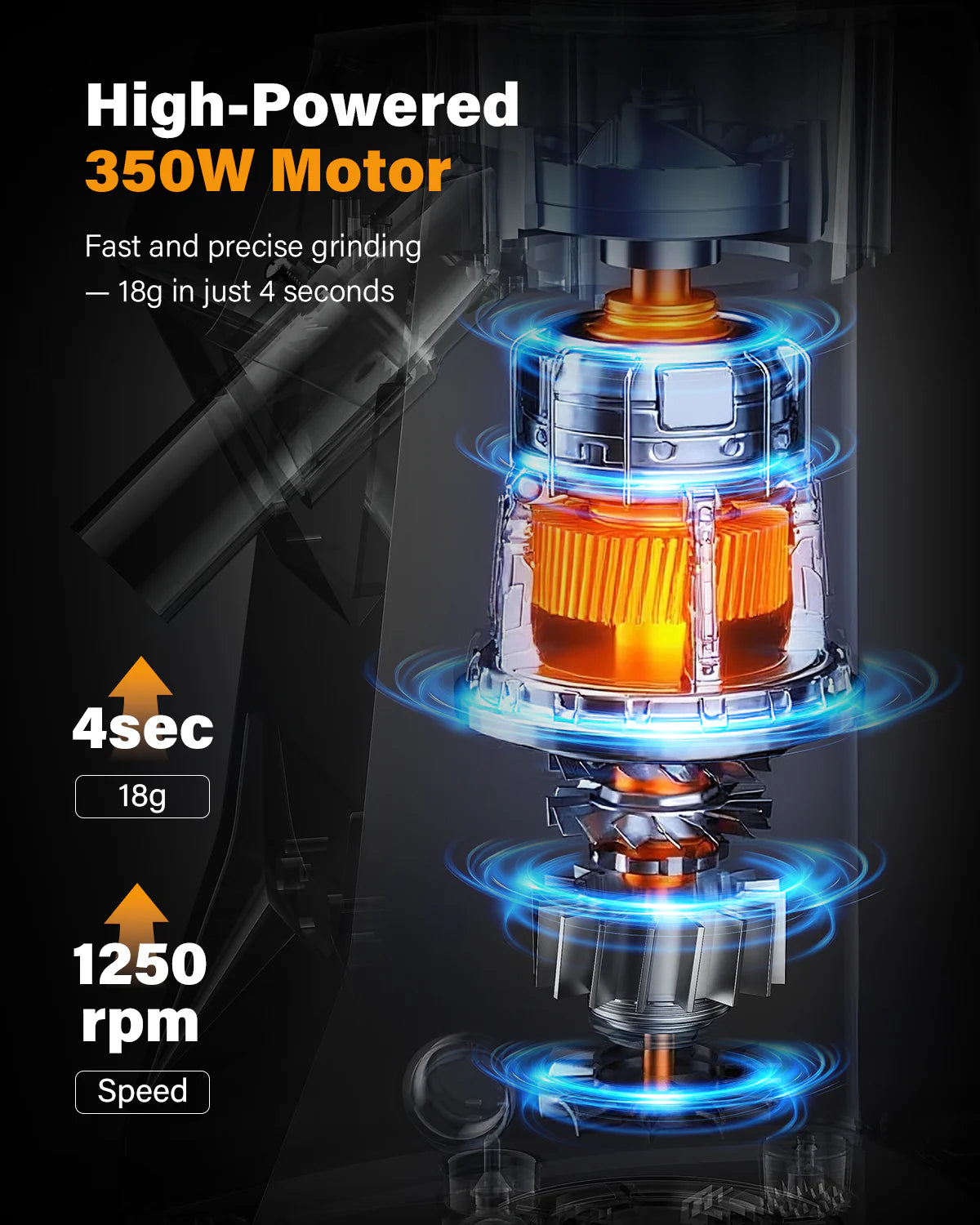
Ask for checks of the electrical supply against the rating plate, bearing condition, adjustment mechanism, motor operation and any relevant starting components. These are inspection requests, not permission for staff to open electrical housings.
Repeated stoppages do not automatically establish motor failure. Ceado’s troubleshooting guidance distinguishes thermal protection after intensive use from blockage and other causes.
For an Indian café outside the technician’s immediate service area, establish whether diagnosis can happen on-site or requires shipping. Confirm travel charges, freight, parts availability and the expected period without the grinder before authorising work.
Repair or Replace the Grinder?
Make the repair or replace espresso grinder decision only after receiving a diagnosis.
A commercial grinder burr replacement is a reasonable option when the burrs are the identified problem, the rest of the grinder is serviceable and its restored performance would still meet your requirements.
Consider an upgrade when an inspection identifies wider deterioration, necessary parts cannot be sourced acceptably, or restoring original performance would still leave a peak-hour bottleneck. At that stage, compare suitable commercial grinders against the documented limitation, not simply against a larger burr diameter.
Compare Actual INR Quotations
A spare-part listing is not an installed repair price. Request a written commercial grinder repair quotation containing:
| Quotation item | What should be explicit |
|---|---|
| Diagnosis | Confirmed fault and proposed remedy |
| Burrs and other parts | Exact part numbers, quantities and prices in INR |
| Labour | Removal, installation and testing |
| Setup | Cleaning, calibration and post-repair dial-in |
| Logistics | Technician travel, collection and return freight |
| Taxes | GST treatment and final payable total |
| Completion | Parts lead time, turnaround and written repair-warranty terms |
Do not use a universal repair-cost percentage. Instead, ask whether the quoted repair resolves the diagnosed problem, whether further work is already foreseeable, and whether downtime is manageable.
There is no responsible model-independent INR estimate for this decision. Use actual quotations for your grinder and location, and keep your own downtime assumptions separate from the supplier’s charges.
Upgrade the Right Limitation
Dose consistency and grinding capacity are different requirements.
For example, the Eureka Atom W65 uses weight-based dosing and 65mm flat burrs. That makes it relevant when evaluating dosing workflow, but its weighing system is not a repair for an existing grinder’s mechanical fault or proof of sufficient capacity for every café.
The Eureka Helios 65 HSM is another model-specific comparison point. Before treating it as a replacement, confirm the supplied burr variant and applicable manual, then assess it against your actual coffee, dose and peak sequence.
Neither should become an automatic recommendation simply because an older grinder needs attention.
Mistakes That Waste Money
- Buying burrs by diameter alone: Have the technician confirm the exact compatible part number and installation requirements.
- Replacing before recording a baseline: Without before-and-after measurements, judging whether the repair worked becomes harder.
- Treating warm grounds as proof of wear: Investigate workload and operating conditions alongside burr condition.
- Comparing incomplete prices: Include labour, GST and logistics rather than comparing a complete repair bill with a headline equipment price.
- Expecting new burrs to create capacity: Evaluate whether restored original performance will meet present demand.
- Skipping handover testing: Agree on the post-repair dose, recipe and operating checks before accepting the work.
For ongoing maintenance after the immediate fault is resolved, refer to Coffee.Plus’s commercial grinder maintenance guide.
Two Useful Follow-Up Questions
Does an Alert Prove Wear?
Not necessarily. The Helios handbook describes a resettable burr-maintenance counter with settings for burr size and type. Treat such an alert as a service prompt; do not assume it directly measures cutting-edge sharpness.
When Is a Repair Complete?
Ask for a handover that includes safe operation, correct assembly, dose calibration and repeatable grinding with your coffee. Record the installed parts and reset maintenance counters only as directed by the applicable manual.
Get a Diagnosis First
Before approaching Coffee Plus, gather the grinder model, serial number, service history, estimated coffee throughput and a short description of when the problem occurs. Include any existing repair quotation and your busiest service sequence.
Ask for guidance on the appropriate next step and confirm model-specific inspection, parts and service arrangements. A justified repair should restore useful performance; a justified upgrade should solve a clearly identified limitation.