





Espresso sour vs bitter is the first question to answer when a shot tastes wrong, but “strong” is a separate question that is often confused with both. This drill has a team taste a shot, change one recipe variable at a time and record what moved. The aim is to name the flavour problem correctly before anyone touches the grinder or the machine.
A barista tastes a sharp shot, makes the grind finer, and the next shot is both sharper and more bitter. The adjustment was reasonable, but the diagnosis was incomplete. This is the usual pattern on a busy bar: several variables change at once, nobody can say which one helped, and the fix does not carry over to the next shift.
What Is the Difference Between Espresso Strength and Extraction?
Espresso strength vs extraction is the distinction that stops most diagnosis errors.
- Strength is how concentrated the drink is, usually expressed as total dissolved solids (TDS).
- Extraction yield (EY) is the share of the dry coffee that dissolved into the cup.
They are independent. Adding water after brewing changes strength but not yield, and a shot can be strong but under-extracted, or weak but well extracted. You can calculate extraction when you know three numbers:
EY (%) = beverage weight (g) × TDS (%) ÷ dose (g)
As an illustration, with an 18 g dose, a 36 g shot at 9% TDS gives 18% extraction. These figures are for explanation only and are not a target for your coffee.
The commonly cited reference zone is 18–22% extraction, and many sources describe espresso strength as roughly 8–12% TDS, though published ranges vary. Treat these as guide rails, not rules, because the right numbers depend on the coffee, the roast and your menu.
How Do You Tell Espresso Sour vs Bitter?
Many guides link sourness to under-extraction and bitterness to over-extraction. That is a useful starting model, because acids tend to dissolve early and heavier bitter compounds later in the extraction. It is a hypothesis to test, not a verdict.
Some tasting cues help teams separate the two:
- Sour: sharp and puckering, often noticed at the start of the sip, with little sweetness behind it.
- Bitter: a drying, lingering aftertaste, often noticed at the end of the sip.
- Salty or thin: often reported in under-extracted shots, but less reliable as a cue.
- Astringent: a dry, rough sensation on the gums and tongue that people often call bitter.
Two cautions stop the model from being over-applied. First, roast level and coffee choice also shape the cup. A very light roast can taste sharp at a perfectly good extraction, and a very dark roast can taste bitter at a modest one. Second, a strong shot can taste harsh without being over-extracted. That is why the drill changes one variable at a time instead of trusting a single taste.
What Does the Tasting Drill Look Like?
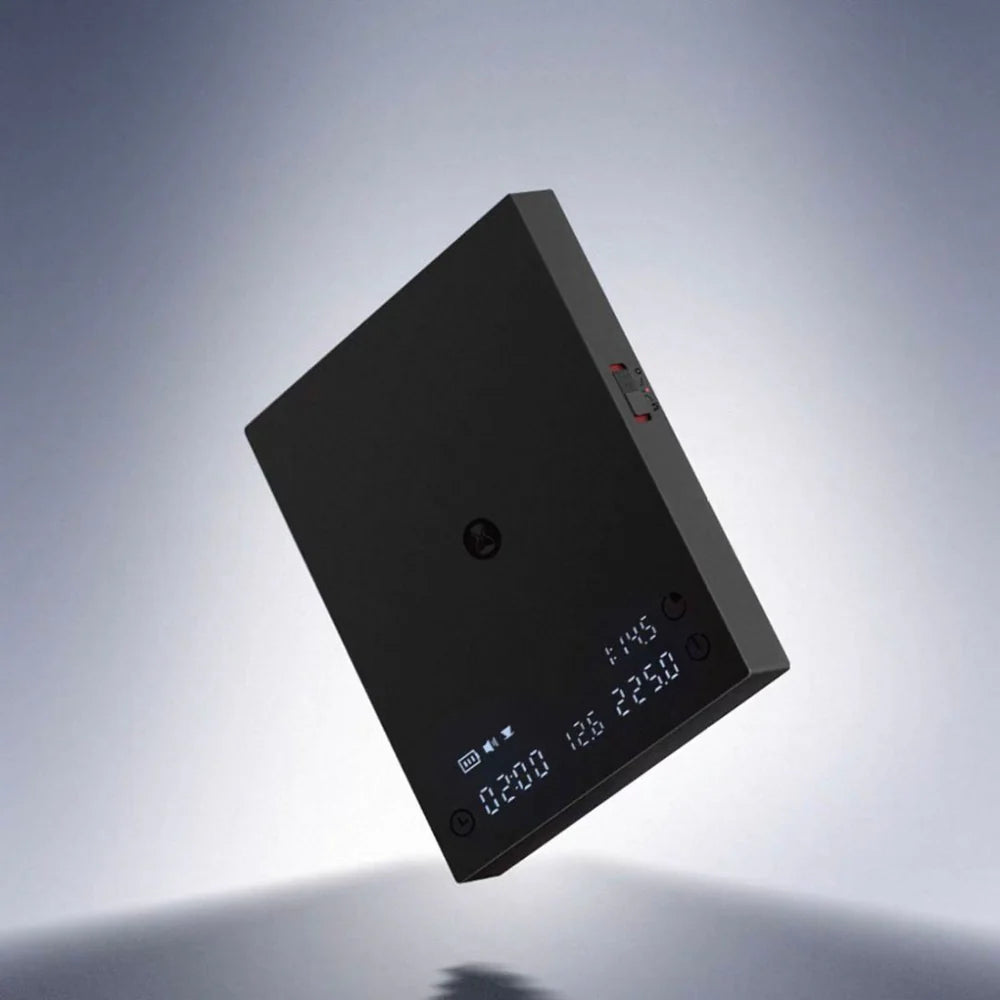
Run it before service, with the same coffee, the same water and the same person pulling every shot. Weigh the dose and the yield, and time every shot. A scale that reads to 0.1 g with a built-in timer is the practical minimum.
Round 1: Baseline. Pull three shots on the current recipe, for example 18 g in, 36 g out. Taste all three blind, scoring each on the sheet below. If they disagree with each other, fix repeatability before running the drill.
Round 2: Change yield only. Keep dose and grind fixed. Pull shots at a shorter, standard and longer yield, such as 1:1.5, 1:2 and 1:2.5. Taste them in order and record how sour, bitter, sweet and thick each one is.
Round 3: Change grind only. Set the yield back to the baseline. Make one small grind step finer, then one coarser, and record shot time and taste.
Round 4: Dilute to compare strength. Take the strongest shot and add hot water until it matches the weight of the longest one. Taste both. This separates “too strong” from “wrongly extracted”, because dilution changes concentration but not the amount extracted.
Only after these rounds should the team consider water temperature, basket changes or machine work. Equipment adjustments make sense once the flavour has a name.
What Should the Tasting Sheet Record?
| Field | What to write |
|---|---|
| Recipe | Dose, yield, time, grind setting |
| First impression | Sharp, sweet, flat, thin or heavy |
| Sourness | None, light, clear or dominant |
| Bitterness | None, light, clear or dominant (aftertaste) |
| Dryness | Smooth, slightly dry or very dry |
| Body and strength | Thin, medium or heavy |
| Verdict | Under, balanced, over or “strong but balanced” |
| Next single change | One variable only |
Which Taste Points to Which Change?
Use this table as a hypothesis, not a diagnosis.
| What you taste | Likely cause to test | One change to try |
|---|---|---|
| Sharp, thin, little sweetness | Lower extraction | Slightly finer grind or longer yield |
| Dry, bitter finish, hollow | Higher extraction | Slightly coarser grind or shorter yield |
| Strong, heavy, still balanced | High strength, normal extraction | Keep recipe or lengthen yield for lighter drinks |
| Harsh and strong | High strength and high extraction | Coarser grind and longer yield, tested separately |
| Weak and watery | Low strength | Shorten yield, check dose |
| Different shot every time | Repeatability problem | Check dose weight, distribution and grinder before dialling |
Why Do Teams Keep Misreading the Shot?
- Changing several things at once. A finer grind, a bigger dose and a new coffee in the same hour cannot be separated afterwards.
- Judging by time alone. Shot time is useful but depends on dose and grind. Many experienced baristas treat yield as the more reliable target.
- Confusing strength with extraction. A heavy, intense shot is not necessarily over-extracted.
- Tasting only once. The first sip and the last sip can tell different stories, so teams should taste after the shot cools slightly.
- Skipping the grinder. Drift in grind setting or dose changes the result before any recipe adjustment does. Our opening-shift espresso and grinder calibration routine covers that daily baseline.
What Equipment Does the Drill Need?
The drill is a skill exercise, not an equipment project, and a good scale does most of the work. When choosing, look for 0.1 g resolution, a timer and a compact footprint that fits the drip tray.
- The TIMEMORE Basic 2.0 Electronic Espresso Scale is aimed at espresso workflows and suits a simple bar setup.
- The MHW-3BOMBER Cube Coffee Scale 3.0 Pro Max is another option for a bar that wants a durable everyday scale.
- The Eureka Precisa Bluetooth scale suits teams that want to log extractions through an app.
Check the product page for the current specification and availability before purchase. Compare the range in the weighing scales collection. A refractometer is optional, since the drill works on taste and weight alone, but it gives a numeric check on TDS and extraction once the team can taste the difference.
A Practical Framework for the Team
- Fix the coffee, water, dose and person pulling the shots.
- Pull and taste three baseline shots blind.
- Change yield only and record the result.
- Change grind only and record the result.
- Dilute the strongest shot to compare strength.
- Agree on a single recipe and write it down.
- Only then consider temperature, basket or machine changes.
FAQs
Is Sour Espresso Always Under-Extracted?
Not always. It is the most likely explanation, but roast level, coffee freshness and a very short shot can all contribute. Test with one change before concluding.
Is Bitter Espresso Always Over-Extracted?
Often, but not always. A dark roast, a stale coffee or channelling can produce bitterness at a normal extraction. Check dose, distribution and the coffee itself too.
Can Espresso Be Strong and Under-Extracted?
Yes. Strength and extraction are separate measures, so a concentrated shot can still taste sharp and unfinished.
Do We Need a Refractometer?
No. A scale, a timer and a trained palate are enough to run the drill. A refractometer adds a measured TDS value and is useful once the team is consistent.
How Often Should the Team Repeat the Drill?
Run it when the coffee, roast date range or grinder changes, and as a short refresher for new staff.
Diagnose First, Adjust Second
A good dial-in habit names the flavour before touching the equipment. Start with a baseline, change one variable per round and write down what happened. If the team does this consistently, the grinder and machine adjustments that follow are targeted, not guesses.
Coffee Plus can help cafés match their equipment to their menu and workflow. If your drill points to a grinder or machine limitation, explore the commercial grinders available and ask the team for guidance on the right next step.