








Designing a Coffee Bar That Can Survive Festival and Weekend Peaks in India (2026 Guide)
The Diwali weekend rush, a long-weekend influx at a hill station café, or Christmas week at a mall kiosk — these are the moments that define your café's reputation and reveal whether your equipment and station layout were designed for actual Indian operating conditions or only for an average Tuesday. Most cafés lose significant revenue during their highest-demand periods not because they lack customers but because they run out of throughput capacity. This guide shows you how to design and size your coffee bar to handle 2x volume spikes without adding permanent headcount or compromising quality.
A café owner in Manali had built a well-regarded specialty operation that ran smoothly through most of the year at 60–80 cups per day. Then Diwali week arrived. Footfall doubled. The single 1-group commercial espresso machine — perfectly adequate for daily operation — became a bottleneck within the first hour of the morning rush. The queue stretched outside. The barista, working alone on one group, was pulling shots back to back with no recovery time. By 11am the steam wand could not keep up with milk drink demand, grind settings had drifted from the heat and hustle, and quality had visibly declined. Customers who had come during peak season — the most important acquisition window of the year — experienced the worst version of the café. The machine that served 70 cups beautifully on a quiet October morning could not serve 140 cups competently on a Diwali Saturday. The problem had been designed into the setup before the first customer walked in.
Why Average Volume Is the Wrong Design Benchmark
Most café equipment decisions are made based on average daily volume — a rational-sounding approach that creates a structurally fragile operation. Average volume means the equipment is correctly sized for the days that do not matter most and undersized for the days that matter most.
In India, the gap between average volume and peak volume is larger than in most markets. Hill station cafés in Shimla, Mussoorie, Nainital, and Manali can see 3–4x footfall during festival long weekends compared to mid-week off-season days. Urban cafés in Delhi, Mumbai, and Bengaluru experience 1.5–2x Saturday-to-weekday spikes. Mall kiosks in tier 2 cities — Indore, Nagpur, Coimbatore — see Christmas and Eid weekends that bear no resemblance to normal operating volume.
The correct design benchmark is peak sustainable throughput — the maximum number of quality drinks your bar can produce per hour under sustained pressure — with a target that your equipment can reach that number consistently across a 3–4 hour uninterrupted rush. Designing to average volume and hoping peak days sort themselves out is a plan for a predictably bad customer experience on your most valuable trading days.
How to Calculate Your Real Peak Throughput Requirement
Before sizing equipment, calculate what your bar actually needs to produce at peak.
Start with your highest-volume hour on your busiest trading day — if you have POS data, pull the actual transaction count for your single busiest hour from the last festival season. If you are opening a new operation, use a conservative estimate based on your seating capacity and average dwell time. A 40-seat café with 45-minute average dwell time has a theoretical throughput ceiling of approximately 53 customers per hour. If 70% order an espresso-based drink, that is 37 drinks per hour from the espresso bar — roughly one drink every 97 seconds.
A single-group commercial espresso machine, operated by one barista, has a practical throughput ceiling of approximately 25–30 milk drinks per hour under sustained peak conditions when milk steaming is included in the workflow. At 37 drinks per hour, a single 1-group machine is already at its ceiling with no margin. Add a second barista and a second group — or upgrade to a 2-group — and the ceiling rises to 50–60 drinks per hour, giving the 40-seat café comfortable headroom through peak service.
This calculation, done before equipment purchase, changes the decision from "what machine do I need for daily operation" to "what machine can I not afford to be without during Diwali weekend."
Best Espresso Machine for Festival and Weekend Peak Volume in India
For Indian café and kiosk operators designing for peak resilience, machine selection should account for three factors simultaneously: group count for parallel extraction, boiler architecture for sustained output, and thermal recovery speed between milk drinks.
1-Group With Peak Ambitions: The Right Spec Matters
For a commercial espresso machine for a small café in India where a single group is the permanent configuration, the machine must at minimum have a rotary pump — not a vibration pump — for pressure consistency across back-to-back shots. It also needs a properly sized boiler: a small single boiler that takes 45–60 seconds to recover steam pressure after each milk drink is not a viable peak service tool regardless of how well it performs in quiet periods.
The Espressa Nimbus Pro with its commercial-grade thermal architecture handles back-to-back 1-group extractions with steam recovery speed that genuine 1-group peak service demands. For a small hill station café that is seasonal by nature — quiet most of the year, intense during festival windows — this is the 1-group configuration that does not collapse under the pressure of a Diwali weekend.
2-Group as the Minimum for 40+ Seat Operations
For any café operating 40 seats or more, or any operation expecting peak volume above 40 drinks per hour, a 2-group machine is not a luxury — it is the minimum viable configuration for peak resilience. The Espressa Falcon as a 2-group thermomatic machine delivers independent group temperature control and programmable pre-infusion alongside a rotary pump that maintains 9 bar across simultaneous 2-group extractions. During a busy Diwali Saturday with two baristas working parallel workflows — one on each group — the Falcon's independent thermal architecture means neither group's performance is compromised by the other's load.
The Izensso Raptor with its T3 multi-boiler configuration brings dedicated steam and brew boiler architecture to the 2-group commercial tier — the dual boiler espresso machine for a café in India that eliminates the thermal compromise between milk steaming and espresso extraction during peak parallel workflows. When both baristas need steam simultaneously, the dedicated steam boiler capacity handles it without affecting brew temperature on either group. This is the architecture that high-turnover festival service demands.
3-Group for High-Volume Festival Destinations
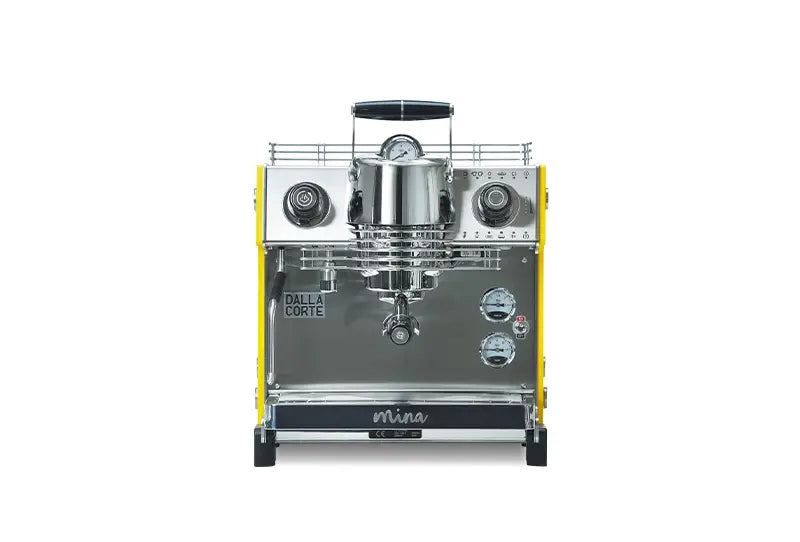
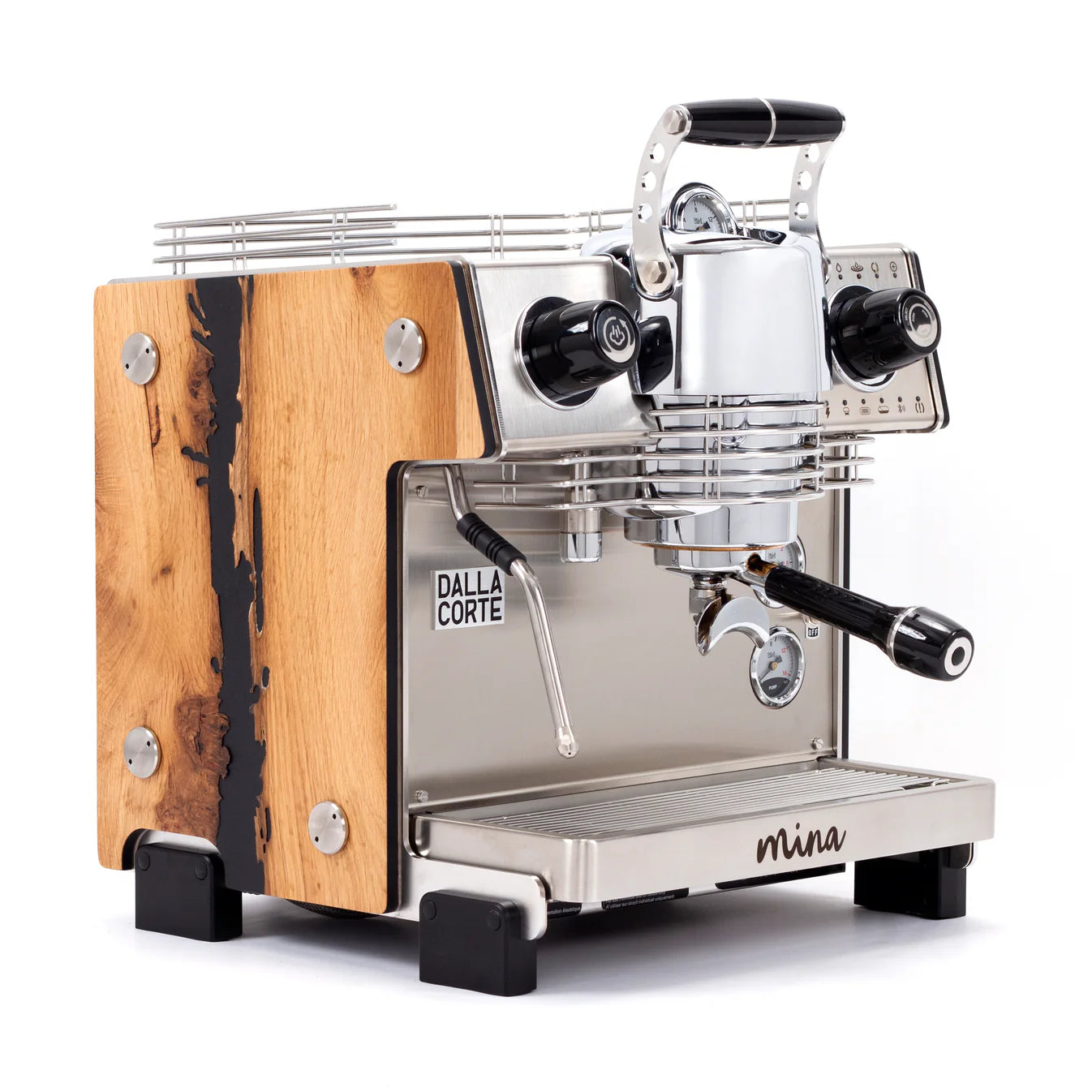
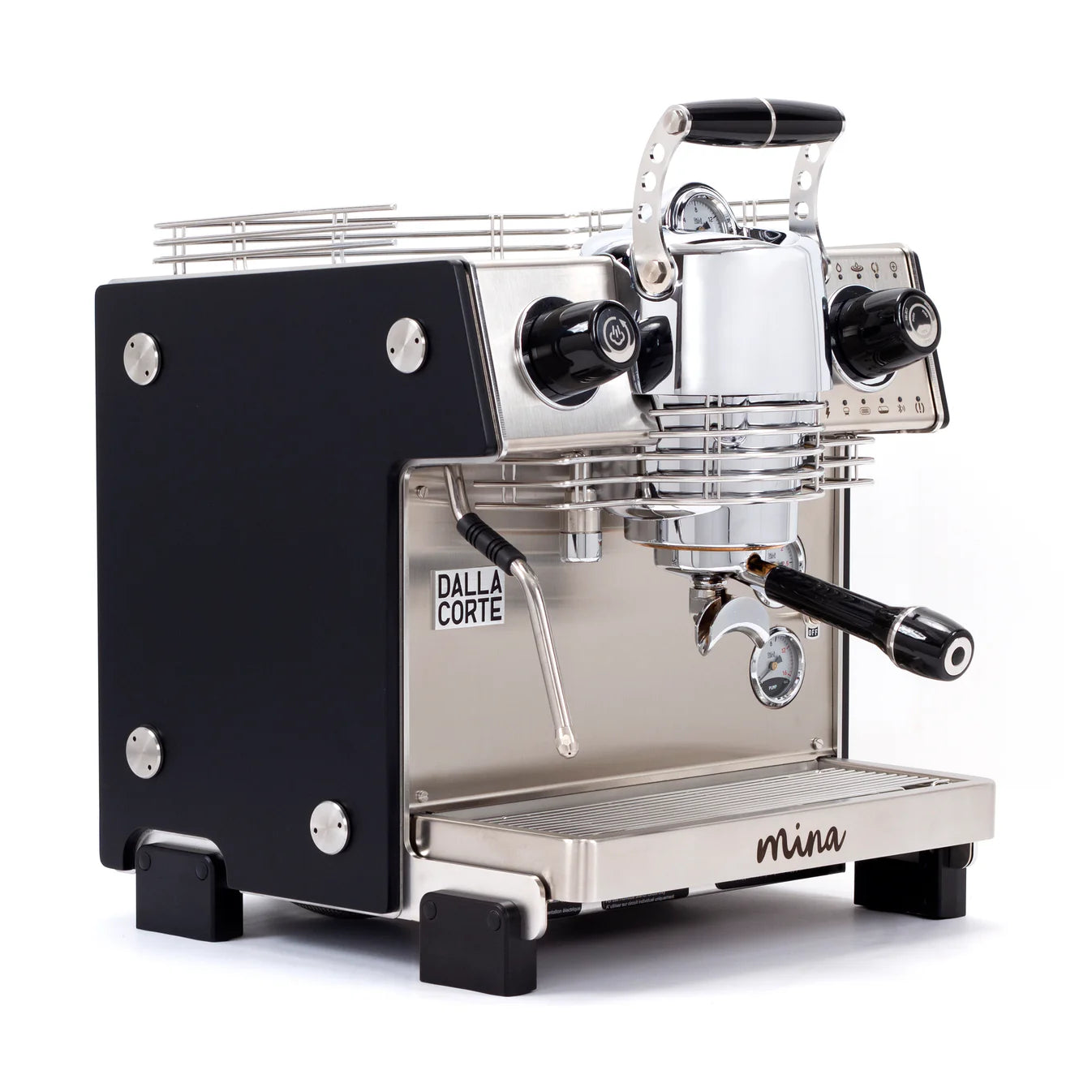
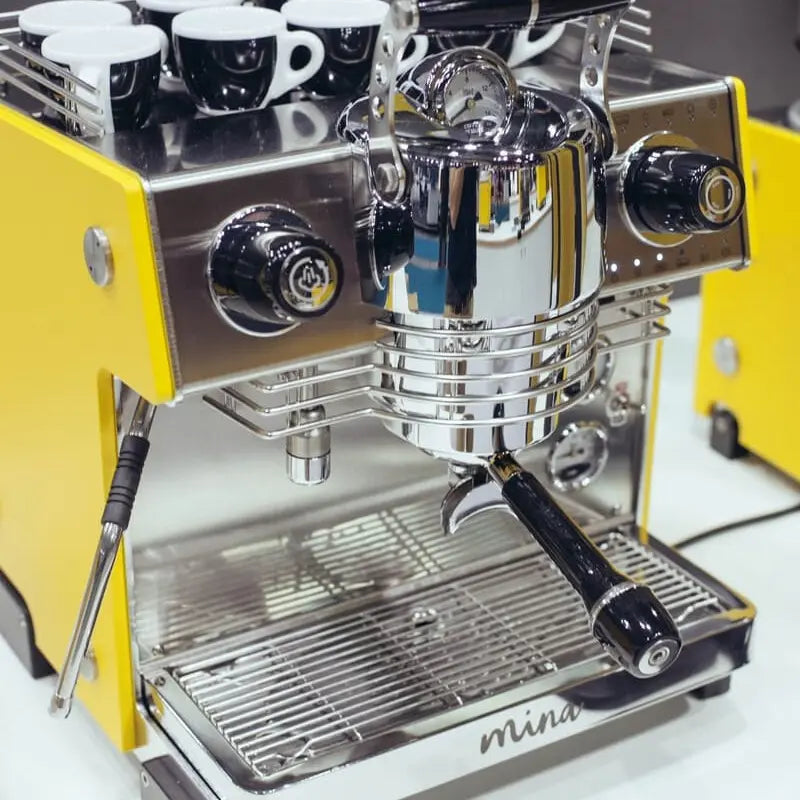
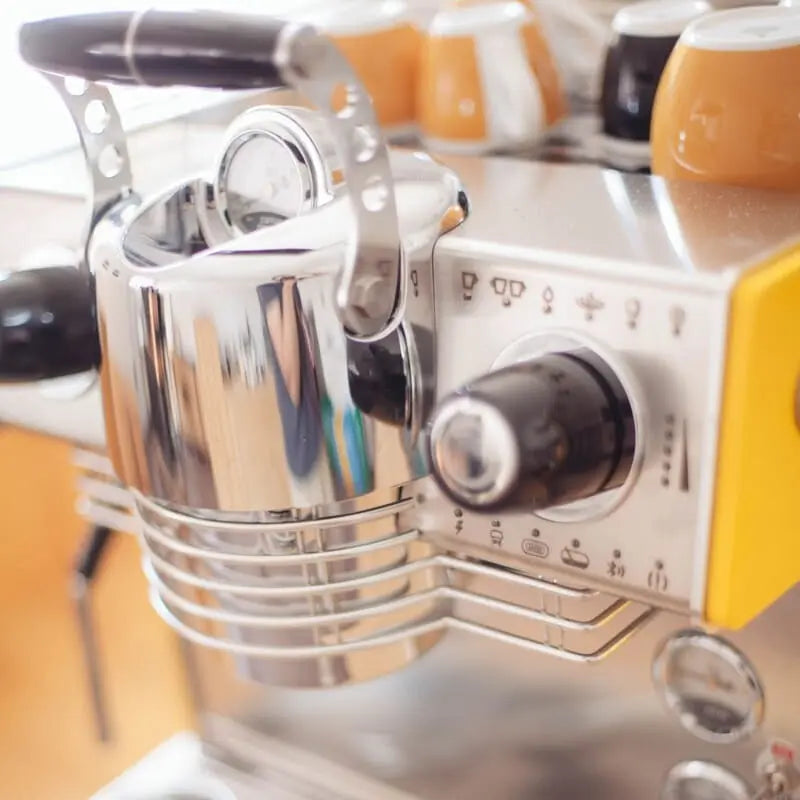
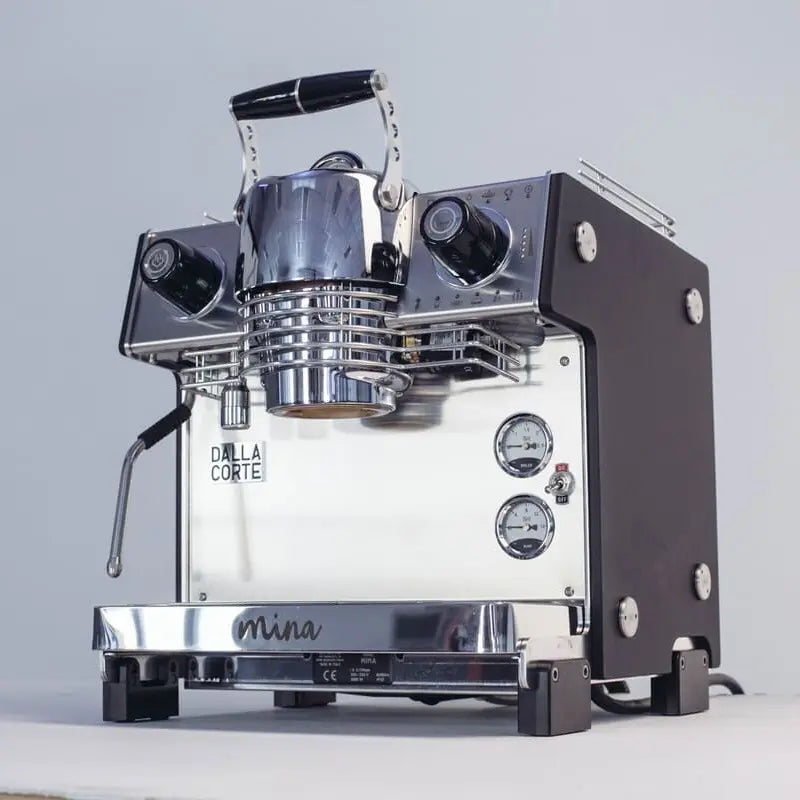
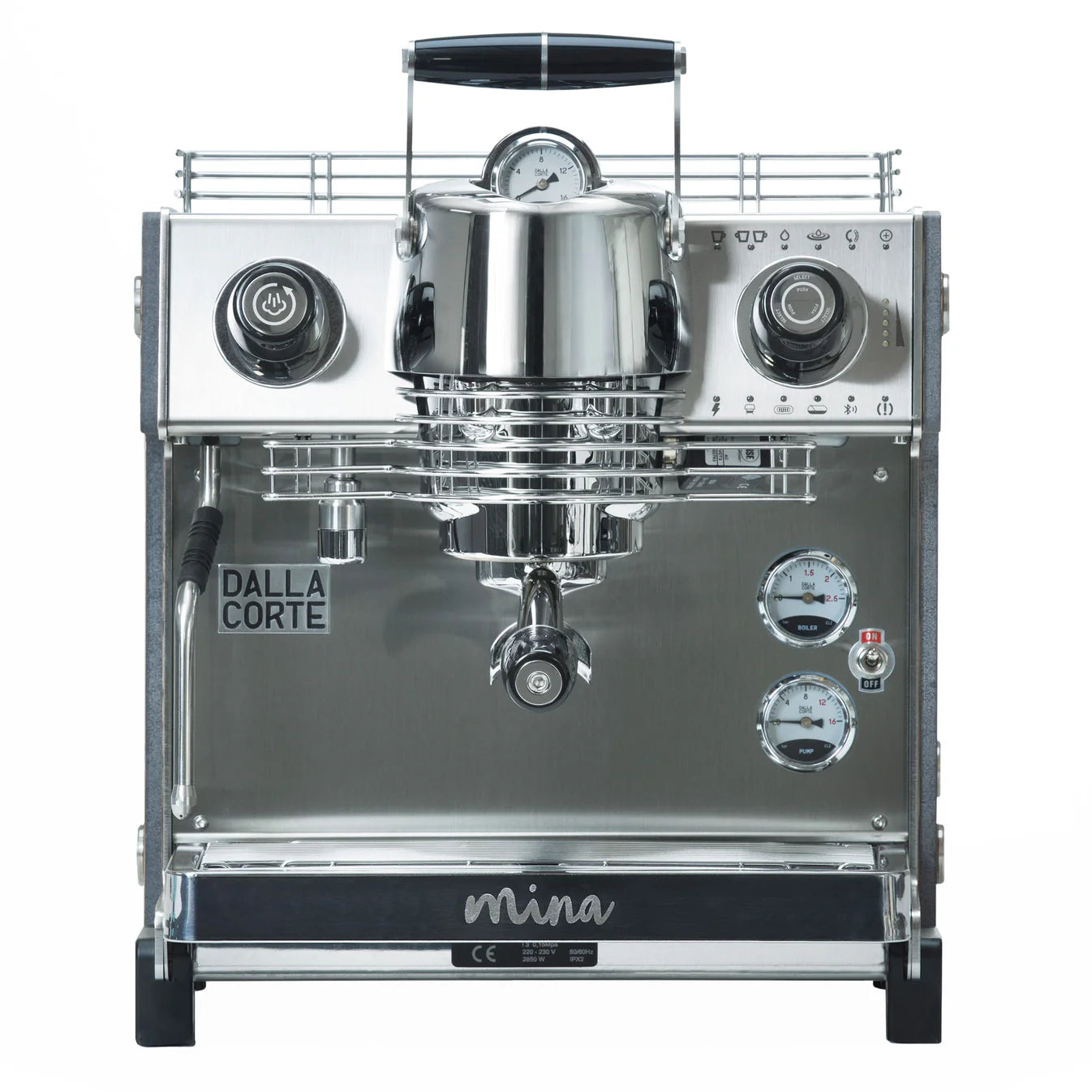
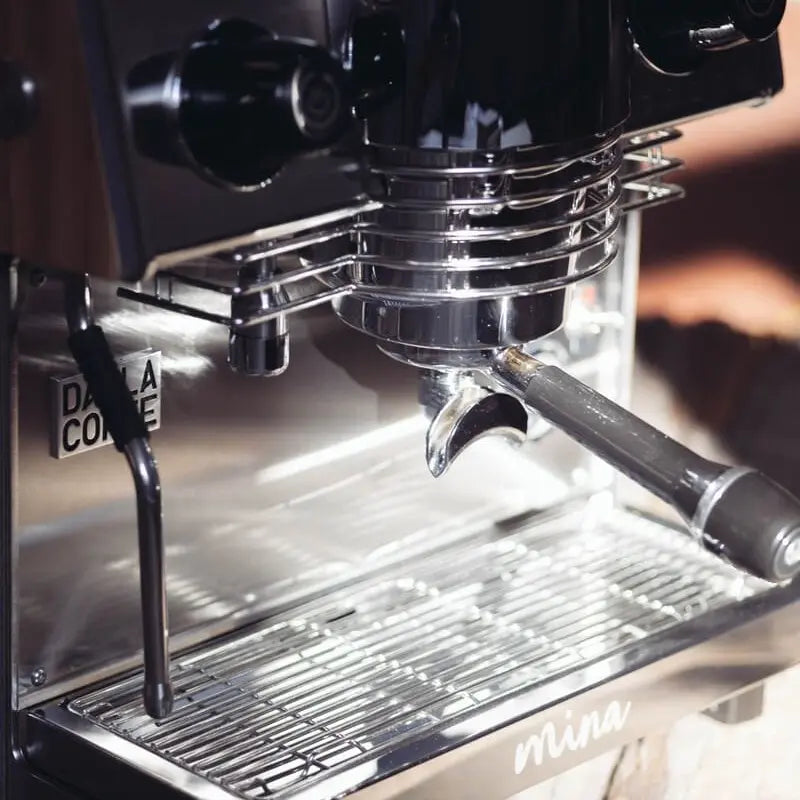
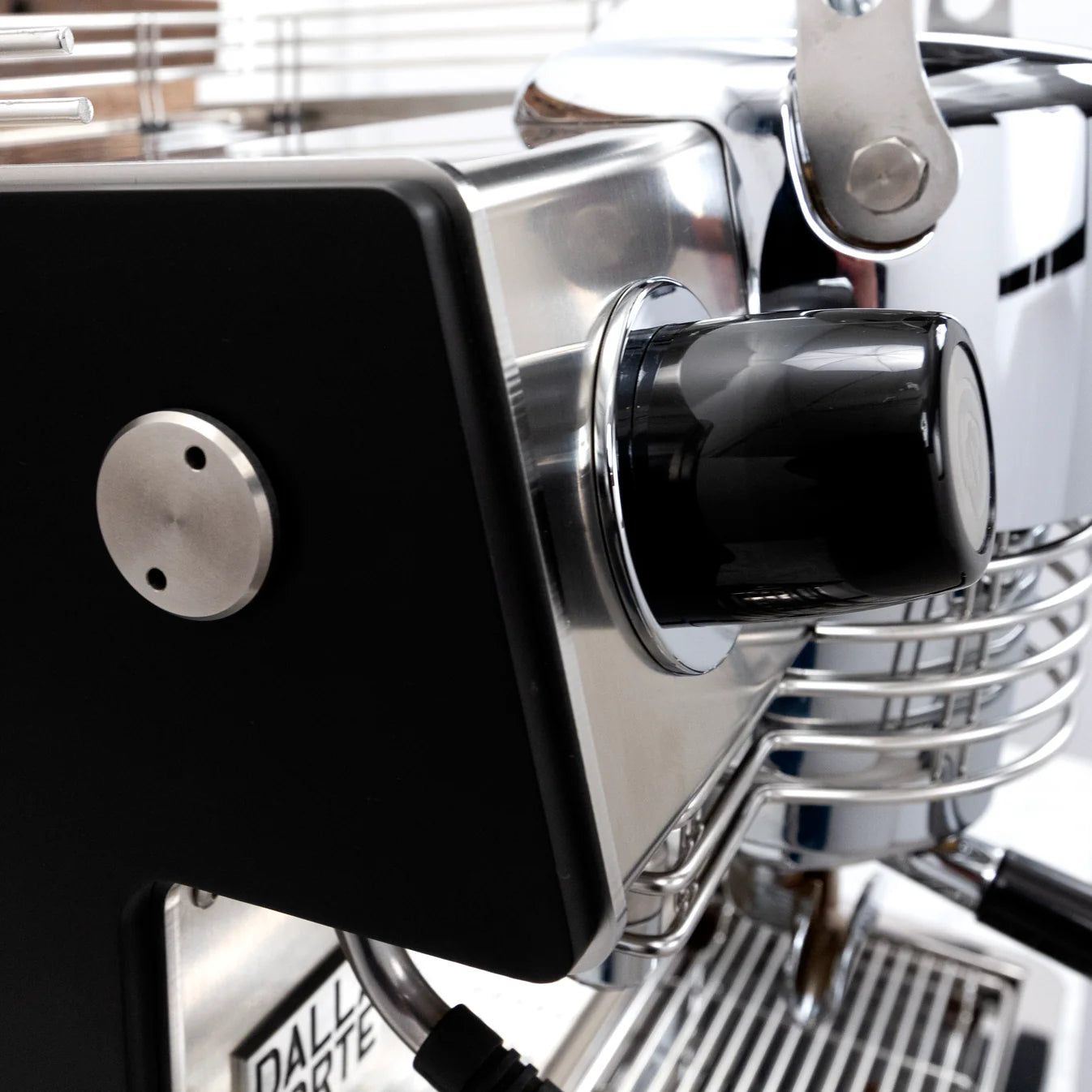
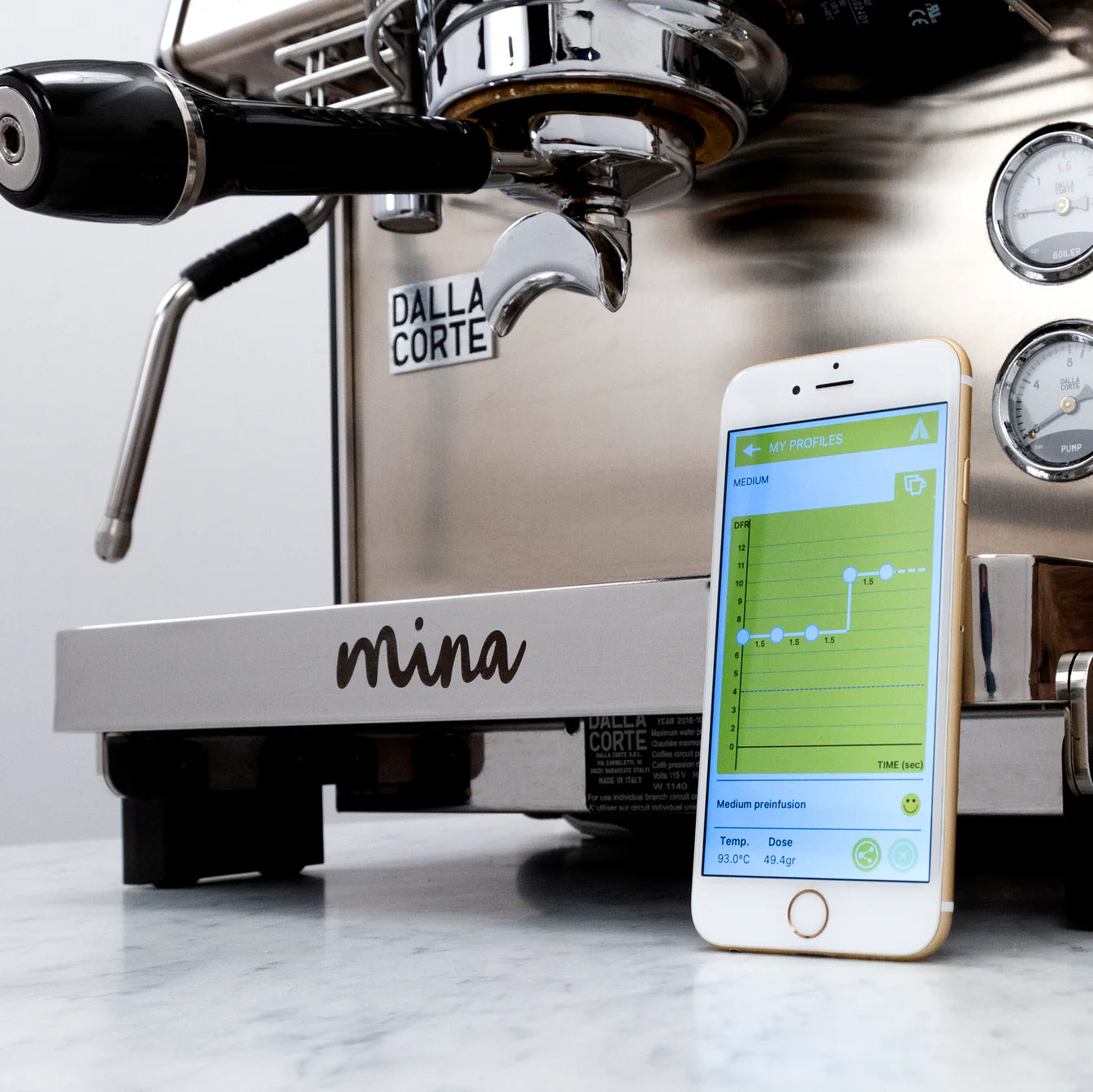
For café-restaurants in hill station destinations or urban locations where peak season volume reaches 150+ drinks per hour — the kind of trading that Shimla or Manali café operators experience during peak summer and Diwali — a 3-group commercial machine provides the throughput capacity that makes peak service manageable rather than survivable. The Dalla Corte Mina in 3-group configuration combines per-group independent boilers with Digital Flow Regulation that ensures each group performs identically under simultaneous heavy load. At peak volume with three baristas, the Mina's architecture distributes load across truly independent thermal systems — no group's performance degrades because the other two are also running.
Grinder Sizing for Peak Service: The Overlooked Constraint
Equipment planning for festival peaks almost always focuses on the espresso machine. The grinder is frequently the actual bottleneck — and it fails more quietly.
A grinder sized for 80 cups per day running at 160 cups during Diwali service is operating above its thermal design ceiling. As discussed in grinder motor and RPM contexts, an underpowered motor heats up under sustained load, slows its RPM, and produces a progressively finer effective grind that the barista compensates for by coarsening the grinder — creating a dial-in drift loop that degrades quality through the peak service window.
For peak-resilient operations, the grinder specification should be sized at least one tier above daily average volume. A café averaging 80 cups daily but peaking at 160 should be running a grinder rated for 150–200 cups per day continuous — not a grinder whose ceiling is 100 cups.
The Ceado E7 with its 450W motor and 64mm flat burrs is the practical choice for mid-volume cafés with significant peak demands — its motor architecture handles sustained back-to-back grinding through a 3-hour festival rush without the RPM drift that lower-wattage machines show under the same load. For high-volume destinations, the Ceado REV Steel with its 700W+ motor and 83mm flat burrs is sized specifically to sustain low-RPM consistent grinding across the kind of volume that Indian festival destination cafés generate. Both are available through Coffee.Plus with pan-India technician support and genuine burr replacement sets stocked locally.
Consider also grinder redundancy for high-peak operations: a primary commercial grinder and a second calibrated grinder that can be activated during peak service. Two mid-tier grinders running in parallel during festival peaks produce more total consistent output than one premium grinder pushed beyond its designed throughput ceiling.
Station Layout for Peak Throughput Without Additional Headcount
Machine and grinder specifications deliver potential throughput. Station layout determines whether that potential is realised by the team operating under pressure.
Design for parallel workflow, not sequential. A layout where one barista can simultaneously steam milk on one group while the other barista extracts a shot on the second group — without either barista's movement interfering with the other — doubles throughput without doubling headcount. This requires the machine, grinder, and milk station to be arranged so both baristas have independent access to their primary tools without crossing paths.
The practical layout for 2-barista peak service on a 2-group machine:
-
Grinder positioned between the two groups so either barista can access it from their working position
-
Knock box at each group position — not shared at a single point that requires one barista to wait for the other
-
Milk station (pitchers, fridge access, steam wand) within the arm reach of each working position independently
-
Cup staging behind the machine at centre, accessible to both baristas without a cross-body reach
Pre-service staging for festival days. On anticipated peak days — Diwali, Christmas, long weekends — 30 minutes of pre-service preparation changes the peak experience significantly:
-
Pre-fill and stage 6–8 milk pitchers in order of size at each steam position
-
Pre-warm cups to service temperature
-
Confirm grinder dial-in on that day's specific bean batch before service opens
-
Verify machine group pressure and temperature at both groups before the first customer
-
Brief the team on the specific workflow protocol for 2-barista parallel service — who manages which group, who handles handoff
Designing Your Coffee Bar for Indian Festival Peak: A Sizing Guide
Mistakes to Avoid: Staffing Your Way Out of an Equipment Problem
Mistake: Adding temporary staff during festival peaks without ensuring the equipment supports the throughput those staff are expected to produce.
This is the single most common festival preparedness mistake in Indian café operations. A café adds two extra team members for Diwali weekend without upgrading from a 1-group to a 2-group machine. The extra staff have nowhere productive to work — the machine remains the bottleneck, the queue remains long, and the added labour cost produces no throughput improvement. Two baristas competing for one group head is slower than one barista who owns the station without interference.
Peak staffing and peak equipment must be planned together. The right question before a festival weekend is not "how many extra staff do I need" but "what is my machine and grinder's peak throughput ceiling, and how many staff can that equipment productively support." If the answer is one barista, adding a second is a cost, not a solution. If the answer is two baristas on a 2-group machine, adding that second barista with a properly equipped station is a genuine throughput multiplier.
At Coffee.Plus, we help café operators plan for peak rather than react to it. Whether you are choosing the best espresso machine for a 50-seat café in India ahead of a high-traffic festival season, evaluating a grinder upgrade before the next long-weekend rush, or planning a station layout that supports 2-barista parallel workflow — every recommendation is based on your specific volume profile and peak projections, not generic advice. Every machine and grinder we supply comes with espresso machine installation and training in India so your team is prepared for peak service before it arrives, not discovering workflows during the rush. Pan-India technician support and genuine spare parts mean a pre-festival service check can be arranged wherever your café operates — so you go into your highest-volume trading days with equipment that has been verified at specification, not assumed to be fine. Visit our Experience Centre in Delhi at 14 Regency, Asola to test peak workflow scenarios on the machines you are considering — running 2-group parallel service on the Izensso Raptor or Dalla Corte before committing tells you more than any specification sheet can.