


![[PRE ORDER] MHW-3BOMBER Cube Coffee Scale 3.0 Mini Pro](http://coffeeplus.in/cdn/shop/files/MHW-3BOMBERCubeCoffeeScale2.0MiniCoffeePlus5.webp?v=1768422727&width=500)

![[PRE ORDER] TIMEMORE Black Mirror Basic 3.0](http://coffeeplus.in/cdn/shop/files/TIMEMOREBlackMirrorBasic3.0_1.webp?v=1769444750&width=500)


![[PRE ORDER] MHW-3BOMBER Cube Coffee Scale 3.0 Pro](http://coffeeplus.in/cdn/shop/files/MHW-3BOMBERCubeCoffeeScale3.0Pro2.webp?v=1777319705&width=500)


![[PRE ORDER] Espressa Orbit 64 PRO | MOKKOM Grinder](http://coffeeplus.in/cdn/shop/files/Espressa_Orbit_Pro_2.webp?v=1779828190&width=500)


![[PRE ORDER] MHW-3BOMBER X-Press58](http://coffeeplus.in/cdn/shop/files/X-press58.webp?v=1763141665&width=500)


![[PRE ORDER] MHW-3BOMBER Cyclone Needle Distribution Tool 58mm](http://coffeeplus.in/cdn/shop/files/CycloneNeedleDistributor.webp?v=1762881161&width=500)




How to Price Your Coffee Menu for Profit: A Complete Equipment Cost Guide for Indian Café Owners (2026)
Most Indian cafés price their drinks by checking what the café down the street charges — not by calculating what their own espresso program actually costs to run. This guide builds a real cost-per-cup framework from the ground up: machine depreciation, grinder wear, power, water treatment, cleaning, waste, and maintenance. Once you know your true cost floor, every pricing decision becomes a margin decision rather than a guess.
A café owner in Pune had been running a well-regarded 40-seat specialty bar for two years. His espresso-based drinks were priced at ₹160–₹220 — competitive with the local market. On paper, coffee was the highest-margin item on the menu. When he finally sat down to calculate what his espresso program was actually costing him per cup — factoring in machine depreciation, grinder replacement cycles, monthly power draw, water filtration cartridge costs, Puly Caff cleaning supplies, and the 8–10% of coffee that disappeared daily in dial-in waste and training — his actual cost floor per drink was ₹48, not the ₹22 he had estimated using only bean cost. His perceived margins were roughly half of what he believed them to be. He had not been losing money. But he had not been building a buffer either. One bad quarter or one machine repair away from a real problem.
This is not an unusual situation. It is the standard one.
Why Bean Cost Alone Is the Wrong Number to Build Pricing On
The single most common pricing error in Indian café operations is treating the cost of coffee beans as the primary input variable and adding a markup. Bean cost is real and relevant, but it represents only a portion of what each cup actually costs the business to produce.
A complete cost-per-cup calculation for a commercial espresso program covers five distinct cost categories:
-
Coffee beans and waste — including dial-in shots, training pulls, and workflow corrections
-
Equipment depreciation — machine and grinder amortised over realistic commercial lifespan
-
Power consumption — daily energy draw from the machine, grinder, and water treatment systems
-
Water treatment and cleaning — filtration cartridges, descalers, backflush powder, and group cleaning tablets
-
Maintenance and service — AMC fees, scheduled preventive maintenance, and wear-part replacement
Miss any one of these, and your pricing is built on an incomplete cost picture. The gap between perceived margin and actual margin lives in the four categories that follow the beans.
Choosing the Right Commercial Espresso Machine in India: How Equipment Tier Directly Affects Your Cost Floor
Before calculating depreciation, you need to understand that the equipment choice itself sets the parameters of the cost calculation — and the revenue ceiling.
A commercial espresso machine for a small café in India running at 30–50 cups per day is an entirely different cost structure than a machine running 120 cups per day. Both depreciate. But the per-cup depreciation rate — the daily cost divided by daily cup output — drops significantly as volume rises. This is the operational logic behind the principle that a better machine, used at volume, is often a lower per-cup cost investment than an entry machine running at under-capacity.
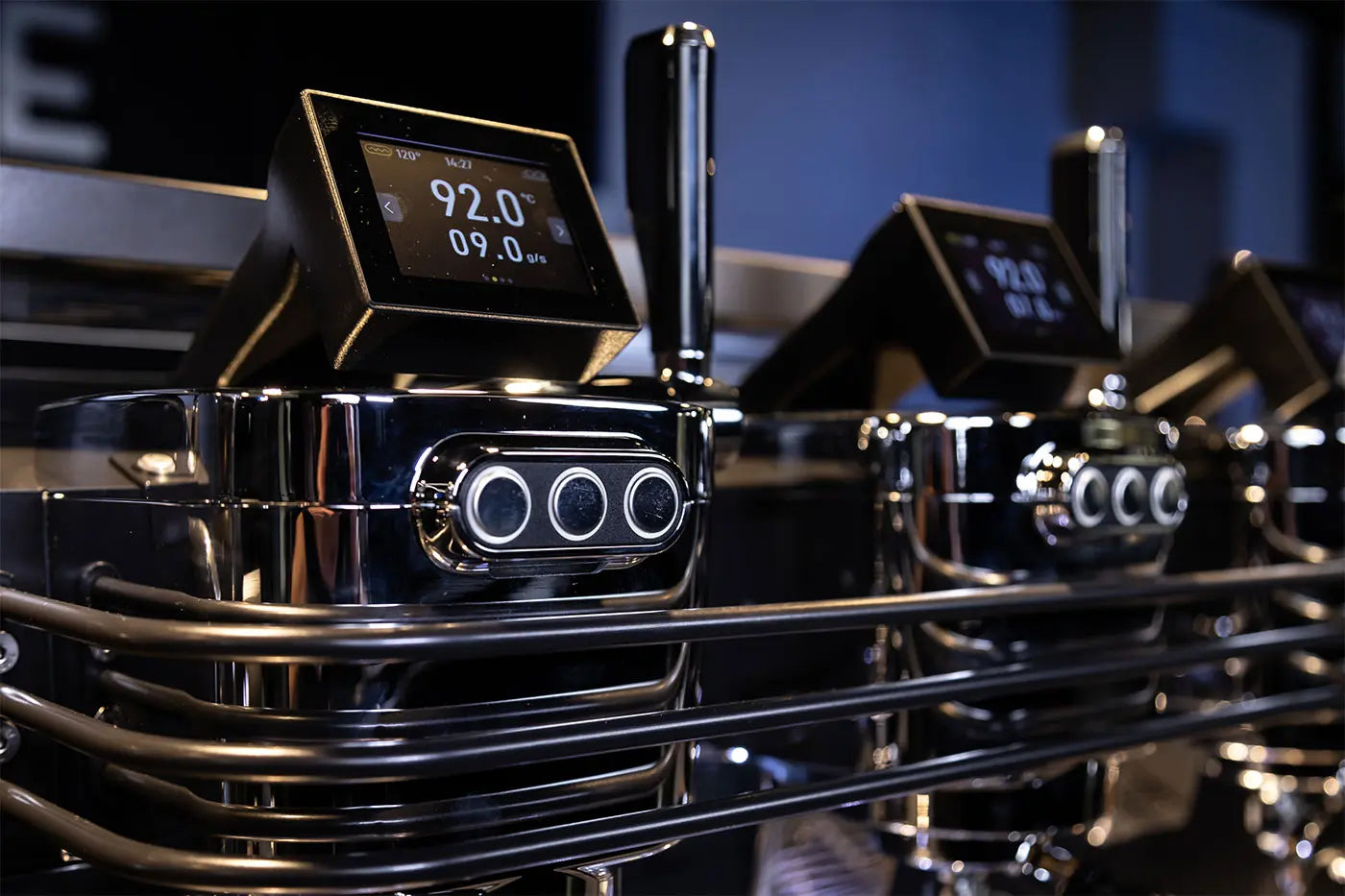
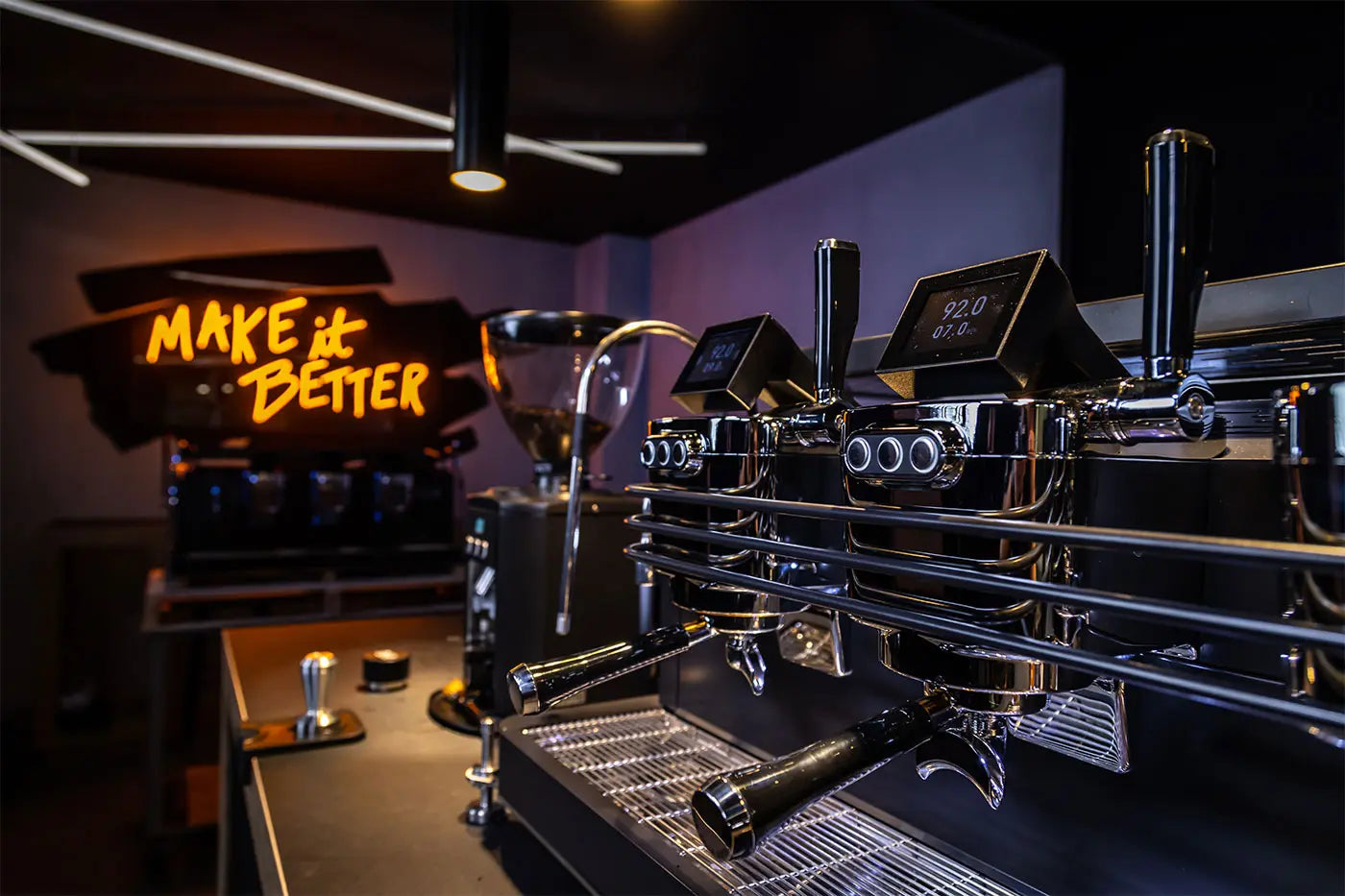
The Espressa ES.One, for example, is a 1-group commercial machine built for sustained daily output at the mid-commercial tier — available through Coffee.Plus with installation, calibration, and pan-India service support. At 50 cups per day over a 5-year working lifespan (a conservative estimate for a well-maintained machine on an AMC), its daily depreciation divided by volume produces a per-cup equipment contribution that is materially lower than a machine half its price running at the same volume but requiring more frequent service.
The Espressa Falcon — a 2-group machine with a thermomatic heating system and BLDC pump designed for sustained peak output — follows the same logic at higher volume. A café running 100+ cups per day on the Falcon, supplied with installation and training in India and backed by an AMC, amortises the machine cost across enough volume that the per-cup equipment contribution becomes a very manageable number. The machine that appears expensive on the invoice often has the lowest per-cup cost in a high-volume operation.
This distinction matters for pricing because the equipment tier you choose sets the output ceiling your pricing model can scale into.
Building Your Actual Cost Per Cup: The Complete Framework
Step 1: Calculate Daily Equipment Depreciation
Take the combined purchase cost of your machine and grinder. Divide it by the expected operational lifespan in days.
Example:
-
Espressa ES.One + Ceado E7 grinder combined: approximately ₹5,50,000
-
Expected lifespan: 6 years = 2,190 operational days
-
Daily equipment depreciation: ₹5,50,000 ÷ 2,190 = approximately ₹251 per day
-
At 60 cups per day: ₹251 ÷ 60 = ₹4.18 per cup in equipment depreciation
The Ceado E7, with its zero-retention design and Steady Lock Grinder system, is used here deliberately — a grinder with poor retention and uneven particle distribution causes more dial-in waste per session, which increases the coffee cost input. The grinder quality directly affects more than one cost category simultaneously.
Step 2: Account for Power Consumption
A 2-group commercial espresso machine typically draws between 3,000–4,500W during active operation and a lower standby wattage during idle periods. A grinder adds 250–400W per use cycle. A water filtration or RO system adds further load.
Conservative daily estimate for a 1-group setup (8-hour operating day):
-
Machine active draw: approximately 10–14 units per day
-
Grinder: approximately 0.5–1 unit per day
-
At ₹8–₹10 per unit across commercial tariffs in most Indian cities: ₹85–₹130 per day in power
-
At 60 cups per day: approximately ₹1.50–₹2.20 per cup
This number is small per cup but significant as a monthly fixed cost — roughly ₹2,700–₹3,900 monthly in power for the espresso station alone, before refrigeration or lighting.
Step 3: Water Treatment and Cleaning Costs
This is the category most Indian café owners underestimate most significantly, because hard water accelerates every consumable's replacement cycle.
-
Filtration cartridge: ₹2,500–₹5,000 per replacement, typically every 3–6 months depending on TDS levels
-
Puly Caff backflush powder: approximately ₹800–₹1,200 per month at commercial volume
-
Group head cleaning tablets: approximately ₹300–₹600 monthly
-
Steam wand and group gasket replacements: ₹1,500–₹3,000 annually
Monthly cleaning and water treatment total: ₹5,000–₹9,000 for a 1-group commercial bar in Indian hard water conditions.
At 60 cups per day across 26 operating days: approximately ₹3.50–₹5.80 per cup.
Step 4: Coffee Waste — The Hidden Cost No One Tracks
A well-run café wastes 7–12% of its ground coffee daily through dial-in pulls, incorrect doses, training shots, and workflow corrections. In a bar running 18g doses at 100 cups per day, that waste represents 12–20 extra doses of ground coffee per day — or roughly 220–360g daily in unusable product.
At specialty coffee wholesale pricing of ₹1,200–₹2,000 per kg, daily waste cost runs ₹260–₹720. Per cup, this adds ₹2.60–₹7.20 to your true cost floor — an amount that completely disappears from most bean-cost calculations.
Grinders with tight dose control — like the Ceado E7 with programmable weight-based dosing — reduce waste significantly compared to timed-dose grinders. Cafés that switch from timer-based to weight-based dosing typically see waste reduction of 30–50% within two weeks. That saving compounds daily across the full year.
Step 5: Maintenance and AMC Contribution
An AMC covering preventive maintenance, technician callouts, and genuine spare parts for a commercial machine and grinder in India typically costs ₹15,000–₹30,000 annually depending on the equipment tier. Per operating day at 300 days, that is ₹50–₹100 per day. At 60 cups per day: ₹0.85–₹1.65 per cup.
This is the smallest per-cup cost in the framework — and the highest-leverage one. A single unplanned repair that costs ₹15,000–₹25,000 and closes the bar for two days erases several months of AMC contributions in a single event.
Your True Cost Floor: The Complete Picture
A café pricing a standard espresso-based drink at ₹150 on this cost structure has a gross contribution of approximately ₹107 per drink — before labour, rent, packaging, and overheads. A café pricing at ₹120 because "the café next door charges ₹120" has a contribution of ₹77 — a difference that accumulates to ₹180,000 annually at 60 cups per day, 300 days.
That gap is entirely the result of pricing by observation rather than calculation.
What Happens to Your Cost Floor When Equipment Quality Changes
This is the insight most pricing guides miss entirely. Equipment quality is not a separate investment decision from pricing strategy — it is the same decision.
A café running a lower-spec machine with higher maintenance frequency, worse dose control, and more coffee waste has a higher cost floor per cup than a café running a better-specified machine with tighter operational control — even if the better machine cost significantly more on day one.
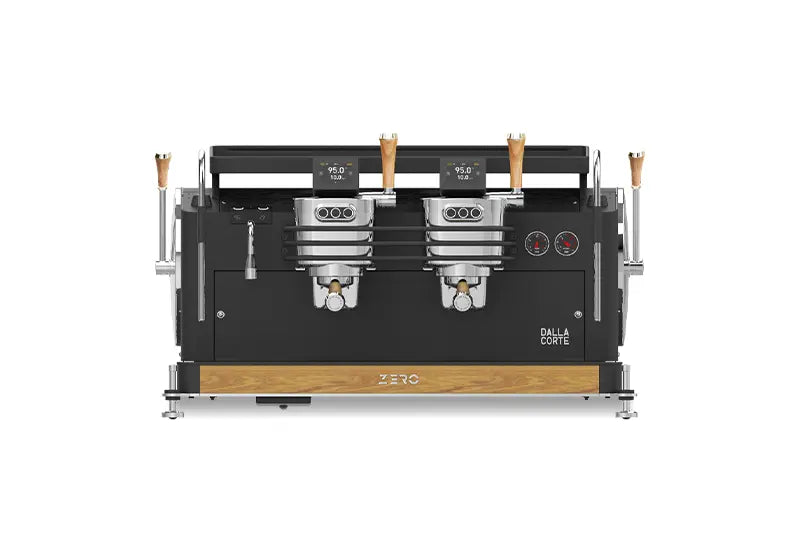
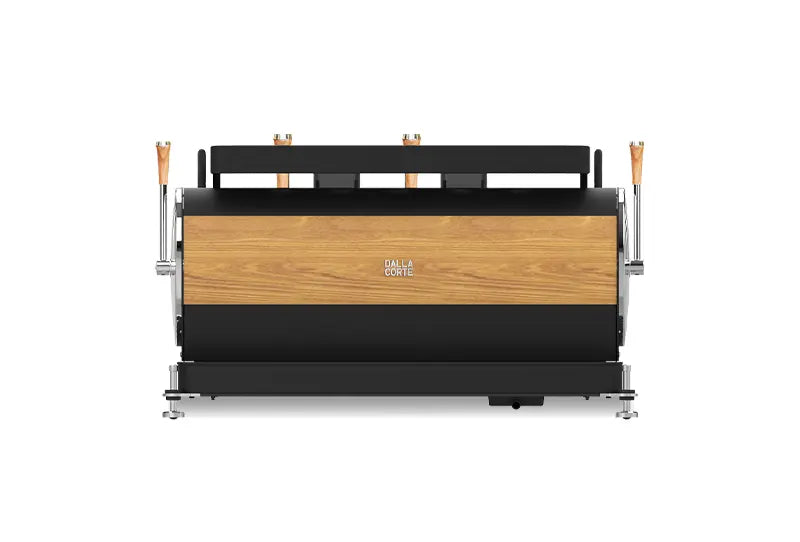
The dual boiler espresso machine for a café in India — whether the Espressa Falcon or a machine from the Dalla Corte commercial range, both available through Coffee.Plus with pan-India service — has a lower per-cup operating cost at volume than a single boiler machine running the same output because thermal recovery is faster, waste from temperature inconsistency is lower, and service intervals are longer.
The machine that looks expensive in the purchase column is often the cheapest machine in the cost-per-cup column.
Mistakes to Avoid: The Two Pricing Decisions That Erode Margins Silently
Mistake 1: Recalculating menu pricing annually instead of quarterly. Bean prices in India shift with harvest cycles, monsoon quality, and import costs. A specialty blend priced into your menu in October may cost 12–18% more by March. If your menu price does not move with input costs, your margin erodes quietly every quarter.
Mistake 2: Pricing all espresso-based drinks at the same contribution margin. A double espresso and a large iced latte use the same machine and grinder but differ significantly in bean dose, milk volume, ice, cups, and staff time. Flat percentage markup across the entire menu means some drinks are subsidising others. A cost-per-drink breakdown — rather than a cost-per-cup average — reveals where the real margin is built and where it is being quietly lost.
At Coffee.Plus, we approach every equipment consultation with the operating economics of the business in mind — not just the spec of the machine. Whether you are evaluating an espresso machine price for a café in India for the first time, upgrading from a single to a dual boiler setup, or building a full commercial equipment stack with installation and training, we help you understand the true cost structure before you commit. Every Espressa commercial machine, Ceado grinder, or Eureka grinder we supply comes with professional installation, calibration to your specific water and roast conditions, barista training for your team, and pan-India technician support backed by genuine spare parts. If you want to understand exactly how a machine will perform in your specific volume and menu environment before buying, our Experience Centre in Delhi at 14 Regency, Asola is the right place to start that conversation — with the actual equipment running in front of you, not a product sheet.