


![[PRE ORDER] MHW-3BOMBER Cube Coffee Scale 3.0 Mini Pro](http://coffeeplus.in/cdn/shop/files/MHW-3BOMBERCubeCoffeeScale2.0MiniCoffeePlus5.webp?v=1768422727&width=500)
![[PRE ORDER] TIMEMORE Black Mirror Basic 3.0](http://coffeeplus.in/cdn/shop/files/TIMEMOREBlackMirrorBasic3.0_1.webp?v=1769444750&width=500)


![[PRE ORDER] MHW-3BOMBER Cube Coffee Scale 3.0 Pro](http://coffeeplus.in/cdn/shop/files/MHW-3BOMBERCubeCoffeeScale3.0Pro2.webp?v=1777319705&width=500)


![[PRE ORDER] Espressa Orbit 64 PRO | MOKKOM Grinder](http://coffeeplus.in/cdn/shop/files/Espressa_Orbit_Pro_2.webp?v=1779828190&width=500)


![[PRE ORDER] MHW-3BOMBER X-Press58](http://coffeeplus.in/cdn/shop/files/X-press58.webp?v=1763141665&width=500)


![[PRE ORDER] MHW-3BOMBER Cyclone Needle Distribution Tool 58mm](http://coffeeplus.in/cdn/shop/files/CycloneNeedleDistributor.webp?v=1762881161&width=500)




Espresso Machine and Grinder Planning for 80–200 Cups per Day in India (2026)
Planning for 80–200 cups a day is the volume range where most Indian café owners either overspend on hardware they don’t need or underspec equipment that collapses during a busy weekend. Getting the right commercial espresso machine for small cafe in India paired with a grinder that can actually keep pace is the single biggest factor in whether that volume feels manageable or chaotic.
A café owner in Lucknow once shared a familiar story. His café was doing about 90 cups a day on weekdays, comfortably served by a single-group setup. Then a nearby office complex opened, weekend footfall tripled, and by 11am on Saturdays his queue was out the door. He assumed he needed a bigger machine. What he actually needed was a better-matched grinder and a slightly upgraded machine — not an oversized system that would sit half-idle most of the week. That is the exact planning gap this guide is meant to close.
Why 80 to 200 Cups a Day Is Its Own Planning Zone
This volume range sits between “simple kiosk” and “full commercial chain,” which is exactly why it causes the most confusion. Below 80 cups, almost any decent 1-group setup works. Above 200 cups, the answer is almost always a 2-group or multi-boiler system with a high-output grinder. But in the middle, the right choice depends heavily on peak-hour behaviour, not just daily averages.
If your busiest hour represents 25–30% of your daily volume — which is common in Indian cafés during breakfast or evening rushes — then your equipment needs to be sized for that hour, not the full day. This is where many owners either overbuy a machine that is too large for daily use or underbuy a grinder that cannot sustain rush-hour grinding.
Choosing the Right Machine Group Count
For 80–120 cups a day, most café owners find that a well-specified 1-group commercial machine works if the rush is spread out. But once you regularly cross 120–150 cups with concentrated peaks, a 2-group machine becomes the safer investment because it protects speed and consistency during simultaneous orders.
This is why we typically separate this volume band into two clear categories: entry-level setups for cafés closer to the 80–130 cup range, and mid-to-high setups for cafés pushing 150–200+ cups with tighter service windows.
Entry-Level Machines for 80–130 Cups a Day
For café owners in this range who want dependable output without overcomplicating the bar, the Espressa Atlantic 1-Group, available with Coffee.Plus pan-India technician support, is a strong starting point. Its 5-litre copper boiler with heat exchanger technology gives steady thermal performance and one-touch volumetric buttons that help new staff stay consistent during their first weeks on the floor.
The Casadio Nettuno A/1, also available with Coffee.Plus pan-India technician support, is another dependable entry-commercial option, offering a compact 1-group layout that suits cafés focused on steady, moderate-volume service rather than aggressive peak handling.
For cafés expecting to grow past 100 cups fairly quickly, the Espressa ES One 2-Group, available with Coffee.Plus pan-India technician support, offers a lower-cost way to step into 2-group operation. It bridges the affordability gap while still allowing two baristas to work in parallel once volume increases.
Mid-to-High Machines for 150–200+ Cups a Day
Once your café is consistently running 150+ cups a day or your weekends spike well beyond your weekday average, the equipment conversation shifts toward stronger thermal architecture. The Espressa Atlantic 2-Group, available with Coffee.Plus pan-India technician support, is built for this stage. Its 11-litre copper boiler acts as a thermal buffer, helping maintain stable brew temperature across both groups even during back-to-back extraction — a meaningful upgrade path for cafés that started on the Atlantic 1-Group and outgrew it.
For cafés wanting more advanced thermal control, the Espressa Falcon, available with Coffee.Plus pan-India technician support, offers programmable recipes and independent group temperature management that supports a more specialty-oriented, high-volume menu. And for operations with heavier simultaneous demand — hotel-style café counters, high-footfall retail cafés, or multi-barista bars — the Izzenso commercial range, available with Coffee.Plus pan-India technician support, brings stronger multi-boiler architecture suited to sustained, high-pressure service.
This tier is also where buyers typically start asking about the best espresso machine for 50 seat cafe India, because seating capacity and drink volume tend to rise together at this stage.
Matching the Grinder to the Machine and Volume
The grinder is where many café owners underspend relative to their machine, and it becomes the hidden bottleneck once volume rises. A grinder that performs fine at 60 cups a day may struggle at 150, especially during a concentrated rush.
Entry-Level Grinders for 80–130 Cups a Day
For cafés using the Atlantic 1-Group, Nettuno A/1, or ES One 2-Group, a well-matched entry-commercial grinder keeps the workflow smooth without overspending. The Espressa Firenze, available with Coffee.Plus pan-India technician support, is a practical option for cafés that want dependable grind consistency without complex automation. The Espressa Ion 64, also available with Coffee.Plus pan-India technician support, is another suitable choice thanks to its 64mm flat burrs and stepless adjustment, which help maintain particle consistency through a moderate service day.
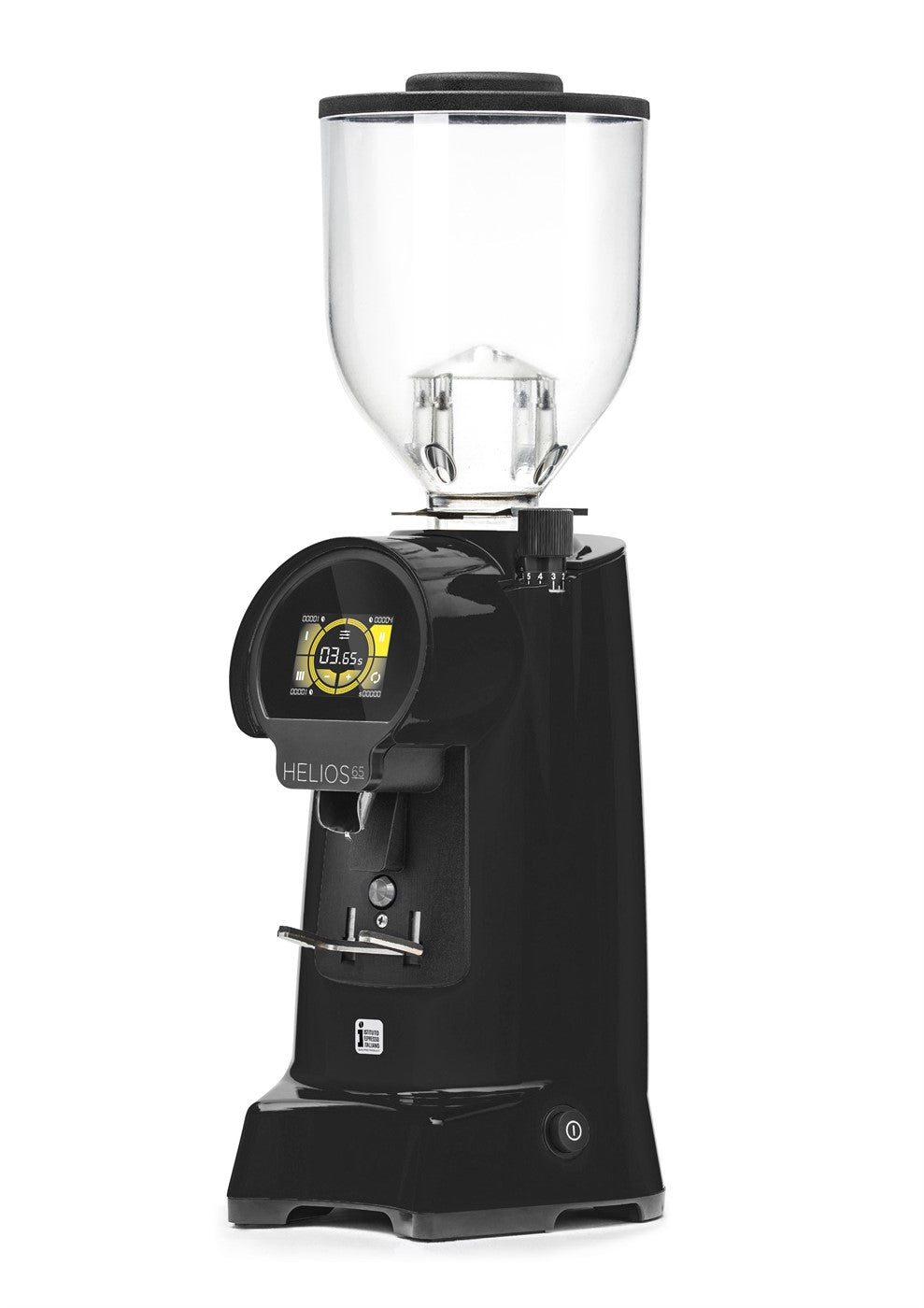
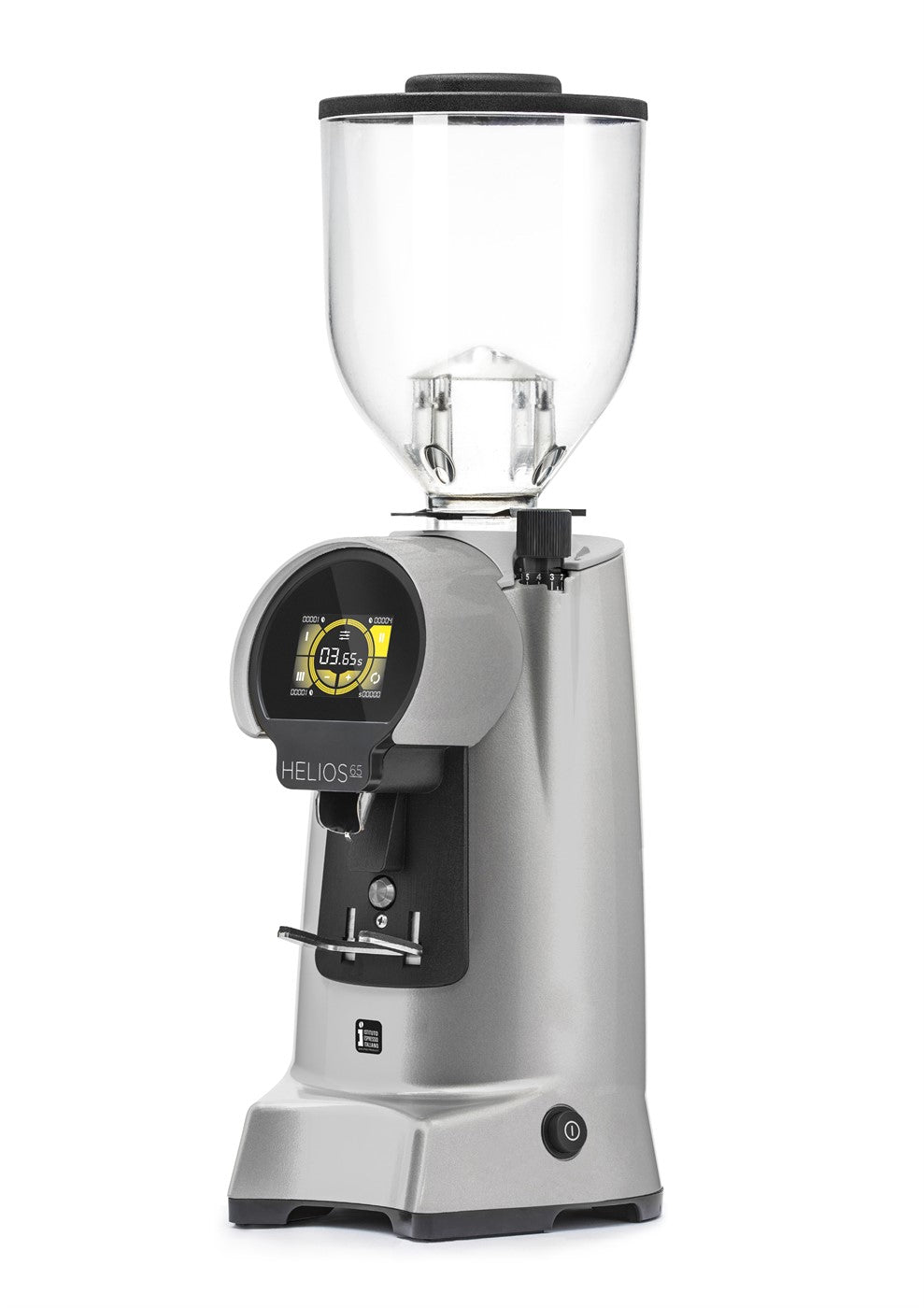
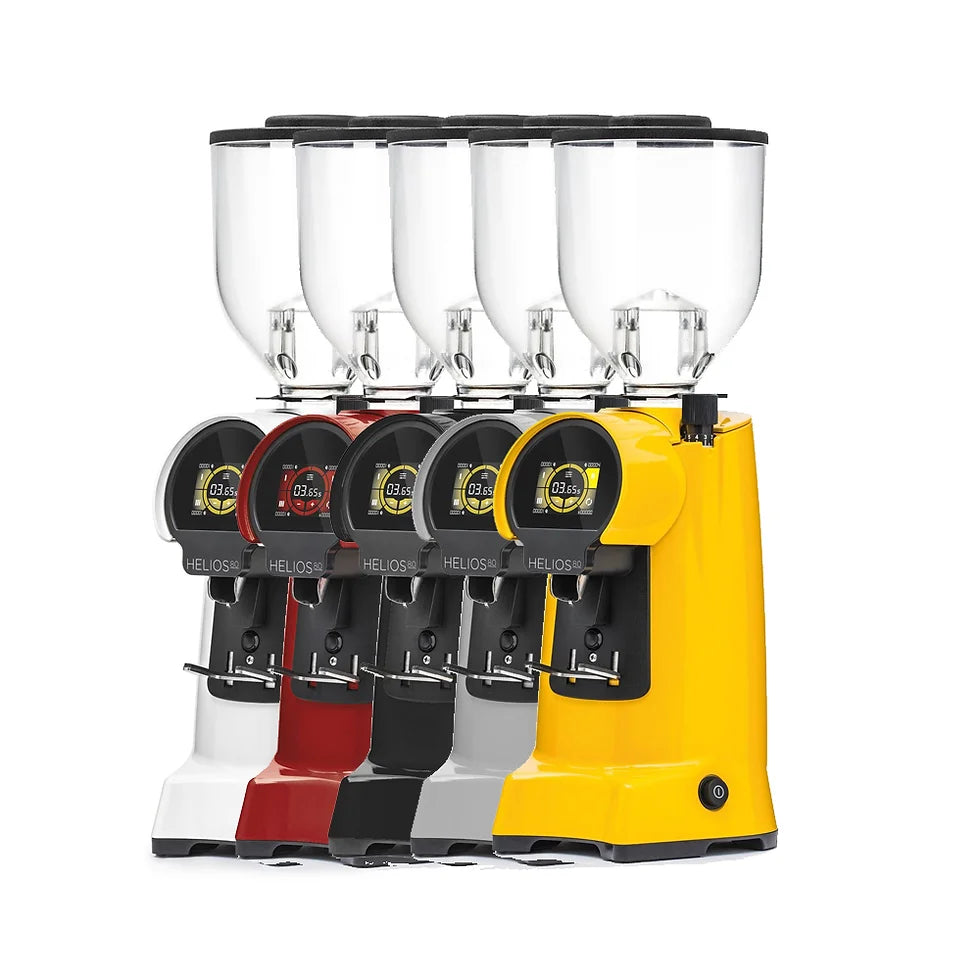
For café owners who want a slightly more refined grind profile at this volume, the Eureka Zenith, available with Coffee.Plus pan-India technician support, and the Eureka Helios, also available with Coffee.Plus pan-India technician support, offer stronger thermal stability and cleaner dosing — useful for cafés serving a mix of milk drinks and the occasional specialty pour.
Mid-to-High Grinders for 150–200+ Cups a Day
Once volume climbs past 150 cups a day, the grinder needs to sustain longer grinding cycles without heat drift or slowdown. The Eureka W65, available with Coffee.Plus pan-India technician support, is built for this kind of sustained commercial pace, offering stronger motor performance suited to back-to-back grinding during peak hours.
For cafés pairing with the Falcon or Izzenso machines, Ceado’s commercial range becomes especially relevant. The Ceado E7, available with Coffee.Plus pan-India technician support, offers reliable mid-volume performance with Steady Lock consistency, while the Ceado REV Steel, also available with Coffee.Plus pan-India technician support, is designed for higher-output environments where grind stability under pressure is essential.
Machine and Grinder Pairing by Volume Band
Planning for Peak Hours, Not Just Daily Totals
The most common overbuy-or-underbuy mistake comes from planning around daily averages instead of peak-hour demand. A café doing 120 cups a day with a smooth, spread-out flow can often run comfortably on a well-matched 1-group setup. A café doing the same 120 cups but concentrated into a 90-minute breakfast rush needs a 2-group machine and a stronger grinder, even though the daily number looks identical.
This is also why a dual boiler espresso machine for cafe India becomes relevant earlier than expected for some operators — not because their daily total is huge, but because their peak window is short and intense. Planning around your busiest 60–90 minutes, rather than your daily total, is the single most reliable way to size equipment correctly.
Mistakes to Avoid
Mistake: Buying a bigger machine before checking if the grinder can keep up.
Many café owners assume that upgrading the machine automatically solves speed problems. In reality, if the grinder cannot sustain the added throughput, the new machine will simply expose the grinder’s limits faster. This leads to inconsistent shots, heat-related grind drift, and frustrated baristas during the exact moments the upgrade was meant to fix.
The safer approach is to treat the machine and grinder as one system. If you are planning for growth toward 150–200 cups a day, choose a grinder with enough thermal headroom to support that volume from day one, even if your current numbers are lower. This avoids a second disruptive upgrade within a year.
At Coffee.Plus, we help café owners plan machine and grinder combinations based on real volume patterns, not just wishlist specs. Whether you are starting with an Espressa Atlantic 1-Group and Firenze grinder or scaling into a Falcon and Ceado REV Steel setup, every recommendation comes with espresso machine installation and training in India, AMC and preventive maintenance planning, and genuine spare parts support through our pan-India service network. If you want to see how these machine-grinder combinations actually perform under real rush conditions, our Experience Centre in Delhi at 14 Regency, Asola is the best place to test them before you commit.