








How to Dial In a New Espresso Machine After Installation in India: Espressa, Dalla Corte & Victoria Arduino Setup Guide (2026)
Quick Take: A new commercial espresso machine is not ready to serve from the moment it is plugged in. Dialling in — the process of calibrating grind, dose, and yield to your specific beans and water — is what separates a machine performing at 60% of its capability from one running at full potential. This process takes focused time. It is not optional.
A Hyderabad café opened with a well-specified commercial machine, ran its first week of service, and assumed the shots were acceptable because no customer complained. Two months later, a guest roaster visiting the bar pulled a shot, tasted it, and pointed out that the machine had never been properly dialled in — the dose was 1.5g over target, the yield ratio was incorrect, and the extraction time was running four seconds long. Every shot for two months had been structurally flawed. The café had been charging for specialty coffee and serving a technically compromised product. Dialling in a new espresso machine after installation is not a barista-level nicety — it is a commercial quality standard. This guide walks you through exactly how to do it.
Why a New Machine Is Never Ready Out of the Box
Commercial espresso machines are calibrated at the factory for standard settings — not for your specific beans, your water, your grind, or your menu. Every variable in your café is different from the next one. The machine has no way of knowing any of them.
Beyond calibration, a new machine needs to be flushed through several cycles before the first extraction. Internal manufacturing residue, storage dust in the brew circuit, and protective compounds in new gaskets all need to be cleared. Running the machine through a full flush cycle — several group head purges and a complete boiler heat-and-release — before the first real shot is standard practice. Skipping this step introduces off-flavours into the first days of service that owners often misattribute to the beans.
The Four Variables You Are Dialling In
Understanding what you are actually adjusting prevents the common mistake of changing too many things at once:
-
Grind size — controls how quickly water passes through the puck; finer slows extraction, coarser speeds it up
-
Dose weight — the grams of ground coffee in the portafilter basket; determines puck density and extraction resistance
-
Yield — the grams of liquid espresso in the cup; together with dose, this defines your brew ratio
-
Extraction time — the number of seconds from first drop to yield target; the output of getting the above three correct
These four variables interact with each other. Change one and the others shift. This is why dialling in is a sequential process, not a simultaneous one.
Step-by-Step: Dialling In Your Commercial Machine

Step 1: Establish Your Baseline Parameters
Before pulling a single shot for service, define your target numbers:
-
Dose: 18–20g for a standard double (confirm with your basket spec)
-
Yield: 36–40g in the cup (a 1:2 ratio is the standard starting point for most espresso blends)
-
Time: 25–30 seconds from first drop
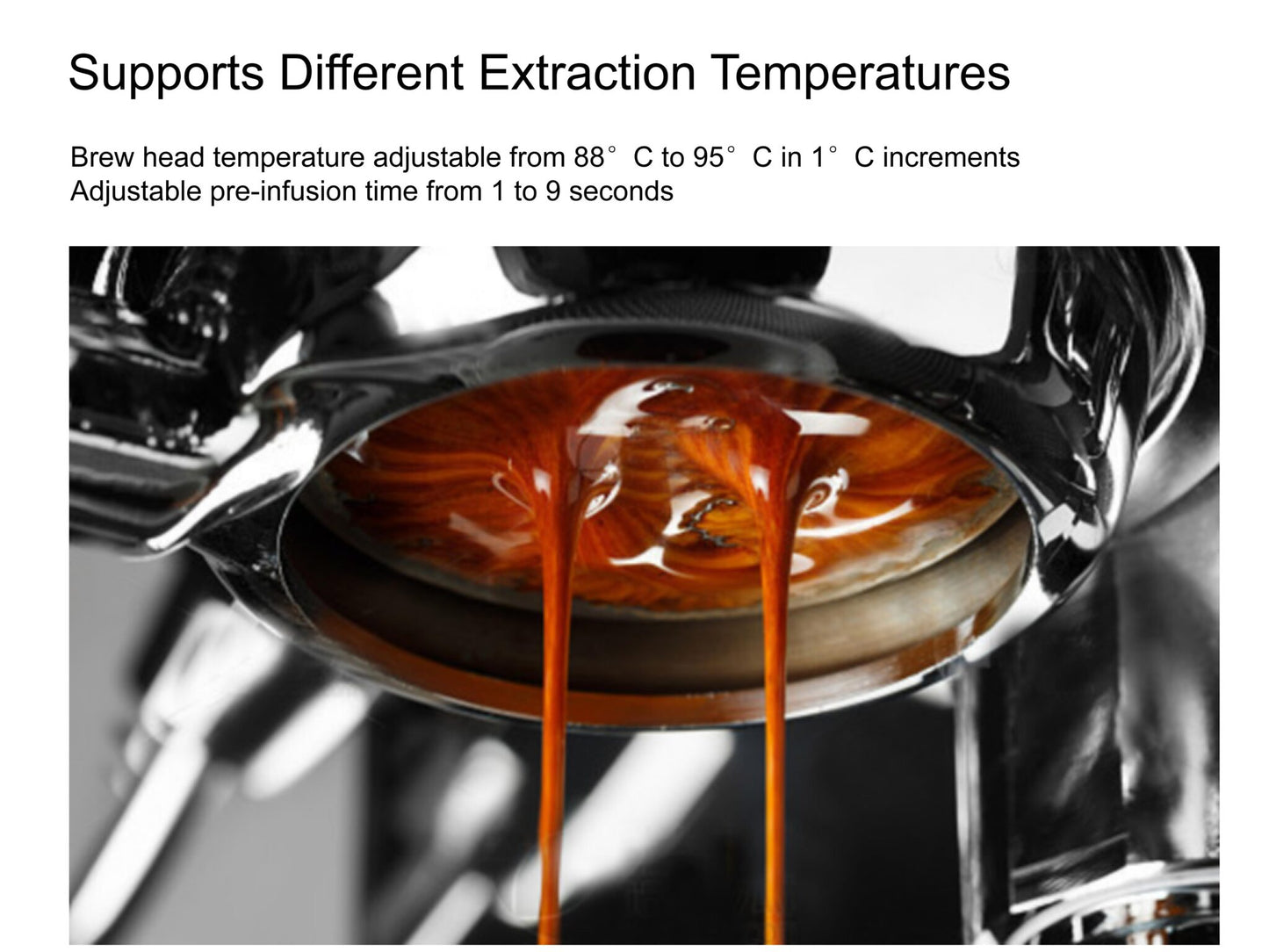
On machines like the Espressa Alpha H6, these parameters can be stored as pre-infusion recipes on the 7-inch touchscreen — meaning once you dial in, every barista on every shift reproduces the same extraction without re-calibrating from scratch. On the Dalla Corte Studio and Dalla Corte Mina, Digital Flow Regulation (DFR) allows you to programme and store flow curves that define exactly how water enters the puck — a level of precision that makes the initial dial-in process genuinely replicable across groups.
Step 2: Set Grind Size First
Start with grind. Pull a shot without adjusting anything else. If extraction runs under 20 seconds, the grind is too coarse — tighten it. If it runs over 35 seconds, the grind is too fine — open it up. Make one small adjustment at a time. Run two shots between each grind change to allow the grinder burrs to stabilise at the new setting.
On the Ceado E7 or REV Steel — with the Steady Lock Grinder system — grind adjustments hold precisely without drift between shots, which makes this step significantly faster than on grinders with looser adjustment mechanisms.
Step 3: Lock in Dose Weight
Once your time is in range, verify dose weight with a scale on every shot. A 0.5g variance in dose creates a measurable difference in extraction. This is the step most cafés skip because it feels slow during busy service — but it is how you confirm your baseline before trusting the workflow to run without a scale every time.
Step 4: Taste and Adjust
Numbers confirm the framework. Taste confirms the result. Pull the shot at your target parameters and assess:
-
Too sour or sharp: Under-extracted — grind finer, or increase dose slightly
-
Too bitter or hollow: Over-extracted — grind coarser, or reduce yield slightly
-
Muted, lacking clarity: Dose may be too low; check basket fit
Victoria Arduino machines — including the Black Eagle with its gravimetric dosing and T3 multi-boiler system — produce shots where temperature and dose accuracy are tightly controlled by the machine itself. On these premium platforms, taste issues during dial-in are almost always grind-related rather than machine-related, which narrows the troubleshooting window considerably.
Machine-Specific Dial-In Notes
The Mistake That Costs the Most Time
Changing grind, dose, and yield simultaneously. When three variables change at once, you cannot identify which one fixed the problem — or caused a new one. Dial in sequentially, confirm each variable before moving to the next, and document every adjustment. The notes from your first dial-in session become the baseline reference every time beans or roast profiles change.
At Coffee.Plus, every commercial machine installation includes a professional dial-in session before the first service day. Whether you are setting up an Espressa Alpha H6, a Dalla Corte, a Victoria Arduino, or an Izensso Raptor, our technicians calibrate grind, dose, yield, and extraction time to your specific beans and water profile before handing over the bar. Installation guidance, recipe programming, and staff orientation are standard parts of every setup. Post-installation, our pan-India service network and AMC programs ensure that when beans change, roast profiles rotate, or seasonal humidity shifts your extraction, the support to re-calibrate is always available — not just on day one.