





Super-Automatic vs Traditional Espresso Machine for Hotels in India: Faema X30 vs Barista-Led Systems (2026 Guide)
Quick Take: For Indian hotels and corporate offices, the choice between a super-automatic and a traditional espresso machine comes down to one question — is your coffee station a high-volume service point or a revenue-generating experience? Super-automatics win on uptime and consistency. Traditional machines win on theatre and craft. Most serious properties need a clear strategy for both.
Your hotel's breakfast buffet opens at 7 AM. By 8:15, sixty guests are moving through the line. The designated barista called in sick. The backup staff member has never touched an espresso machine. Within twenty minutes, there is a queue, cold milk, and guests walking to the tea counter instead.
This is not an unusual scenario across Indian hospitality. Staff turnover in F&B is among the highest of any sector in the country. The question of super automatic vs traditional espresso machine for hotel India is not purely technical — it is a staffing, uptime, and revenue decision. This guide gives you a clear framework based on your venue type, daily volume, and guest expectations — so you make the right call before you spend.
The High-Stakes Choice: Hospitality Theatre or Operational Efficiency?
Indian hotels and corporates face two pressures at the same time. Global travelers and corporate employees now expect specialty-grade coffee — not the diluted filter brew that was standard a decade ago. At the same time, F&B staff turnover makes barista-dependent workflows a genuine liability.
Traditional espresso machines require a skilled hand. Extraction pressure, grind consistency, tamping technique, and milk emulsification all vary between operators. One shift change can mean a measurable, guest-noticeable drop in cup quality.
Super-automatic machines remove that variable entirely. The machine grinds, doses, brews, and in many cases froths milk — without barista intervention.
The right answer is not one or the other. It is knowing which environment demands which solution. Uptime is revenue. A machine that fails during a 200-cover breakfast service costs far more than any equipment line item.
Super-Automatic Bean-to-Cup Systems: How They Actually Work
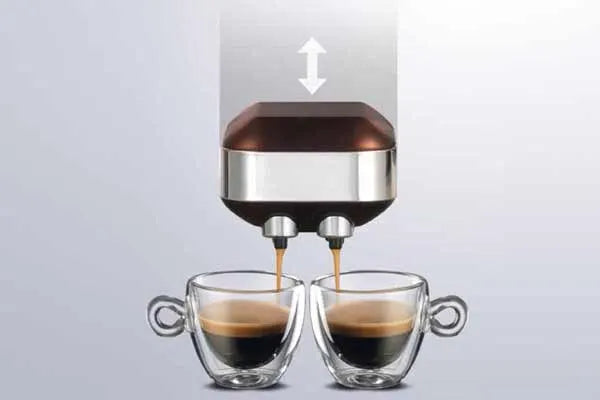
A super-automatic machine integrates the grinder, brewing unit, and milk system into a single platform. Staff select a drink. The machine handles everything from grinding fresh beans to delivering the finished cup.
The Faema X30 is the benchmark for this category in India's hotel and office segment. Here is what matters commercially:
-
Smartboiler technology maintains precise brew and steam temperatures simultaneously, eliminating the recovery lag that slows traditional machines during peak demand.
-
AutoSteam Milk4 automatically emulsifies milk to the correct microfoam texture for lattes and cappuccinos — no barista technique required.
-
Perfect Grinding System (PGS) adjusts grind on the fly based on dose weight, ensuring the 200th cup performs identically to the first.
-
10.4-inch touchscreen with Wi-Fi telemetry enables remote monitoring of cup counts, usage patterns, and maintenance alerts — critical for multi-property hotel groups.
-
Automated cleaning cycles reduce hygiene risk and keep the machine ready for the next service window without manual intervention.
The consistency of a Faema super automatic coffee machine is its core value proposition. For a hotel buffet or corporate pantry, that repeatability is the product.
Traditional Barista-Led Machines: Where Craft Meets Commerce
A traditional semi-automatic espresso machine provides the platform. The barista provides the result.
In the right environment, that is not a weakness — it is exactly what the guest is paying for. A specialty lobby bar or premium hotel café gains real commercial value from the visual ritual: portafilter locked in, grinder running, steam wand at work. Guests read it as craft. It justifies a higher price per cup and elevates the venue's overall positioning.
For this environment, a machine like the Lelit Bianca — with its dual boiler, E61 group head, flow-control paddle, and Lelit Control Centre (LCC) — gives a trained barista precise control over temperature and pressure profiling. The Espressa Alpha H6, with its 7-inch touchscreen, thermomatic heating system, BLDC pump, and multi-stage pre-infusion recipe storage, takes that a step further — allowing baristas to programme extraction profiles suited to specific single-origin or seasonal roasts.
The hidden cost is real, however. A trained barista in Delhi or Bengaluru commands ₹25,000–₹35,000 per month. Factor in two shifts, training cycles every time a barista leaves, and wastage during skill transitions — and the ongoing operational cost becomes significant. Traditional machines require continuous investment in human capability.
The Real Cost Comparison Over 3 Years
Labor and Training
A super-automatic can be operated by general pantry or floor staff with one hour of basic orientation. A traditional machine requires at minimum two to three months of barista training before cup quality is reliable.
Over a three-year period, the staffing cost differential between a trained barista-led station and a super-auto-operated one can exceed ₹15–20 lakh — before accounting for replacement training when staff leave.
Wastage and Portion Control
Super-automatic machines with integrated weight-based dosing — as seen in the Faema X30's PGS — deliver a precise dose every single time. There is no yield loss from a poor tamp, no discarded shot during a busy rush, and no guesswork.
Traditional machines in the hands of inconsistent staff can waste 3–5 grams of coffee per shot. Across 200 cups a day, that is meaningful raw material loss every month.
When evaluating a commercial coffee machine with AMC in India, factor the service contract cost alongside this waste calculation. The full picture changes the decision significantly.
Super Automatic vs Traditional Espresso Machine for Hotel India: The Right Fit by Venue Type
The Hotel Breakfast Buffet and Executive Lounge
This is the environment where the best super automatic coffee machine for hotel buffet India query dominates — and for clear operational reasons. Self-service speed and zero skill dependency are the only practical requirements at 8 AM with 80 covers moving.
The Faema X30 handles this natively. AutoSteam Milk4 means any floor staff member can deliver a consistent latte without training. Wi-Fi telemetry alerts F&B management before the machine needs a service visit, eliminating surprise downtime during peak periods.
The Corporate Pantry 2.0
High-tech offices in Bengaluru, Gurugram, and Mumbai have raised their expectations considerably. The espresso machine for corporate office pantry in India is no longer a coin-operated vending unit — it is part of the workplace identity.
For mid-size offices with 100–300 employees, a full-scale super-automatic may be oversized. The Meraki — an all-in-one prosumer machine with integrated grinder, dual boilers, CoffeeSense technology, dual brew-by-weight scales, and NFC recipe storage — occupies a compelling middle ground. It delivers near-super-auto convenience with specialty-grade output, at a footprint suited to a premium pantry setup.
For larger campuses, the Faema X30 is the correct call. The office coffee machine super automatic India segment is growing fast, and the X30 is built for exactly this scale.
The Specialty Lobby Bar
Guests paying ₹12,000 a night expect to see a portafilter. A super-automatic behind a premium lobby bar counter signals cost-cutting — not hospitality.
Here, a trained barista with a Lelit Bianca or Espressa Alpha H6 becomes part of the room's identity. The dual boiler, the E61 group, the steam wand, the latte art — these are intentional, value-adding experiences. Invest in the equipment and equally in the person operating it.
Power, Water, and AMC: The Indian Reality Check
Super-automatic machines carry more integrated components — grinder motors, milk system valves, brew unit assemblies — and require a structured AMC to perform reliably over time. Skipping preventive maintenance on a Faema X30 in a hotel environment will lead to brew unit failures within 18 months. This is not speculation; it is the service reality we see consistently.
Traditional machines are mechanically simpler at the core. But they are far more exposed to operator misuse — running the boiler dry, incorrect backflush cycles, and limescale buildup from unfiltered water.
Both machine types require proper water filtration. Indian city water TDS ranges from 200 ppm to over 800 ppm depending on the city and source. At those levels, scale accumulates inside boilers within weeks. An inline filtration system with active TDS monitoring is not an optional upgrade — it is what protects your machine, your AMC warranty, and your cup quality.
Pan-India coffee machine service and access to genuine spare parts should be confirmed before purchase. A machine with no local service network is a liability the moment it needs a technician.
Decision Matrix: Which Machine Type Suits Your Business?
| Factor | Super-Automatic | Traditional / Prosumer |
|---|---|---|
| Skill required | None — general staff can operate | Trained barista essential |
| Speed per cup | 25–35 seconds | 60–90 seconds |
| Milk consistency | Automated emulsification | Barista-dependent |
| Cup quality ceiling | High and repeatable | Very high, but variable by operator |
| Daily volume sweet spot | 100–500+ cups | Up to 150 cups |
| Guest perception | Premium efficiency | Artisan craft and theatre |
| Maintenance complexity | Scheduled, multi-component AMC | Simpler, but misuse-sensitive |
| Best environment | Buffet, office pantry, high volume | Lobby bar, specialty café |
Why a Hybrid Approach Often Wins
In most 4-star and 5-star hotel properties, the answer is not either-or. It is both — deployed with a clear logic.
The hub-and-spoke model: A traditional machine in the lobby bar, operated by a trained barista, anchors the hotel's specialty coffee identity. Super-automatics run independently in the breakfast buffet area, the executive lounge, and the all-day dining pantry.
This gives you the theatre where guests pay for experience, and the operational efficiency where volume and uptime matter more than craft. The two systems serve different moments without competing with each other.
The mistake most F&B directors make is applying a single machine philosophy across all stations. A super-automatic in the lobby bar feels transactional. A semi-auto in an unsupervised buffet is a service failure that will happen — it is just a matter of when.
Match the machine to the moment. Match the system to the team. The rest follows.
At Coffee.Plus, we have helped hotel F&B teams, corporate facilities managers, and hospitality groups across India navigate exactly this decision — not by pushing a single product, but by mapping the right equipment to each station's specific volume, staff structure, and guest expectation. Every machine we supply comes with professional installation, staff orientation, genuine spare parts, and AMC support. Whether you are evaluating the Faema X30 for a large-format hotel property, the Meraki for a premium corporate pantry, or a Lelit Bianca for a specialty lobby counter, our job is to ensure your coffee station performs the way your business needs it to — on day one and three years from now.