






The Espresso Machine Backup Plan Every Indian Café Should Have: A Commercial Equipment Downtime Guide for India (2026)
A single-machine café is one compressor failure away from shutting the bar for the day. Most Indian café owners discover they have no backup plan at the worst possible moment — a Saturday morning, a festival weekend, or mid-service during a full house. This guide walks through exactly what a practical backup strategy looks like for different café sizes, what fails most in Indian operating conditions, and which service agreements actually reduce downtime from days to hours.
A café owner in Jaipur ran a tight, well-reviewed 40-seat specialty bar. Footfall was strong, reviews were consistent, and the machine — a single 2-group commercial espresso machine — had never given trouble in two years. On a Friday evening before a long weekend, the group solenoid failed mid-service. No spare was in stock. The nearest authorised technician was in Delhi. The café closed Saturday and Sunday — the two highest-revenue days of the month. The repair itself took four hours once the technician arrived and the part was sourced. The downtime was not a technical failure. It was a planning failure.
This story repeats itself across Indian cafés every week. The machine is fine. The backup plan does not exist.
Why Downtime Hits Harder in India Than Anywhere Else
Indian café operating conditions create a specific set of stresses that accelerate component wear and raise the probability of unplanned failure.
Voltage instability is the most damaging and least discussed. Fluctuations above and below the rated 220–240V input — common in tier 2 and tier 3 cities and hill stations — put repeated stress on the machine's control board and heating elements. A machine designed for stable European mains voltage is constantly absorbing these micro-fluctuations. Over 18–24 months of daily use, the cumulative damage shows up in the components that manage electrical load.
Hard water scaling is the second major Indian-specific risk. Hard water — prevalent across Delhi, Rajasthan, most of Maharashtra, and large parts of Tamil Nadu — accelerates limescale buildup inside the boiler and heat exchanger at a rate that European calibration cycles do not anticipate. A machine in Mumbai may need descaling twice as frequently as the same model running in Munich. When scaling is left unaddressed, boiler pressure irregularities follow. The extraction becomes inconsistent before the machine fails — which means lost quality compounds the lost uptime problem.
Staff handling and cleaning discipline is the third. High staff turnover in Indian hospitality means the person operating the machine in month six is often not the same person who received the installation training. Improper backflushing — or none at all — accelerates group head gasket wear. Group head gaskets in commercial operations should typically be replaced every 6–12 months. In high-turnover Indian café environments, this interval often shortens.
The Components That Fail Most Often — and What to Keep in Stock
Knowing the failure hierarchy is more useful than a generic "spare parts" recommendation. These are the components that account for the majority of unplanned downtime in Indian commercial espresso machines:
-
Group head gaskets — the rubber seals between the portafilter and the group head. They harden and crack under repeated heat cycling. Cost: negligible. Impact when missing: the portafilter leaks under pressure and shots cannot be pulled
-
Solenoid valves — electromagnetic valves that control water flow between the boiler and the group. They are one of the most common single-point failure components across all commercial machine brands. A failed solenoid means the group produces no water pressure — the bar stops immediately
-
Steam tip O-rings and steam wand seals — small seals that fail under steam pressure, especially when cleaned incorrectly. Easy to replace. Often ignored until the steam wand becomes unusable
-
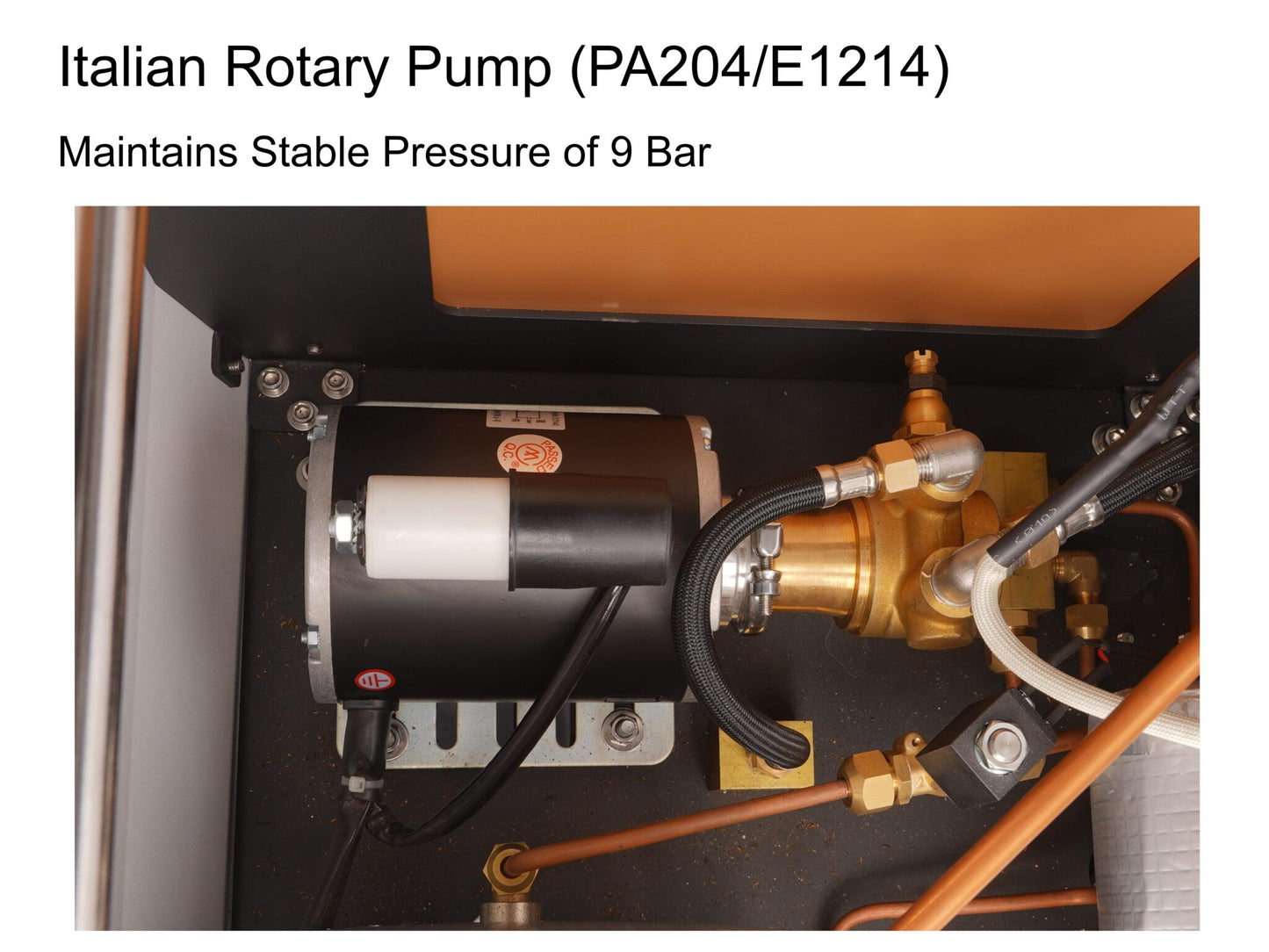
Pump motor — vibration pumps, common in single-group commercial machines, wear faster at high daily volumes. A pump degrading in pressure shows up first as inconsistent extraction, then as complete failure. Machines running rotary pumps — like several models in the commercial Espressa range — are more durable under sustained load, but the pump is still a replaceable component
-
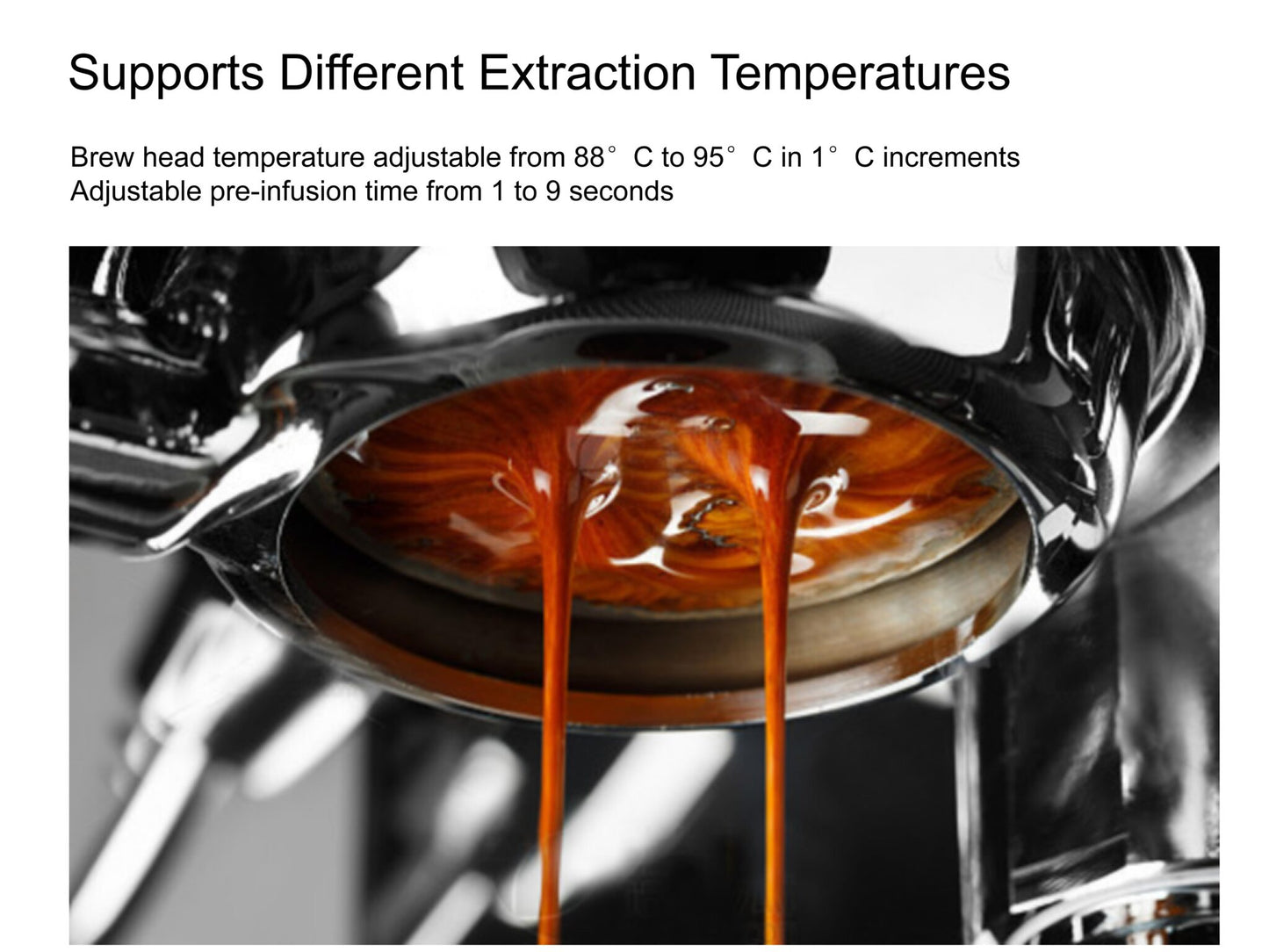
PID temperature controller — the digital board managing brew temperature. Voltage spikes in Indian conditions accelerate PID board failure. Once a PID goes, temperature management fails entirely
Practical guidance: Stock gaskets, solenoid valves for your specific model, steam wand O-rings, and a replacement pump for machines running at 80+ cups per day. These are low-cost, high-impact items. A stock of these components is the difference between a 30-minute fix and a 3-day wait.
Choosing a Commercial Espresso Machine for Small Cafés in India: Build the Backup Into the Setup
The conventional backup discussion focuses on whether to own a second machine. For most cafés, this is the wrong starting point.
For single-group cafés running under 60 cups per day, the most cost-effective backup strategy is not a second espresso machine — it is a quality manual brewing station (V60, Chemex, or Aeropress setup) that can serve a simplified menu if the espresso machine is down. Communicated correctly to customers — "we're doing a pour-over bar today" — it converts a crisis into an experience. Pair this with a second grinder, because a grinder failure is statistically more likely than a machine failure and equally service-stopping.
Speaking of grinders: a second grinder is almost always more critical as a backup investment than a second espresso machine. A commercial espresso machine like the Espressa ES.One — reliable, well-built, and available with Coffee.Plus pan-India service support — will typically outlast three grinder service cycles in a busy café. Grinders take continuous mechanical punishment from the burrs and motor. The Ceado E7, with its Steady Lock Grinder system and 64mm flat burrs, is a strong primary commercial grinder. But running a secondary, lower-volume grinder — even a Eureka Mignon Specialita — as a backup unit for a house blend or manual brewing station is a practical, cost-efficient insurance policy for any single-machine café.
For 2-group cafés running 80–120 cups per day, a second machine becomes a genuine business consideration. This does not necessarily mean a full-spec commercial machine in standby. The Espressa Base — the entry point of the commercial Espressa range — serves efficiently as a backup 1-group machine that keeps the bar running at reduced capacity during a failure on the primary setup. At an espresso machine price for a café in India that positions it significantly below a second 2-group investment, this is a practical and well-proven approach.
For 3-group or dual-machine bars — typically the best espresso machine setups for 50-seat cafés in India running full commercial output — the backup configuration is built into the station architecture. Two machines of the same model (the Espressa Falcon, for instance, which runs a thermomatic heating system and BLDC pump designed for sustained commercial use) means that a failure on one machine reduces capacity rather than ending service entirely.
What to Look for in a Service Agreement Before You Buy
The service agreement is where most Indian café owners lose the most money — not through the price of the agreement, but through the downtime cost of a poorly structured one. Evaluate every service agreement on these specific terms before signing:
An AMC that commits to 48-hour technician response with genuine spare parts and twice-annual preventive maintenance is worth a premium over one that promises response "within 7 working days" in fine print. The difference between those two agreements, annualised against a café doing ₹1.5–2 lakh of weekly revenue, is obvious.
Mistakes to Avoid: The Two Backup Decisions Indian Café Owners Get Wrong
Mistake 1: Buying a backup machine of a different brand than the primary. When a failure happens mid-service, training a barista on an unfamiliar machine interface under pressure is not a functional backup plan. The backup machine — whether a simpler unit or a second primary — should use the same workflow logic, the same portafilter size, and the same operational interface as the machine your team already knows. The Espressa commercial range, for example, shares a consistent workflow architecture across Base, ES.One, and Falcon tiers — which means a team trained on one can operate another without retraining under stress.
Mistake 2: Treating the service agreement as a post-purchase formality. The service agreement should be evaluated before the machine is chosen, not after. The quality of the service network — including pan-India technician reach, genuine spare parts availability, and preventive maintenance scheduling — is as much a part of the machine's total value as its boiler specification.
At Coffee.Plus, every machine consultation includes an honest assessment of the service environment the machine is entering — not just the spec it is being sold on. Whether you are setting up a commercial espresso machine for a small café in India or building a dual-machine configuration for a high-volume bar, we help you plan the backup setup, the service agreement, and the spare parts inventory from day one.
Every Espressa commercial machine we supply comes with professional installation and calibration, barista workflow training, and pan-India technician support backed by genuine spare parts. Preventive maintenance scheduling is available through our AMC programs — structured to protect machine performance through Indian power, water, and operational conditions. If you want to experience the machines and understand the workflow before committing, our Experience Centre in Delhi at 14 Regency, Asola is open for exactly that — bring your team, run your beans through the actual setup, and leave with clarity rather than a brochure.