


![[PRE ORDER] MHW-3BOMBER Cube Coffee Scale 3.0 Mini Pro](http://coffeeplus.in/cdn/shop/files/MHW-3BOMBERCubeCoffeeScale2.0MiniCoffeePlus5.webp?v=1768422727&width=500)
![[PRE ORDER] TIMEMORE Black Mirror Basic 3.0](http://coffeeplus.in/cdn/shop/files/TIMEMOREBlackMirrorBasic3.0_1.webp?v=1769444750&width=500)


![[PRE ORDER] MHW-3BOMBER Cube Coffee Scale 3.0 Pro](http://coffeeplus.in/cdn/shop/files/MHW-3BOMBERCubeCoffeeScale3.0Pro2.webp?v=1777319705&width=500)


![[PRE ORDER] Espressa Orbit 64 PRO | MOKKOM Grinder](http://coffeeplus.in/cdn/shop/files/Espressa_Orbit_Pro_2.webp?v=1779828190&width=500)


![[PRE ORDER] MHW-3BOMBER X-Press58](http://coffeeplus.in/cdn/shop/files/X-press58.webp?v=1763141665&width=500)


![[PRE ORDER] MHW-3BOMBER Cyclone Needle Distribution Tool 58mm](http://coffeeplus.in/cdn/shop/files/CycloneNeedleDistributor.webp?v=1762881161&width=500)





What Happens to Your Espresso Machine in the First 12 Months: A Real-World Care Guide for Indian Cafés
Quick Take: Most espresso machine failures between years two and four trace back to decisions made — or skipped — in the first twelve months. Wrong water setup, inconsistent cleaning, and ignored early warning signs are the three causes that account for the majority of avoidable commercial machine repairs in India.
A café in Chennai received a brand-new commercial espresso machine in January. By October, the steam pressure had dropped noticeably, extraction times were running long, and the group head gaskets needed replacing for the second time. Nothing catastrophic had happened. There had been no power surge, no flood, no accident. The machine had simply been used without a structured care routine from day one. The first year of owning a commercial espresso machine is the period that determines whether you get three years out of it or seven. This guide gives café owners, F&B managers, and first-time commercial machine operators a month-by-month framework for protecting that investment — based on what actually goes wrong in Indian operating conditions, not a manual written for a European kitchen.
The First 30 Days: Setup Decisions That Last Years
The most consequential decisions happen before the first shot is pulled.
Water filtration is not optional. Indian municipal supply in most metro cities runs at a TDS of 200–500 ppm. Without an inline softener or appropriate filtration, scale accumulates inside boiler walls within weeks. On a dual boiler machine with its independent brew and steam boilers — two separate chambers are exposed to scale risk simultaneously. On the Espressa Alpha H6, the thermomatic heating system is engineered for precision; scale coating the internal surfaces degrades that precision gradually and silently.
Install the filtration before the machine goes live. Test the output water with a TDS meter. Target 100–150 ppm for brewing water. If your site runs on borewell or high-TDS groundwater, a remineralization valve on the RO output is non-negotiable.
Get a proper installation and calibration session. Grind size, dose weight, and extraction time need to be set to your specific beans before the first service day. A machine left at factory defaults and handed to a barista unfamiliar with it will produce mediocre results and masked problems for weeks.
Months 1–3: Building the Daily Discipline
The habits formed in the first three months become the bar's permanent operating standard — for better or worse.
-
Backflush the group head with water at end of service every day
-
Purge the steam wand before and after every use — milk residue inside the wand tip is a hygiene and performance issue
-
Brush and rinse the group head screen after the last shot of the day
-
Wipe all external surfaces while still warm — coffee oils on portafilter handles and group collars harden over time
Weekly:
-
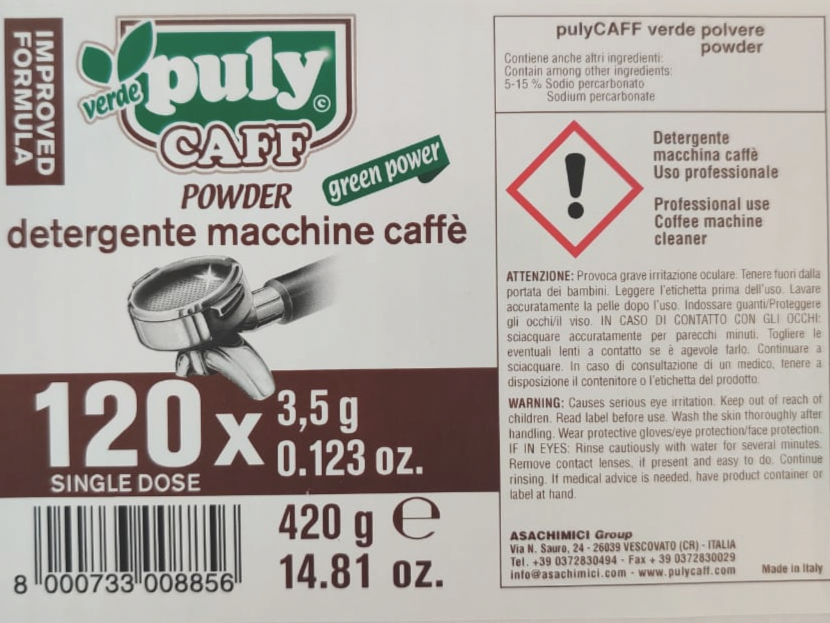
Chemical backflush with Puly Caff cleaning powder — this removes rancid coffee oil buildup inside the group head and brew path that water backflushing alone cannot clear. A machine skipping this step for four weeks will show it in the cup before it shows it on a diagnostic
-
Inspect the shower screen for blockage or warping
What most cafés skip in month one: The chemical backflush. It feels unnecessary when the machine is new. It becomes obviously necessary when shot quality starts drifting at week six and the cause is three weeks of accumulated oil in the brew path.
Months 3–6: The First Signs of Wear to Watch For
A well-maintained machine in this window should be performing identically to how it performed on day one. Any deviation is a signal.
Watch for:
-
Extraction times drifting longer without a grind change — early indicator of shower screen blockage or scale in the brew circuit
-
Steam pressure noticeably weaker during peak service — early scale accumulation in the steam boiler or steam tip blockage
-
Portafilter requiring more force to lock — group head gasket beginning to wear. On machines with an E61 group head, like the Lelit Bianca, gasket replacement is a straightforward scheduled service item — but it needs to happen before the gasket starts leaking, not after
Month 3 service action: Replace the group head shower screen and gasket as a preventive step, not a reactive one. These are low-cost parts. Replacing them on schedule is far cheaper than managing an extraction inconsistency that takes two weeks to diagnose.
Months 6–9: Water System Checkpoint
At this point, your inline filter cartridge has handled roughly 150–180 days of brewing water. Most cartridges are rated for six months of commercial use — but that rating assumes average hardness. In high-TDS Indian cities, effective life is shorter.
Replace the filter cartridge at month six without waiting for a flow-rate drop. By the time flow rate is visibly reduced, the cartridge has been passing partially filtered water for weeks. On a Faema super-automatic with its Smartboiler and Perfect Grinding System, internal water quality affects both extraction and grinding performance — degraded water quality inside a super-automatic system is harder to diagnose and more expensive to remediate than in a traditional machine.
Check all water line connections under the counter for slow drips or mineral deposits around fittings. These are easy to miss during service and accumulate into real problems by month twelve.
Months 9–12: The First Annual Service
A professional annual service is not a sign that something is wrong. It is the reason nothing will go wrong in year two.
What a proper annual service covers:
-
Full descaling of boiler(s) and internal brew circuit
-
Replacement of group head gaskets, shower screen, and solenoid valve O-rings
-
Inspection and lubrication of pump fittings
-
Calibration check on PID temperature settings and pressure gauge
-
Steam wand tip replacement if worn
-
Filter cartridge replacement and water output TDS verification
On a machine with pressure profiling capabilities — like the Espressa Alpha H6 with its 7-inch touchscreen and BLDC pump — annual calibration also ensures the profiling curves stored in the machine's recipe library are still executing accurately against the machine's actual pressure output.
The Mistake That Shortens Most Machines' Lives
Waiting until something stops working before calling a technician. Minor faults — a slightly leaking group head, a steam tip that takes a second longer to reach pressure, extraction times creeping by two seconds — are the machine communicating early. Attended to promptly, they cost very little. Left for three months, they become the cause of a repair bill that exceeds the cost of twelve months of preventive service.
At Coffee.Plus, the relationship does not end at installation. Every commercial machine we supply comes with a professional setup session, calibration to your water quality and roast profile, and access to genuine spare parts through our pan-India service network. Our AMC programs are built around the exact maintenance intervals outlined above — scheduled technician visits, filter replacements, calibration checks, and priority response when something needs immediate attention. Whether you have invested in an Espressa, a Lelit, or a Faema, our lifecycle support is designed to make sure the machine you bought on day one is still performing at the same standard in year seven.