


![[PRE ORDER] MHW-3BOMBER Cube Coffee Scale 3.0 Mini Pro](http://coffeeplus.in/cdn/shop/files/MHW-3BOMBERCubeCoffeeScale2.0MiniCoffeePlus5.webp?v=1768422727&width=500)

![[PRE ORDER] TIMEMORE Black Mirror Basic 3.0](http://coffeeplus.in/cdn/shop/files/TIMEMOREBlackMirrorBasic3.0_1.webp?v=1769444750&width=500)


![[PRE ORDER] MHW-3BOMBER Cube Coffee Scale 3.0 Pro](http://coffeeplus.in/cdn/shop/files/MHW-3BOMBERCubeCoffeeScale3.0Pro2.webp?v=1777319705&width=500)


![[PRE ORDER] Espressa Orbit 64 PRO | MOKKOM Grinder](http://coffeeplus.in/cdn/shop/files/Espressa_Orbit_Pro_2.webp?v=1779828190&width=500)


![[PRE ORDER] MHW-3BOMBER X-Press58](http://coffeeplus.in/cdn/shop/files/X-press58.webp?v=1763141665&width=500)


![[PRE ORDER] MHW-3BOMBER Cyclone Needle Distribution Tool 58mm](http://coffeeplus.in/cdn/shop/files/CycloneNeedleDistributor.webp?v=1762881161&width=500)




Building a Profitable Cold Coffee Line Using Your Existing Espresso Machine in India (2026)
Your espresso machine is already capable of building a cold coffee menu that drives serious summer revenue — most cafés just never map out the full potential sitting on their existing bar. A well-designed cold coffee line built around your current setup can add 4–6 high-margin menu items, require no new equipment investment, and serve drinks in under 90 seconds during a busy service. The margin on a well-executed cold coffee is consistently higher than a standard hot latte, and in India's long, hot season, it is what your customers are already asking for.
A kiosk owner in a Lucknow mall was running a straightforward hot espresso menu — lattes, cappuccinos, americanos — and noticed that 60% of customer enquiries during the April-to-September window were for cold coffee options. She had one cold coffee on the menu: a blended frappe that took 3 minutes to make and required a standalone blender that broke down twice in one month. She was turning away cold coffee demand because her process was too slow and too dependent on equipment she had not factored into her original setup budget. When we walked through her bar together, she had a commercial espresso machine, a milk steamer, a hand blender, and a fridge. That is enough to run a 5-item cold coffee line at commercial speed. The gap was not equipment. It was menu architecture and recipe design.
Why Your Espresso Bar Is Already a Cold Coffee Engine
Cold coffee profitability rests on one principle: concentrated, flavourful espresso as the base, combined with simple cold components that are either batch-prepared or assembled in seconds. Your espresso machine does the hardest part — it produces the flavour foundation. Everything else is preparation, proportion, and speed.
The cold coffee items that work best in Indian commercial operations share three characteristics: they are built on espresso or espresso concentrate, they use components that can be batch-prepped before service, and they assemble in under 60–90 seconds at the counter. These are not slow, custom-blended artisan drinks — they are high-margin menu items designed for commercial throughput.
Cold coffee also carries excellent margin logic in India. A hot latte with 18g of specialty coffee, 180ml of milk, and overhead costs typically delivers 60–65% gross margin at ₹180–₹200. The same espresso base over ice with cold milk and a flavour element — served in a larger, visually appealing cup — commands ₹220–₹260 and delivers 68–72% gross margin because the ice and cold milk cost less than the steamed milk and heating energy in the hot version. The seasonal demand surge makes this margin differential commercially significant.
The Five Cold Coffee Formats Your Existing Setup Can Produce
1. Shaken Espresso (The Speed Champion)
Pull a double shot (18g dose, 36g yield) over ice in a cocktail shaker or a tall steel glass. Add 5ml of simple syrup if the menu version is sweetened. Shake for 8–10 seconds until chilled and lightly frothy. Pour over fresh ice in a serving glass.
That is a 45-second drink. It requires no blender, no additional equipment, and produces a beautifully chilled, slightly aerated espresso with natural sweetness from the shaking. Priced at ₹180–₹220, it is your fastest high-margin cold item and the one that can be pulled off during a peak rush without breaking workflow rhythm.
The texture that shaking creates — small ice crystals and light foam — is why this format works so well. Customers who have experienced shaken espresso at specialty cafés in Bengaluru or Delhi know exactly what they are ordering. For cafés in tier 2 cities introducing the format, the visual and texture impact creates genuine novelty at low cost.
2. Cold Latte (The Volume Driver)
The cold latte is the simplest format and the highest-volume cold coffee item for most Indian commercial bars. Pull a double shot directly into a glass over ice. Add cold whole milk — 150–180ml — and stir gently. That is the base version.
The upgrade that adds menu breadth without operational complexity: flavoured cold lattes built on the same base with 10–15ml of flavour syrup added before the milk. Brown sugar cold latte, hazelnut cold latte, salted caramel cold latte — each is the same espresso and cold milk base with a flavour element that costs ₹3–₹6 per drink and allows ₹30–₹40 price differentiation on the menu. Three flavour variants are enough for a kiosk menu. Five flavour variants, priced at ₹230–₹260 for the flavoured versions, create a visual menu board that looks comprehensive without adding operational complexity.
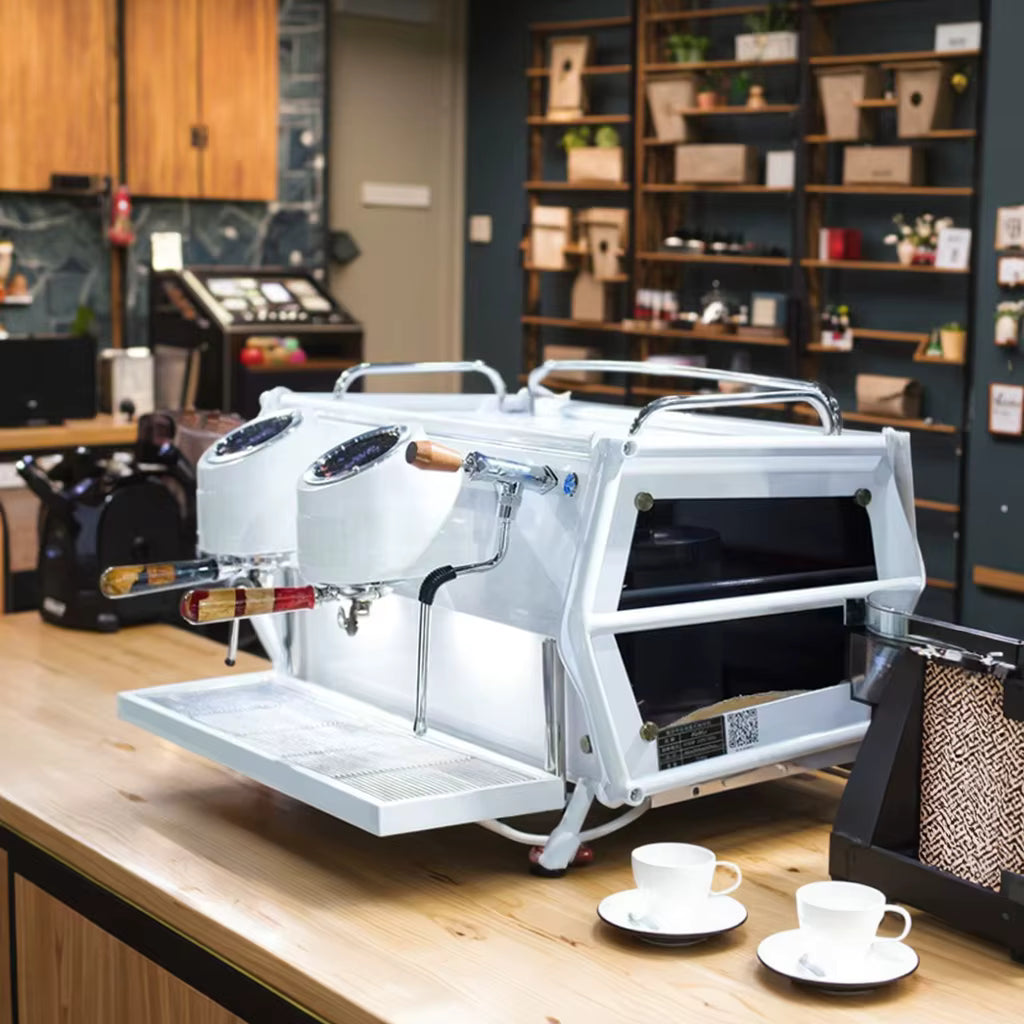
The Espressa Nimbus Pro and similar 1-group commercial machines produce the extraction consistency that cold latte quality requires — a balanced, not-too-bitter double shot that is pleasant when cooled rather than harsh. Bitter or over-extracted espresso becomes more pronounced when served cold because the milk's warmth no longer rounds the edges of harsh extraction notes. Good espresso machine calibration matters more for cold drinks than many operators assume.
3. Espresso Tonic (The Specialty Upsell)
Espresso tonic has earned its place on specialty café menus across India's urban markets and is now appearing in tier 2 cities as coffee culture broadens. It requires only one additional product: chilled Indian tonic water, available at any commercial beverage supplier.
Fill a tall glass with ice. Pour 80–100ml of chilled tonic water over the ice. Pull a double espresso — ideally a bright, medium-roasted blend like Coffee.Plus's Flair or a fruity single-origin — and pour it slowly over the back of a spoon to float it on top of the tonic. The layered presentation is visually striking and the flavour — bitter tonic cutting against sweet espresso acidity — is genuinely different from anything else on a standard café menu.
Priced at ₹250–₹320, the espresso tonic is your highest-margin cold item by percentage. Tonic water costs ₹25–₹35 per serve. The espresso dose is your standard double. The visual impact drives social media sharing — which is unpaid marketing for a ₹3 per drink ingredient upgrade.
4. Cold Brew Style Americano (The Batch Option)
This is not true cold brew — it does not require an overnight steep and dedicated equipment. It is a batch-prepared strong espresso concentrate diluted with cold water that mimics cold brew's smooth, low-acidity character closely enough for most commercial customers.
Batch prep: Pull 10 double shots into a 1-litre container at the start of each day. This produces approximately 360ml of concentrated espresso. Add 640ml of cold filtered water. Store in the fridge. This concentrate keeps for 6–8 hours refrigerated without significant quality degradation.
Service: Pour 200ml of the pre-made concentrate over ice. Serve in 30 seconds. No machine interaction required during peak service — the extraction work was done during prep time, and service is purely assembly.
For kiosks and high-footfall café counters where peak service speed is the primary constraint, this batch option turns a 3-minute drink into a 30-second one. The consistent cold dilution ratio also eliminates extraction variables during service — every cold brew americano in that batch is identical.
5. Textured Blended Frappe (The Crowd Pleaser, Done Right)
The blended frappe is the highest-revenue cold coffee format in Indian tier 2 and tier 3 markets and at hill station cafés — it is what most customers mean when they say "cold coffee." The challenge is doing it at speed and consistency rather than as a slow, labour-intensive custom drink.
The batch approach: pre-blend a base of cold milk (500ml), flavour syrup (30ml), and crushed ice (200g) in the morning and keep it in a chilled container as a semi-prepared frappe base. At service, add a double espresso shot to 200ml of the pre-blended base, blend for 8–10 seconds with a hand blender directly in the cup, and serve. The hand blender — a ₹2,500–₹4,000 commercial-grade stick blender — handles this without the standalone blender that breaks down, takes counter space, and requires full cleaning between drinks.
The pre-blended base eliminates 60–70% of the per-drink blending time. The espresso is the only element pulled fresh per order. The result is a consistent, cold, creamy frappe in under 90 seconds — fast enough for peak service without a standalone blender workflow.
Cold Coffee Menu Pricing and Margin Structure
Batching and Pre-Service Prep: The Operational Key
Cold coffee profitability at scale is not about individual drink recipes — it is about pre-service batching that turns high-demand drinks into assembly operations during service rather than production operations.
Before service opens each day, a 10-minute prep routine covers:
-
Prepare the cold brew americano concentrate (10 shots, water dilution, fridge)
-
Mix and chill the frappe base (milk, syrup, ice — fridge ready)
-
Pre-chill serving glasses or plastic cups (fridge or a bucket of ice)
-
Stage ice in a dedicated counter ice bin within arm reach of the espresso machine
-
Pre-portion flavour syrups into labelled dispensers at the cold station
With this prep in place, every cold coffee item on the menu becomes a 60–90 second assembly during service. The espresso machine remains the only live production element — and that is what it is designed to do.
Mistakes to Avoid: The Inconsistency That Kills Cold Coffee Repeat Orders
Mistake: Making cold coffee drinks freestyle — eyeballing milk volumes, estimating syrup, and varying ice quantity based on cup fill — rather than standardising each recipe with measured proportions.
Cold coffee quality is far more sensitive to proportion variance than hot drinks because cold temperature suppresses sweetness perception. A cold latte with 10ml less syrup than the standard recipe tastes noticeably less sweet and more bitter than the correctly proportioned version. A hot latte with the same syrup variance is much less detectable because warmth amplifies sweetness perception.
This means cold coffee recipes need tighter measurement discipline than most baristas apply to hot drinks. Portion control cups for syrup, a consistent ice scoop, and a measured milk pour — either by weight or by a marked cup line — are the operational standards that turn a good cold coffee into a consistently repeatable one. Customers who order the same drink twice and receive noticeably different versions stop ordering that item. Customers who receive the same quality twice become regular cold coffee purchasers — which is the repeat revenue that makes a seasonal cold coffee line into a year-round contribution to your café's margins.
At Coffee.Plus, we supply the espresso machines and grinders that make the espresso foundation of your cold coffee menu consistent and reliable — from the Espressa Nimbus Pro for a kiosk cold coffee setup through the Espressa Falcon for a 50-seat café building a high-volume summer cold line. Every machine comes with espresso machine installation and training in India that covers extraction calibration for both hot and cold applications. Our wholesale bean range — including Flair and Classico blends optimised for commercial espresso extraction — is available with nationwide delivery so your cold coffee base is consistent regardless of where in India your operation is located. Pan-India service support ensures the machine pulling your cold coffee foundation is always at specification. If you want to build out your cold coffee menu architecture before summer peaks, our Experience Centre in Delhi at 14 Regency, Asola is the place to test recipes on calibrated equipment and understand which formats suit your specific operation and customer profile.