






Why Espresso Grinder Motor Power and RPM Matter More Than Burr Size for High-Volume Indian Cafés (2026)
Most commercial grinder comparisons lead with burr diameter — 64mm, 75mm, 83mm — as the primary quality indicator. But cafés running 150 or more shots daily discover a more expensive truth: an underpowered motor overheats, slows down, and shifts particle size distribution across the service window, turning a consistent morning dial-in into an unreliable afternoon. Motor specifications determine whether your grinder performs the same at cup 20 as it does at cup 180. This guide explains what to look for and why it matters for your commercial operation in India.
A Delhi roastery café upgraded to a grinder with impressive 83mm flat burrs at an attractive espresso machine price for café in India. For the first two hours of service, extraction was excellent — consistent 27-second shots, clean flavour, happy team. By 1pm on a busy Saturday, shots had slowed to 31–32 seconds with no grind adjustment. The barista compensated by coarsening the grinder slightly. By 3pm, the shots were fast and thin. The team spent the afternoon chasing a moving target. The burrs were fine. The motor was not. Under sustained load, the motor was overheating and slowing its RPM, producing a progressively finer effective grind at the same setting — because slower-spinning burrs have more contact time with each particle and reduce particle size even with no physical adjustment to the grinder. The burr diameter had looked impressive on the spec sheet. The motor wattage had been buried in the footnotes.
Why Motor Power Is the Performance Ceiling for High-Volume Grinders
A commercial espresso grinder's motor does two things: it spins the burrs at a set RPM and it sustains that RPM under load. The load in question is the frictional resistance of grinding coffee — a force that increases with harder beans, finer grind settings, and most significantly, with sustained continuous use over a long service window.
Wattage is the motor's raw power capacity — how much electrical energy it can convert into rotational force. A higher wattage motor can sustain its target RPM under greater load before thermal throttling occurs. In practical café terms, a 350W motor driving 83mm burrs at 150 cups per day is working near its thermal ceiling. A 600W motor driving the same burrs at the same volume has significant headroom — the motor runs cooler, RPM stays stable, and grind particle size stays consistent across the full service window.
Thermal throttling is the specific failure mode that produces the service-window drift problem. Electric motors generate heat when they work. When a motor's internal temperature rises above a design threshold, the motor's control circuitry reduces power output to protect the windings — this is thermal throttling, and it directly reduces RPM. Lower RPM means more burr contact time per particle, which produces a finer effective grind at the same physical setting. The barista does not know the motor has throttled — all they see is that shots have slowed, and they adjust the grinder coarser to compensate. When the motor cools and recovers to full power, the grinder is now too coarse, shots run fast, and the team adjusts again. The whole afternoon becomes a dial-in exercise caused by a motor problem that looks like a calibration problem.
This is why motor wattage — not burr size — is the first specification to check when evaluating a commercial grinder for sustained high-volume use.
How RPM Affects Grind Quality and Heat Generation
RPM (revolutions per minute) describes how fast the burrs spin during grinding. Most commercial espresso grinders operate in the range of 400–1,600 RPM, with meaningful quality and thermal implications at each end of the range.
High RPM (1,200–1,600 RPM): Faster burr rotation processes coffee more quickly, which is good for throughput. However, high RPM generates more frictional heat per grinding session, transferring that heat into the ground coffee. Coffee ground at elevated temperature degasses more rapidly and loses volatile aromatic compounds faster after grinding. For a café pulling shots immediately after grinding, this is a minor concern. For a café with any hold time between grind and extraction — even 60 seconds at a busy bar — high-RPM heat generation affects extraction character in the cup, particularly with lighter, more aromatic roasts.
Low RPM (400–800 RPM): Slower burr rotation generates significantly less heat per grinding session because the contact event between burr and bean is slower and less aggressive. The coffee emerges cooler, retaining its volatile aromatics more fully. Particle size distribution from low-RPM grinding also tends to be more uniform because the cutting event is more controlled — the burr shears cleanly rather than impacting with force. The tradeoff is throughput speed: a 500 RPM grinder processes a 18g dose more slowly than a 1,400 RPM grinder. The solution to this tradeoff is not higher RPM but higher motor wattage — a powerful motor running at low RPM can maintain consistent torque across continuous use while generating minimal heat.
This is the combination that separates genuinely professional commercial grinders from capable but limited ones: adequate wattage to sustain low RPM consistently under load, not simply enough wattage to spin burrs fast.
What Minimum Motor Specifications Should Look Like by Volume Tier
For Indian café operators evaluating commercial grinder price and specification, these are the minimum motor parameters for sustained commercial use at different daily volumes.
Under 80 cups per day: A 250–350W motor at 1,000–1,400 RPM is adequate for light to moderate commercial use. The Eureka Mignon Specialita — with its compact motor and Silent Technology reducing operational noise — sits in this range and is well-matched to boutique specialty bars and kiosks in tier 2 and tier 3 cities where daily volumes are controlled. The Eureka Firenze also performs reliably at this volume tier, with flat burr architecture and a motor calibrated for consistent mid-volume output rather than sustained peak load.
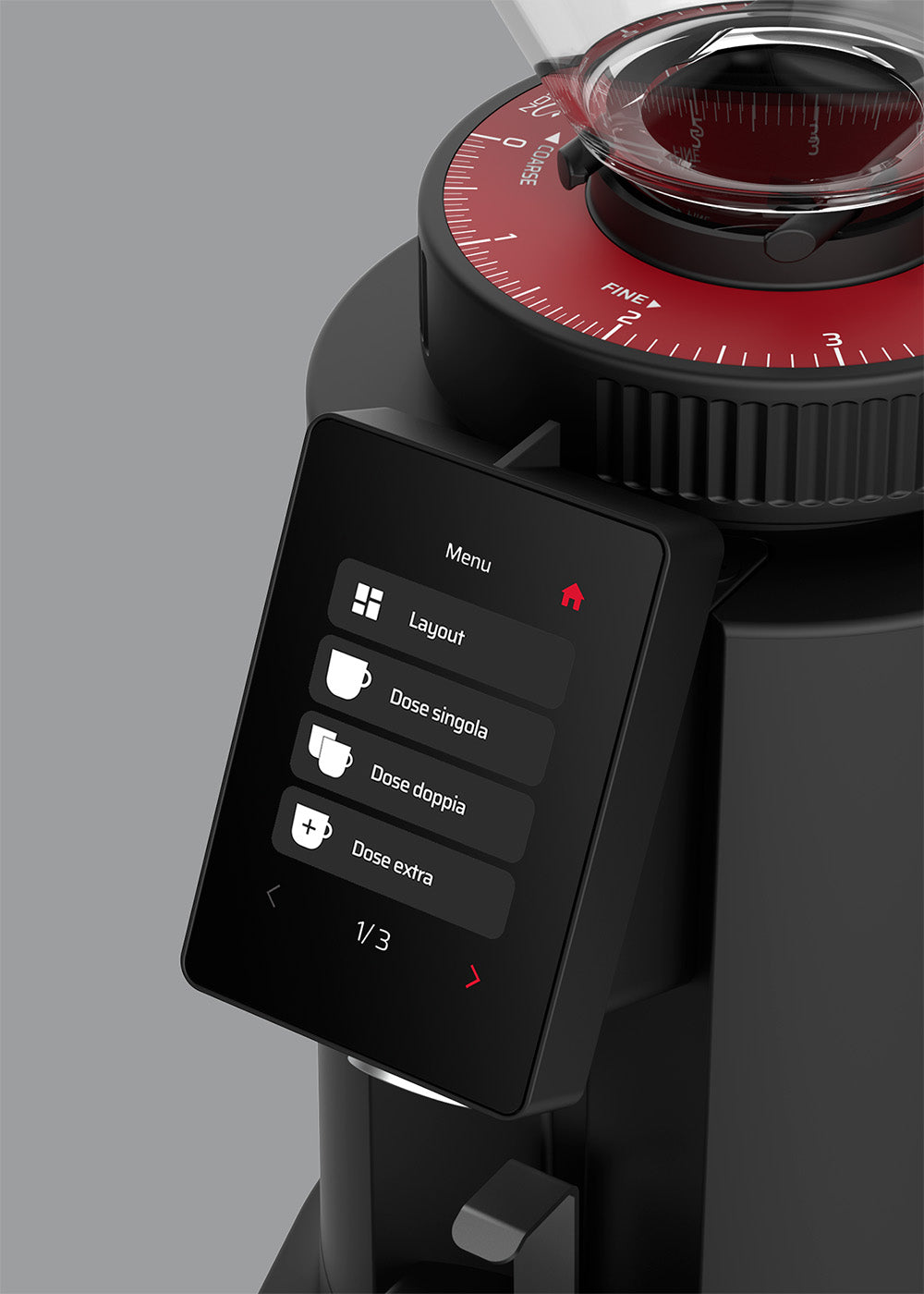
80–150 cups per day: This is the volume range where motor specification becomes the deciding factor in whether a grinder performs consistently through a full service or begins to drift in the afternoon. The minimum specification at this range should be 400–500W at 900–1,200 RPM. Grinders in this tier need active cooling or sufficient motor mass to absorb heat generated during back-to-back grinding sessions without throttling. The Ceado E7 — with its 450W motor and 64mm flat burrs — is specifically engineered for this volume band. Its motor is sized to run continuously through a commercial service without the RPM drift that affects lower-wattage machines at this throughput level. Available through Coffee.Plus with pan-India technician support, the E7's motor and burr combination produces the particle consistency that high-volume milk bars demand — dose after dose, across a full Saturday service.
150–300 cups per day: At this volume, motor specification must be taken seriously as a primary purchasing criterion. A minimum of 600–800W at sustained low RPM — 500–800 RPM — is the correct specification for sustained high-volume commercial grinding without quality drift. The Ceado REV Steel operates at this tier, with its 83mm flat burrs and a motor architecture designed for continuous high-volume output. The larger burr diameter distributes the grinding load over more cutting surface area, which reduces the force required from the motor per gram of coffee processed — this is why larger burr diameter and adequate motor power work together rather than independently. The REV Steel's motor generates consistent torque at low RPM through an extended service window, producing the same particle distribution at cup 250 that it produced at cup one.
The Heat Management Factor Specific to Indian Café Conditions
The motor heat discussion is more critical in India than in most markets, and this is not sufficiently acknowledged in most grinder comparisons designed for European or North American buyers.
Indian café kitchens run warm. A typical open kitchen in a tier 2 city café can reach 35–40°C ambient temperature during summer service. A grinder motor that manages its thermal load adequately at 22°C European room temperature may reach its throttling threshold 30–40% faster in a 38°C Indian kitchen. This means that a grinder positioned as "adequate for 120 cups per day" in a manufacturer's specification was likely tested at European ambient temperatures. In a hot Indian kitchen at the same volume, the thermal margin is smaller and performance drift begins earlier in the service window.
When evaluating grinders for Indian commercial conditions, apply a conservative multiplier: if a grinder's rated commercial capacity is 150 cups per day, treat 100–110 cups per day as your practical operational ceiling during Indian summer months. Cafés in hill stations — Manali, Ooty, Coorg, Mussoorie — have the advantage here: cooler ambient temperatures allow motors to sustain rated performance more reliably, and a grinder that is technically undersized for a Delhi kitchen may perform adequately in a Coorg hill café at the same daily volume.
Grinder Motor and RPM Comparison for Indian Commercial Buyers
Mistakes to Avoid: The Burr Size Fixation That Misleads Commercial Buyers
Mistake: Selecting a grinder based on burr diameter alone without checking motor wattage and rated continuous duty cycle.
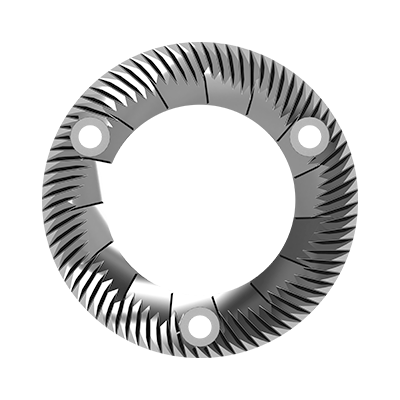
A grinder with 75mm burrs and a 300W motor will underperform a grinder with 64mm burrs and a 500W motor at 150 cups per day. The larger burrs look more impressive in a comparison, but without a motor strong enough to sustain consistent RPM under extended load, the larger cutting surface becomes irrelevant — the motor throttles, RPM drops, and particle size shifts regardless of how much burr surface is theoretically available.
Ask suppliers two specific questions before purchasing any commercial grinder for a high-volume operation: What is the motor wattage? And what is the manufacturer's rated continuous duty cycle — the maximum sustained grinding time per hour before a rest period is recommended? A grinder with a 30-minute continuous duty cycle is not designed for a café pulling 40 shots in 45 minutes. A grinder without a published duty cycle specification is one whose manufacturer has not tested it under commercial load conditions — which is itself important information.
At Coffee.Plus, every commercial grinder recommendation we make is matched to your café's specific daily volume, kitchen ambient temperature, and service window characteristics — not just to a spec sheet comparison. Whether you are evaluating a Ceado E7 for a commercial café setup or a Ceado REV Steel for a high-output specialty bar, both are available with Coffee.Plus pan-India technician support, genuine replacement burr sets, and full AMC coverage. Installation and training for every grinder we supply covers motor management, dial-in protocol, and the thermal indicators that tell your team when to call service rather than adjust the grinder. Our Experience Centre in Delhi at 14 Regency, Asola has these grinders running at commercial volume — visit and experience the consistency difference between motor tiers before committing your capital.