









Water Hardness, TDS, and What They Mean for Your Commercial Espresso Machine Across Indian Cities (2026)
Water is the most overlooked variable in any commercial espresso setup — and in India, it is also the most damaging one. Most café operators do not test their water until scale has already degraded their machine's boiler, shortened component life, or corrupted extraction quality in ways that no amount of grind adjustment will fix. This guide explains what TDS and water hardness actually mean for your machine and your espresso, and gives city-specific guidance for the markets where it matters most.
A Bengaluru café owner had been through two boiler heating elements in three years on the same commercial espresso machine. Each failure was attributed to normal wear. After the second replacement, a technician measured the café's water TDS: 420 ppm. No filtration was in place. The machine had been running hard groundwater through its boiler every day since installation, depositing scale on the heating element at a rate far above what the machine's service intervals anticipated. The problem was not the machine. It was never the machine. It was the water entering the machine every single day, untreated and unmeasured.
This scenario repeats itself in cafés across Delhi, Bengaluru, Hyderabad, and Jaipur every month. The fix is almost always simpler and cheaper than the repair it prevents.
What TDS and Water Hardness Actually Mean for Your Espresso Setup
These two terms are often used interchangeably in café conversations, but they measure different things and affect your espresso setup in different ways.
TDS (Total Dissolved Solids) measures the total concentration of all dissolved substances in water — minerals, salts, metals, and organic compounds — expressed in milligrams per litre (mg/L) or parts per million (ppm). A TDS reading tells you how much stuff is in the water overall, but not specifically what that stuff is.
Water Hardness measures specifically the concentration of calcium and magnesium ions in the water, expressed in ppm or degrees of hardness (°dH). Hard water is water with high calcium and magnesium content. These minerals are the primary source of limescale — the white mineral deposit that forms on heating elements, inside boilers, and across heat exchanger surfaces inside your espresso machine.
Why this distinction matters for café operators: A water with high TDS but low hardness — such as water with elevated sodium content — may not produce significant scale but can affect extraction flavour and corrode certain internal metal components over time. Hard water with high calcium and magnesium content will produce aggressive scale regardless of overall TDS level. Both scenarios require treatment, but different kinds.
For commercial espresso machines, the SCA (Specialty Coffee Association) recommends water with a TDS between 75–250 ppm and hardness between 50–175 ppm for optimal extraction quality and machine protection. Most untreated tap water and borewell water across Indian cities falls outside this range — often significantly above it.
How Hard Water Damages Your Commercial Espresso Machine
Scale formation is not a dramatic event. It is a slow, cumulative process that begins from the first cup you brew with hard water and compounds with every subsequent extraction.
Inside the boiler, calcium and magnesium ions precipitate out of solution when water is heated, forming calcium carbonate deposits on the heating element and boiler walls. Scale acts as a thermal insulator — a layer of scale as thin as 1mm increases the energy required to heat the boiler by approximately 10–12%. The heating element works harder, runs hotter at its surface, and degrades faster. Over 12–18 months of daily commercial use in a hard water city without descaling, the heating element can fail entirely — a repair that costs significantly more than a year of preventive filtration and descaling combined.
Inside the group head, scale deposits accumulate in the shower screen, dispersion block, and internal passages, restricting water flow and changing the pressure profile of each extraction. This shows up as gradually increasing extraction times at the same grind setting — a creeping change that most baristas compensate for by adjusting the grinder rather than recognising as a scale symptom.
In the steam boiler, scale reduces steam pressure output over time. Milk steaming becomes less consistent, steam recovery between drinks slows, and the boiler pressure sensor eventually reads inaccurately as scale builds around it. On a dual boiler espresso machine for a café in India — where the steam boiler is a dedicated, independent component — scale in the steam circuit can be addressed without affecting the brew circuit, but only if the machine is on a correct descaling schedule.
City-by-City Water Profile Guide for Indian Café Operators
Indian cities have genuinely different water profiles driven by their source water, local geology, and municipal treatment processes. Here is what café operators in the major commercial markets need to know:
Delhi NCR — High Hardness, High TDS
Delhi's municipal water is drawn from the Yamuna river and various groundwater sources across the NCR region. Municipal-treated water typically arrives at 300–500 ppm TDS in many areas, with hardness often in the 200–350 ppm range. Borewell water used in parts of Noida, Gurugram, and Faridabad can reach 600–800 ppm TDS with corresponding hardness levels.
Treatment recommendation: A dedicated commercial water softener ahead of the espresso machine, followed by a carbon block filter, is the minimum viable setup in Delhi. Softeners exchange calcium and magnesium ions for sodium, effectively eliminating scale formation. Monthly descaling with Puly Caff descaling solution is still recommended as a maintenance practice even with softener installation, because softeners have efficiency limits and occasional breakthrough can occur.
Bengaluru — Moderate to High Hardness, Groundwater-Dependent
Bengaluru is supplied by BWSSB with Cauvery water in central areas, which runs at moderate TDS (150–250 ppm) and manageable hardness. However, a significant portion of the city — particularly newer layouts in the east and north — relies on borewell water that can exceed 500–600 ppm TDS with high hardness. The specific water profile of a Bengaluru café depends heavily on its precise location and water source.
Treatment recommendation: Test before treating. A ₹500–₹1,000 TDS meter and hardness test kit will tell you which problem you actually have. Cauvery-supplied areas may need only a good carbon filter and bi-monthly descaling. Borewell-dependent areas need full softener treatment equivalent to Delhi.
Mumbai — Soft but Not Safe to Skip
Mumbai's water supply from Vihar and Tulsi lakes is among the softest in India's major cities, typically arriving at 80–150 ppm TDS with relatively low hardness. By standard coffee brewing parameters, Mumbai water is close to the ideal range — which makes it tempting to skip water treatment entirely.
This is still a mistake. Soft water with very low mineral content — below 75 ppm TDS — can be slightly aggressive toward certain metals used in espresso machine internals, particularly brass components in the group head and boiler fittings. At the low end of Mumbai's water range, a remineralisation filter that adds a controlled level of calcium and magnesium back to the water provides both machine protection and improved extraction flavour without the scale risk of harder sources.
Jaipur and Rajasthan Cities — Very Hard, Highest Risk
Rajasthan groundwater is among the hardest in India. TDS readings of 800–1,200 ppm are not unusual in Jaipur, Jodhpur, and Udaipur. Operating a commercial espresso machine on untreated Rajasthan groundwater without scale protection is the most predictable equipment failure scenario in the Indian café market. Boiler element failures within the first year of operation are common in this environment without proper treatment.
Treatment recommendation: A full water treatment train — sediment pre-filter, commercial water softener, carbon block filter, and a final TDS check post-filter — is essential before the water line reaches the espresso machine. Scale removal post-damage is significantly more expensive than prevention.
Hyderabad — Moderately Hard, Chemically Variable
Hyderabad's water supply combines Krishna river water and groundwater sources, producing moderate TDS (200–350 ppm in most city areas) with moderate hardness. The chemical composition can include higher fluoride and chlorine levels in some municipal supply areas, which affect both machine internals and espresso flavour quality. A carbon block filter that removes chlorine and organic compounds, paired with a scale inhibitor filter, is the practical minimum setup for most Hyderabad café locations.
Chennai — Coastal Softness with TDS Variability
Chennai's water is generally softer than inland cities, sourced from reservoirs including Chembarambakkam and Poondi. However, Chennai also has a significant borewell water dependency in many commercial areas, and coastal proximity can introduce elevated sodium content in some groundwater sources. Test source water specifically rather than assuming coastal softness applies to your location.
The Correct Water Treatment Stack for Commercial Espresso Machines in India
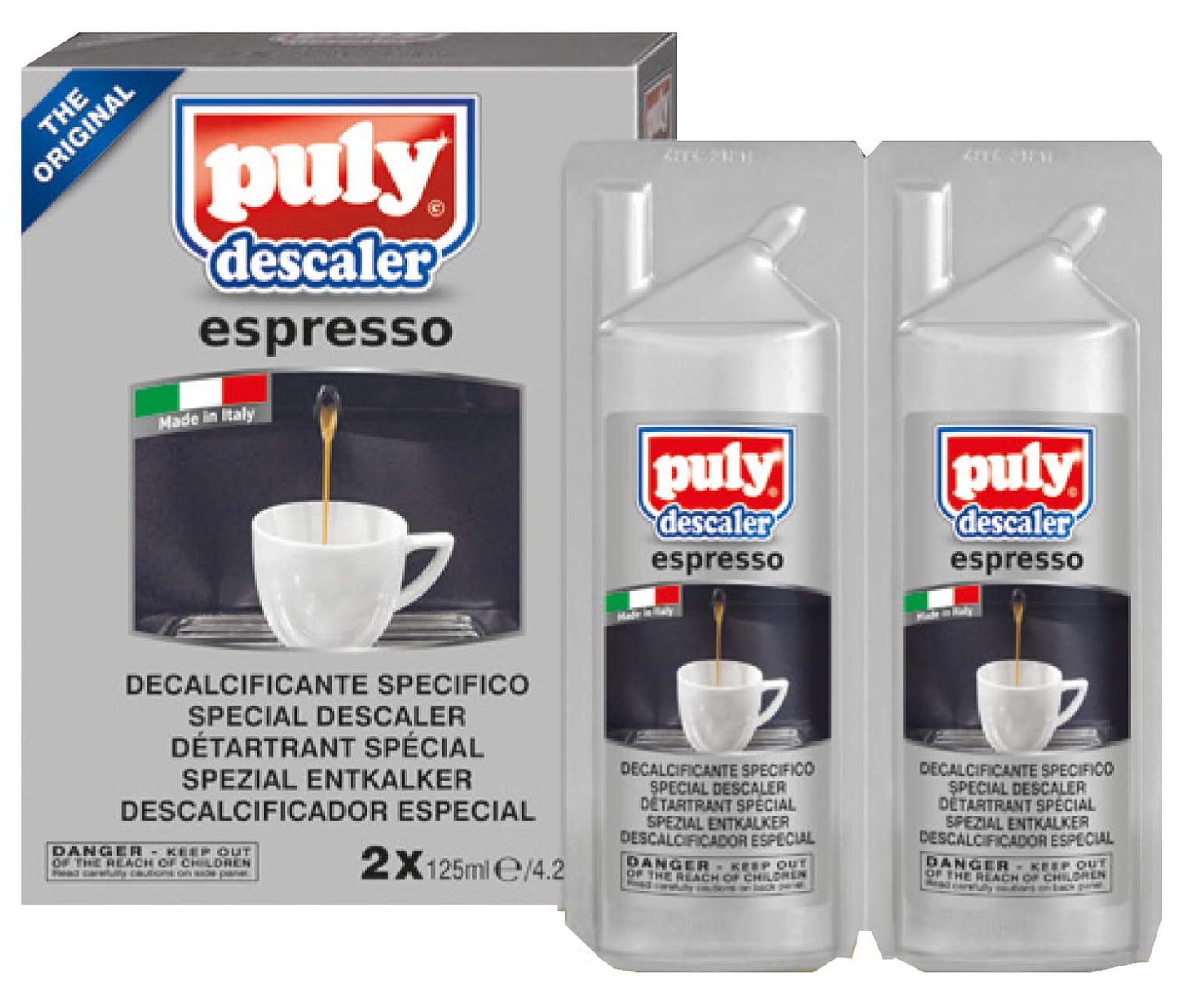
Descaling with Puly Caff — even on a correctly filtered water setup — remains a scheduled maintenance practice, not an emergency measure. Puly Caff descaling solution is formulated specifically for espresso machine internals: it removes scale from boiler walls, heating elements, and internal passages without damaging brass, stainless steel, or the rubber seals inside the machine. At the correct dilution and contact time specified for commercial machines, it does not leave chemical residue or affect extraction flavour in subsequent sessions. Using generic citric acid or domestic descalers on a commercial machine is one of the most common water treatment mistakes in Indian café operations — the concentration and chemistry are mismatched to commercial machine materials and can cause seal degradation over repeated use.
How Water Affects Espresso Extraction Quality, Not Just Machine Life
Water treatment is not only a machine protection decision. It is an extraction quality decision.
Water with very high mineral content extracts aggressively — it pulls more soluble compounds from the coffee puck and can produce over-extracted, harsh cup character even at correct extraction times. Water with very low mineral content (below 50–75 ppm TDS) under-extracts, producing flat, hollow espresso that lacks body and complexity regardless of grind precision. The mineral content of water actively participates in extraction chemistry — magnesium ions in particular have an affinity for aromatic compounds in coffee, and their presence in the correct concentration improves fragrance and flavour complexity in the cup.
This means that treating your water to the correct TDS range improves not just machine longevity but the taste of every drink your café produces. It is one of the few operational changes that delivers ROI in both equipment protection and cup quality simultaneously.
Mistakes to Avoid: The Water Treatment Misjudgement That Costs the Most
Mistake: Installing a full RO (reverse osmosis) system and using RO-purified water directly in the espresso machine.
RO systems strip water to near-zero TDS — often 10–20 ppm — removing virtually all dissolved minerals. At this level, the water is too pure for espresso extraction, producing flat, under-extracted shots regardless of grind precision. More critically, very low TDS water is corrosive to the copper and brass internal components of commercial espresso machines because it has a high affinity for dissolved metals and will slowly leach them from machine components over time.
If you have an RO system already installed, use a remineralisation cartridge on the post-RO line to bring TDS back to the 100–150 ppm range before the water reaches the espresso machine. This gives you the scale-free quality of RO water combined with the mineral level that protects the machine and improves extraction quality.
At Coffee.Plus, every commercial espresso machine installation consultation includes a water assessment for your specific location and source — not a generic recommendation but advice calibrated to your city, water supply type, and machine choice. We supply Puly Caff descaling solutions and cleaning products as part of our maintenance ecosystem, and our AMC programs include scheduled descaling checks alongside preventive maintenance visits. Whether you are setting up a commercial espresso machine for a small café in India for the first time or expanding an existing operation, water treatment is always part of the conversation before the machine is installed. Pan-India technician support means your water setup is assessed in the context of your actual local water conditions, wherever in India your café operates. If you are unsure what your water profile looks like or how to interpret a TDS reading for your espresso setup, our Experience Centre in Delhi at 14 Regency, Asola is the right place to start that conversation — with machines running on properly treated water so you can hear and taste the difference directly.