


![[PRE ORDER] MHW-3BOMBER Cube Coffee Scale 3.0 Mini Pro](http://coffeeplus.in/cdn/shop/files/MHW-3BOMBERCubeCoffeeScale2.0MiniCoffeePlus5.webp?v=1768422727&width=500)

![[PRE ORDER] TIMEMORE Black Mirror Basic 3.0](http://coffeeplus.in/cdn/shop/files/TIMEMOREBlackMirrorBasic3.0_1.webp?v=1769444750&width=500)


![[PRE ORDER] MHW-3BOMBER Cube Coffee Scale 3.0 Pro](http://coffeeplus.in/cdn/shop/files/MHW-3BOMBERCubeCoffeeScale3.0Pro2.webp?v=1777319705&width=500)


![[PRE ORDER] Espressa Orbit 64 PRO | MOKKOM Grinder](http://coffeeplus.in/cdn/shop/files/Espressa_Orbit_Pro_2.webp?v=1779828190&width=500)


![[PRE ORDER] MHW-3BOMBER X-Press58](http://coffeeplus.in/cdn/shop/files/X-press58.webp?v=1763141665&width=500)


![[PRE ORDER] MHW-3BOMBER Cyclone Needle Distribution Tool 58mm](http://coffeeplus.in/cdn/shop/files/CycloneNeedleDistributor.webp?v=1762881161&width=500)




How India's Specialty Coffee Boom Is Reshaping Commercial Espresso Equipment Requirements in 2026
Indian roasters are now producing world-class light roasts and single-origin espresso offerings that behave fundamentally differently from the dark Italian blends most commercial equipment was originally designed to handle. For café operators serious about showcasing these coffees, the equipment conversation has changed — temperature precision, pressure profiling, and grinder particle distribution are no longer premium luxuries but operational necessities. This is what the specialty shift means for your next equipment decision.
Three years ago, a Coorg single-estate coffee winning recognition at the India Barista Championship would have been notable news. Today, it is a pattern. Indian-grown arabicas from Araku, Chikmagalur, and the Nilgiris are appearing on espresso menus across Bengaluru, Delhi, and Pune — not as novelties but as headline offerings that define a café's identity. At the same time, light-roasted Ethiopians, Kenyan washed coffees, and Colombian natural process beans are increasingly accessible to Indian roasters and their wholesale café clients. The equipment most cafés bought to run a commercial espresso machine for a small café in India three to five years ago — calibrated for a dark South Indian robusta blend at 93°C and 9 Bar — is not the equipment that does justice to these coffees.
This is the equipment gap that the 2026 specialty wave is surfacing across Indian commercial coffee.
Why Light Roasts Demand More from Your Espresso Machine
Dark-roast espresso blends — the traditional foundation of Italian commercial machines and most Indian café menus through the 2010s — are relatively forgiving in extraction. Higher roast levels break down the bean's cell structure, making solubles easier to extract across a wider temperature range. Extraction windows are broader. Temperature variance of 3–4°C at the group head produces a noticeable but manageable quality shift. Pressure at 9 Bar delivers consistent results without fine-tuning.
Light roasts operate on different physics. The bean's cell structure is largely intact, making solubles harder to extract and the extraction window significantly narrower. At group head temperatures below 93°C, light roast espresso under-extracts sharply — producing sour, astringent, underdeveloped shots that experienced customers immediately notice. At temperatures above 96°C, the same coffee tips into bitter harshness. The usable extraction window for a high-quality Ethiopian natural or a washed Araku single-origin might be only 2–3°C wide, compared to 6–8°C for a commercial dark blend.
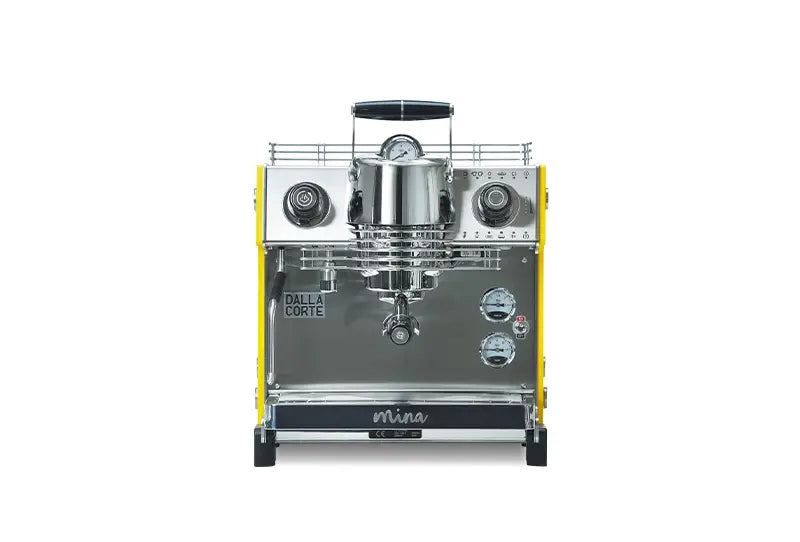
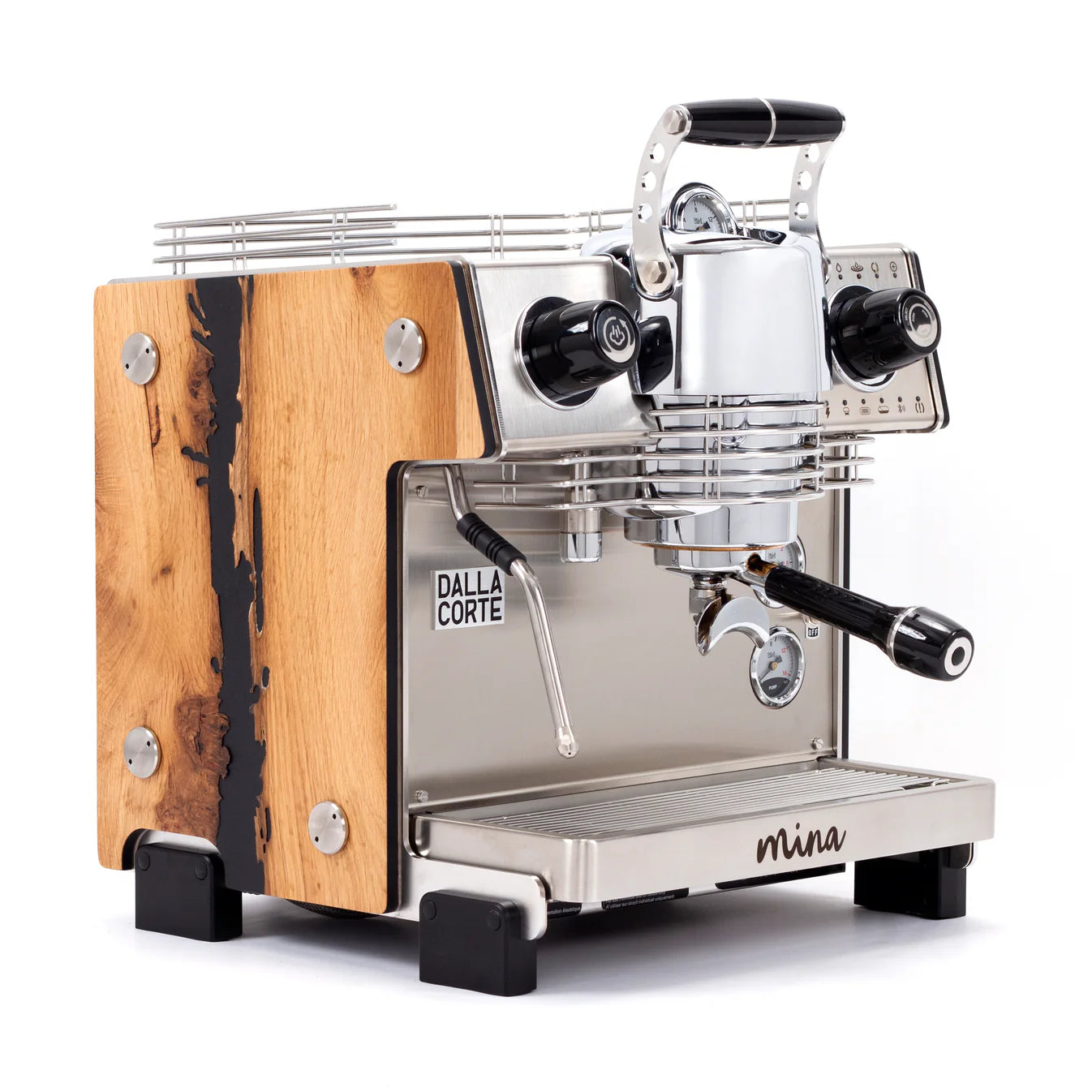
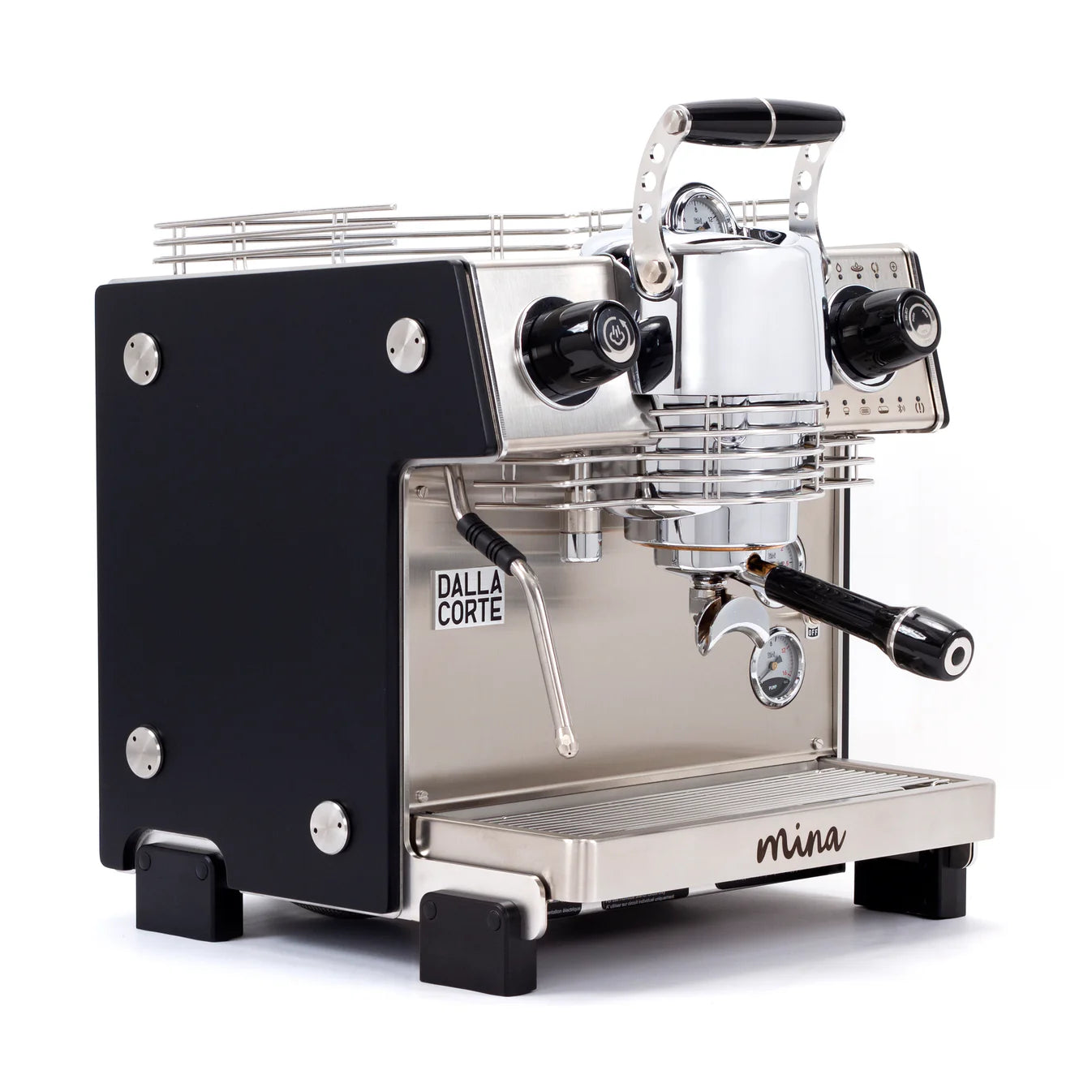
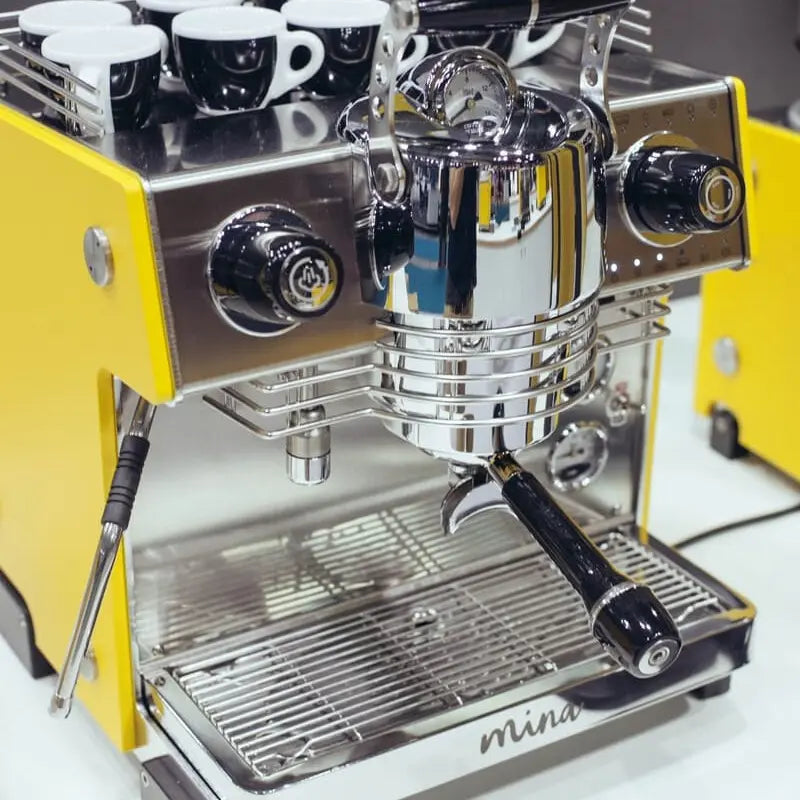
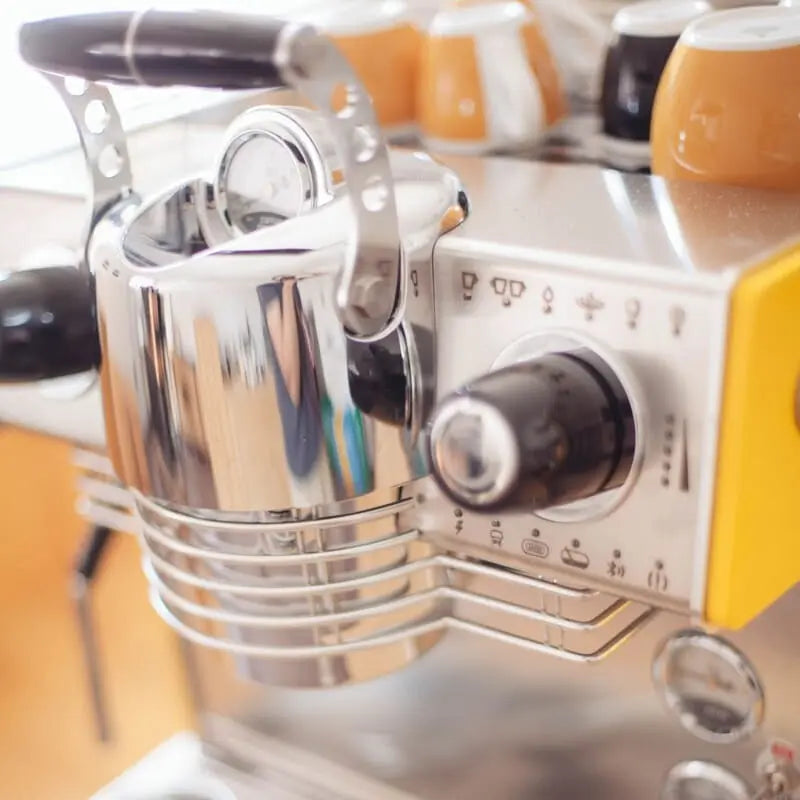
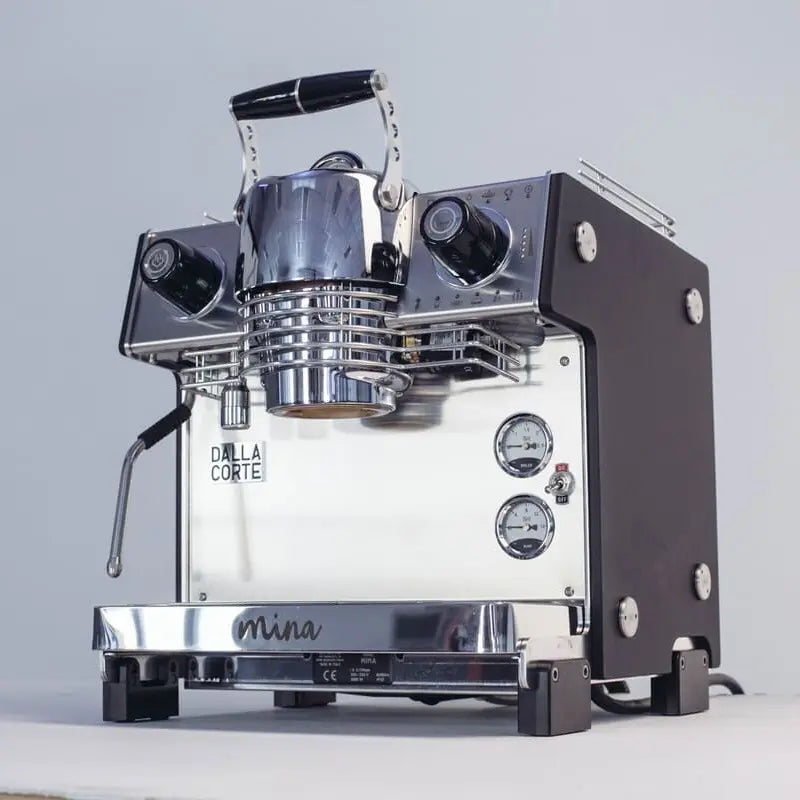
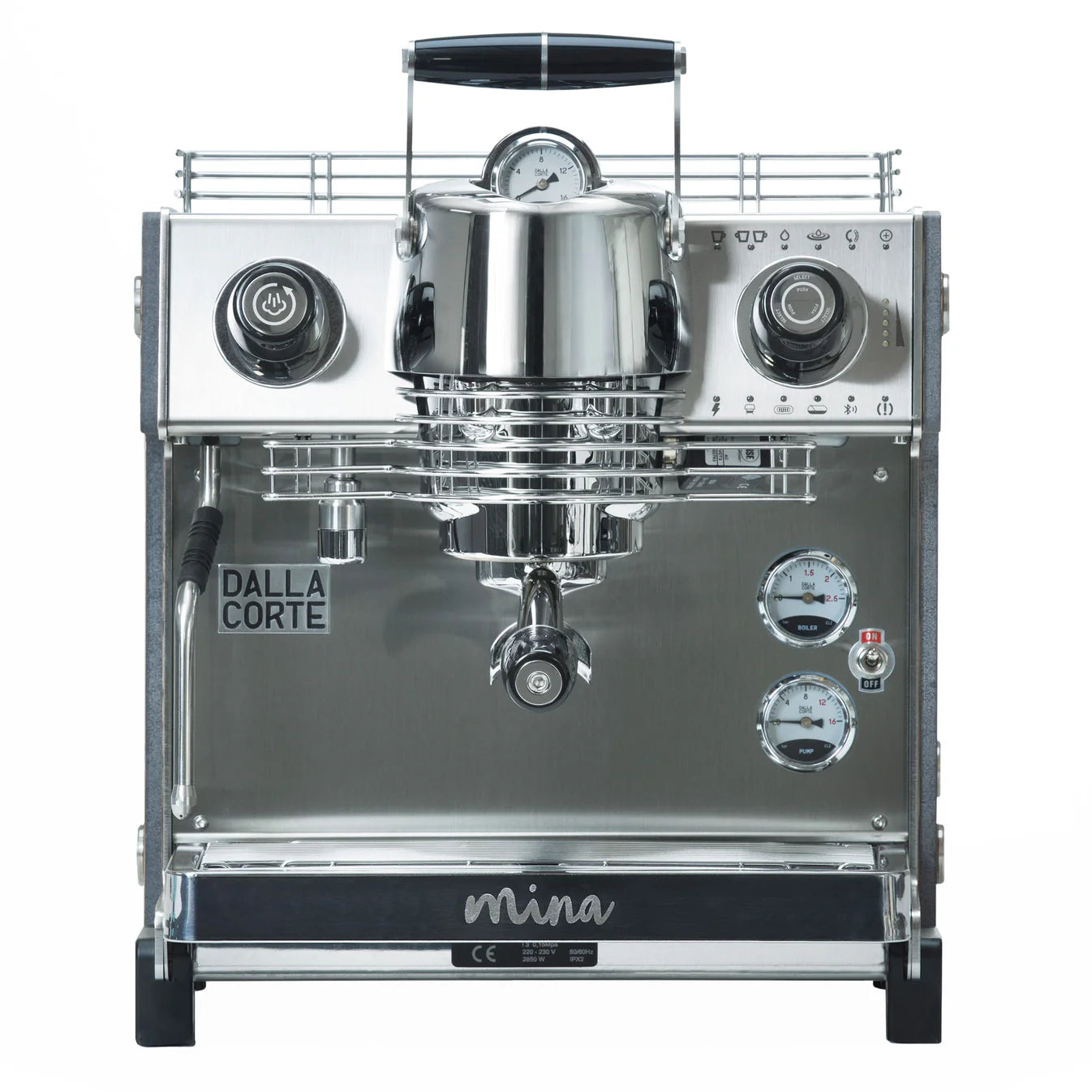
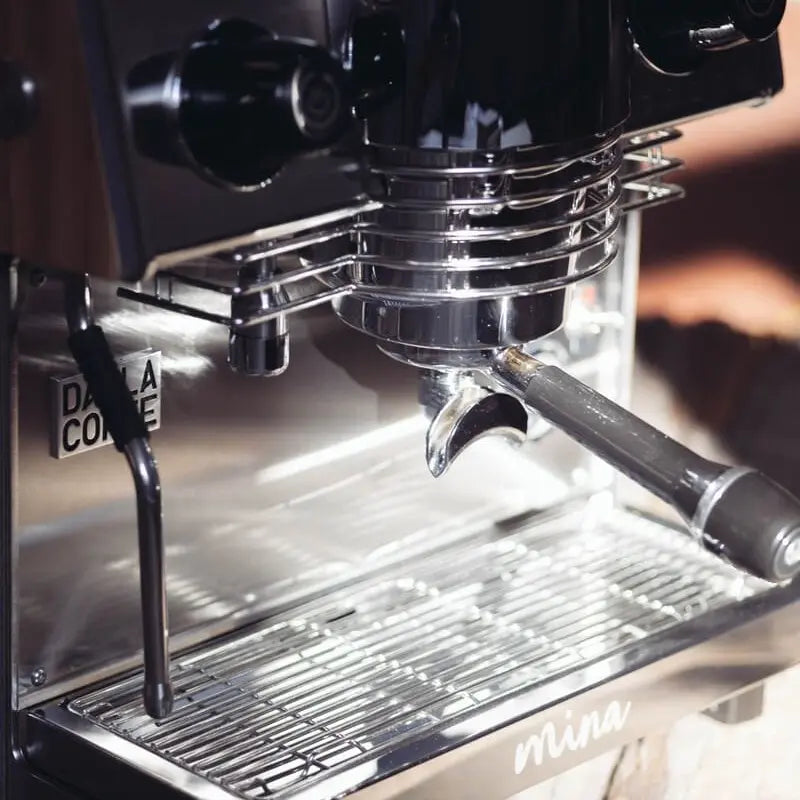
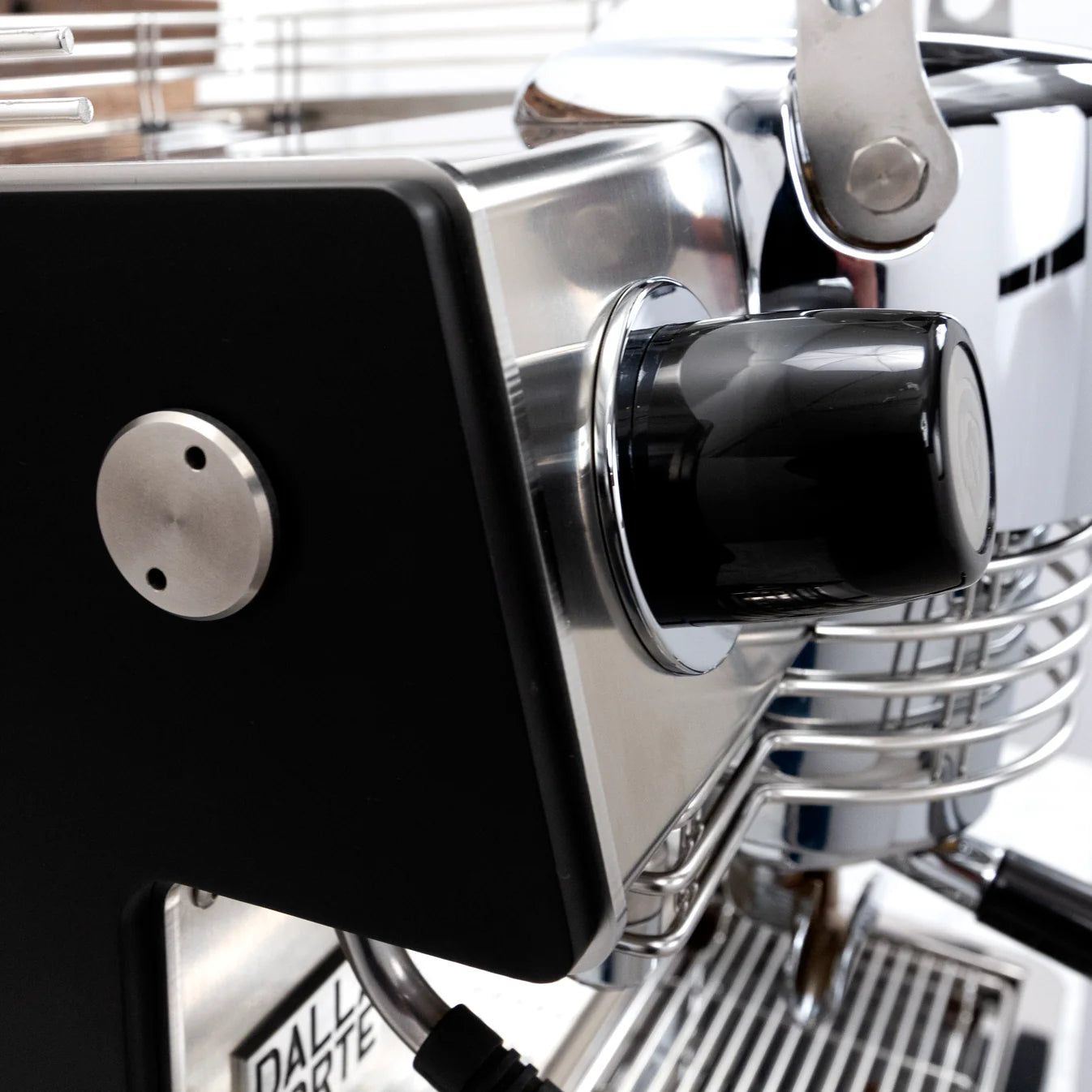
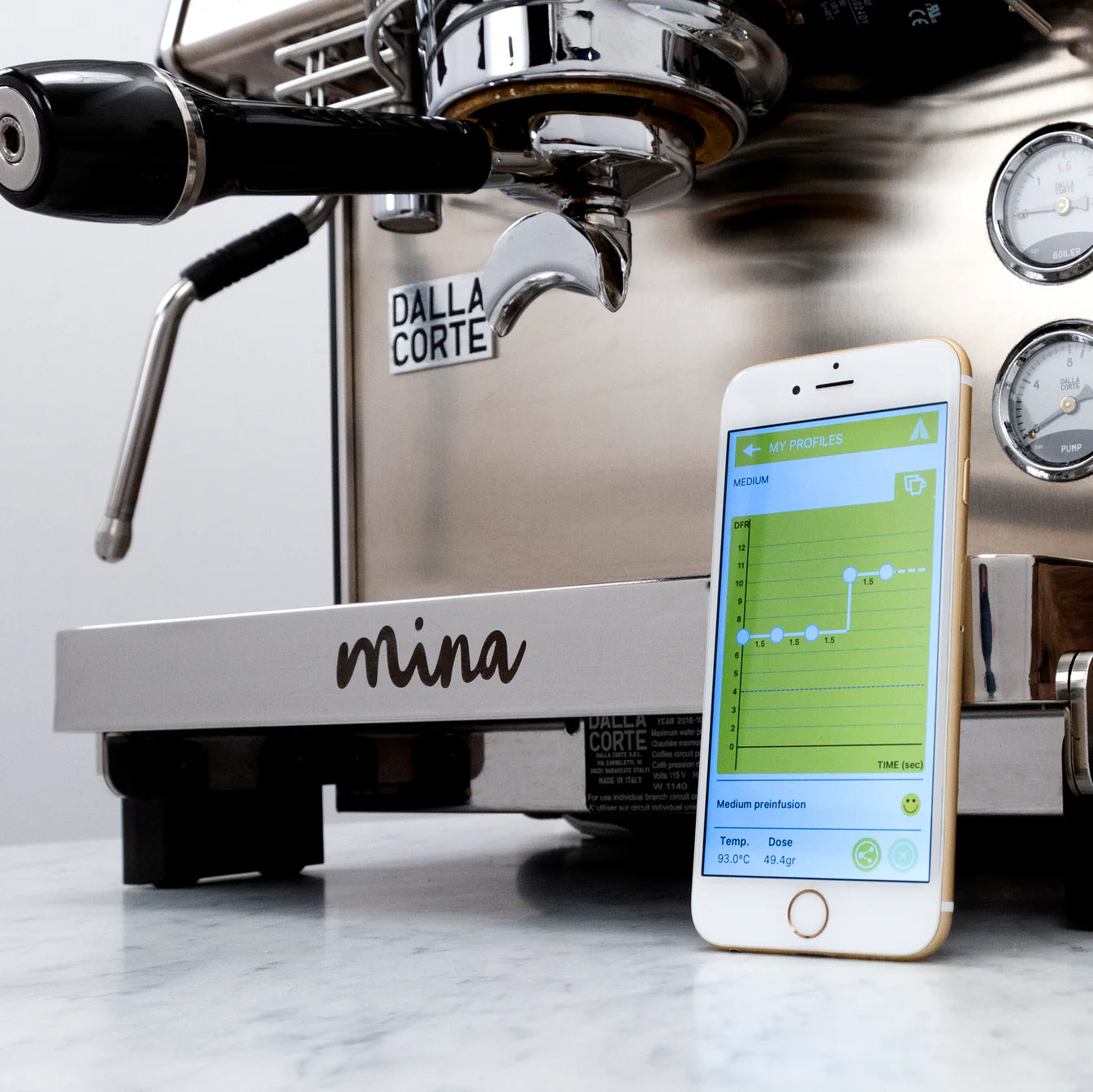
This is why temperature stability — not just temperature accuracy — is the critical specification for specialty-focused commercial bars in 2026. A machine that holds 94°C ±0.3°C across 80 consecutive shots is a fundamentally different tool from one that targets 94°C but varies by ±2°C during a busy service. The Dalla Corte Mina and Studio — with independent per-group boilers and Digital Flow Regulation (DFR) — represent the engineering answer to this requirement. Each group head maintains its programmed temperature with a precision that changes the viability of light roast espresso at commercial volume from hit-or-miss to consistently repeatable.
Pressure Profiling: From Competition Tool to Commercial Necessity
Pressure profiling — the ability to vary extraction pressure across the shot timeline rather than maintaining a fixed 9 Bar throughout — moved from competition barista technique to commercial relevance primarily because of light roasts and natural process coffees.
Dark blends are dense and compact at pressure. A flat 9 Bar profile works because the coffee's cell structure and solubility make it tolerant of that pressure from the first second of extraction. Light roasts and high-altitude single-origins, however, respond better to a lower initial pressure that gently saturates the puck before building to full extraction pressure — a technique called pre-infusion or pressure ramping. The lower initial pressure reduces channelling risk in coffees with irregular particle distribution, and the gradual pressure build creates a more even extraction front through the puck.
The commercial implication: cafés serving single-origin espresso without pressure profiling capability are leaving extraction quality on the table every service. The Espressa Falcon — with its thermomatic group head and programmable pre-infusion sequences via its 7-inch touchscreen — brings pressure profile capability to the mid-commercial tier at a credible espresso machine price for café in India. Operators can programme different pre-infusion profiles for different beans on the same machine, which is the operational flexibility a multi-origin espresso menu requires.
At the premium end, the Dalla Corte Studio's DFR system takes this further — real-time flow and pressure manipulation per shot, allowing the barista to respond to what they observe in the extraction rather than simply running a pre-set programme. For a roastery café where the barista's craft is the product, this level of control is the correct tool.
How the Specialty Shift Changes Grinder Requirements
The grinder conversation changes alongside the machine conversation when the menu moves toward specialty and light roast espresso — and this is where many Indian cafés are currently under-equipped even when their machine choice is appropriate.
Light roast espresso demands a finer grind than dark roast espresso to compensate for lower solubility. Finer grind settings mean the grinder's burr geometry and particle size distribution have a greater impact on extraction character. A grinder that produces acceptable uniformity for a forgiving dark blend may produce problematic fines distribution at the finer settings required for a light Ethiopian — leading to channelling and over-extraction in parts of the puck even when the overall extraction time looks correct.
The Ceado E7 — with its 64mm flat burrs and stepless micrometric adjustment — handles the finer settings that specialty single-origins require with the particle uniformity that consistent extraction demands. Its low-RPM motor architecture minimises heat generation at extended fine settings, protecting the volatile aromatic compounds in light roasts that are the entire point of serving them. For higher-volume specialty bars in Bengaluru or Delhi running 150+ shots of light roast daily, the Ceado REV Steel with its 83mm flat burrs provides the surface area and motor sustained output to handle fine grinding at commercial throughput without particle size drift across the service window.
Choosing a Commercial Espresso Machine in India for Specialty Coffee in 2026
The specialty wave has created a new decision matrix for Indian café operators that looks different from the one relevant three years ago. The question is no longer simply "how many cups per hour" but "what coffees are you serving and at what precision level do they need to be extracted."
Entry Specialty: Controlled Volume, Single-Origin Menu
For a new specialty café in a tier 2 city — Nashik, Mysuru, Dehradun — running a single-origin espresso menu at 40–70 cups per day, the equipment requirement is a machine with precise PID control, programmable pre-infusion, and group head temperature stability that thermosyphon machines cannot deliver consistently. The Espressa Aviator and Espressa Nimbus Pro — compact 1-group commercial machines — are designed for this application. The Aviator's pressure profiling capability and the Nimbus Pro's thermal stability at controlled volume give a new specialty operator the extraction precision that single-origin espresso requires without the footprint or capital commitment of a 2-group setup. Both are available with Coffee.Plus installation and training in India and pan-India technician support — critical for a first-time specialty setup in a city where specialist barista support is not locally available.
Mid-Commercial Specialty: Milk and Black Menu, 80–150 Cups
For a 50-seat specialty café running both milk-based drinks and a showcase single-origin espresso programme, a dual boiler espresso machine for a café in India is the correct architecture. Dedicated brew and steam boilers eliminate the thermal compromise that affects single-boiler and heat exchanger machines when steaming milk and brewing espresso overlap. The Izensso Raptor — with its T3 multi-boiler system and touchscreen recipe control — handles this volume with group head temperature stability appropriate for a light-to-medium roast espresso menu. Its programmable pre-infusion and independent group temperature management make it the practical choice for a mid-commercial specialty setup that needs consistency without the price point of a European flagship machine.
Premium Specialty and Roastery Cafés
For a roastery café where the espresso programme is the primary revenue driver and the coffee is routinely lighter, more complex, and more varied than a standard commercial menu, the Dalla Corte Mina or Studio is the equipment answer. No other machine at commercial volume combines per-group independent boiler control, DFR, and the kind of thermal precision that makes a Yirgacheffe natural process espresso as reproducible on cup 120 as it was on cup one. This is commercial coffee equipment for hotels and high-end café operators who understand that the machine's capability is the limiting factor on how well their coffee expresses itself.
The Indian Specialty Equipment Landscape: A Practical Overview
Mistakes to Avoid: The 2026 Specialty Café Equipment Trap
Mistake: Buying a machine designed for dark commercial blends and expecting it to perform well on light roast single-origins simply because it has a PID controller.
PID control manages boiler temperature accurately. It does not guarantee group head temperature stability across consecutive shots, pre-infusion capability for channelling-sensitive coffees, or the thermal architecture that light roasts require. A thermosyphon machine with a PID — adequate for a traditional espresso menu — will produce inconsistent results on a Kenyan washed espresso or an Indian natural process arabica because the group head temperature variance between consecutive shots at moderate service pace is wider than the extraction window those coffees allow.
If specialty coffee is the reason you are opening your café, let that drive the equipment specification from day one. Retrofitting specialty-grade equipment after six months of inconsistent results costs more in lost reputation and replacement capital than specifying correctly at the outset.
The specialty coffee movement in India is not slowing. Indian roasters will continue producing more complex, lighter coffees. Customer palates in Bengaluru, Delhi, Pune, and increasingly in Indore, Kochi, and Chandigarh are evolving toward appreciating and expecting those coffees extracted well. The café that invests in equipment capable of delivering that precision in 2026 is building a quality moat that cheaper equipment cannot close.
At Coffee.Plus, we have been watching this specialty shift develop across India for the last several years and have positioned our equipment range specifically to serve it — from the Espressa Aviator and Nimbus Pro for new specialty setups with a commercial espresso machine and installation and training in India, through the Izensso Raptor and Espressa Falcon for mid-commercial volume, to the Dalla Corte range for precision-first roastery applications. Every recommendation we make is grounded in understanding your specific coffee menu, daily volume, and the extraction precision your beans actually require. Pan-India service and AMC coverage ensure the machine performs at its specification throughout its commercial life. Visit our Experience Centre in Delhi at 14 Regency, Asola — bring your own beans, run them through machines at different precision tiers, and hear the difference that the right equipment makes for the coffee you are actually serving.