


![[PRE ORDER] MHW-3BOMBER Cube Coffee Scale 3.0 Mini Pro](http://coffeeplus.in/cdn/shop/files/MHW-3BOMBERCubeCoffeeScale2.0MiniCoffeePlus5.webp?v=1768422727&width=500)
![[PRE ORDER] TIMEMORE Black Mirror Basic 3.0](http://coffeeplus.in/cdn/shop/files/TIMEMOREBlackMirrorBasic3.0_1.webp?v=1769444750&width=500)


![[PRE ORDER] MHW-3BOMBER Cube Coffee Scale 3.0 Pro](http://coffeeplus.in/cdn/shop/files/MHW-3BOMBERCubeCoffeeScale3.0Pro2.webp?v=1777319705&width=500)


![[PRE ORDER] Espressa Orbit 64 PRO | MOKKOM Grinder](http://coffeeplus.in/cdn/shop/files/Espressa_Orbit_Pro_2.webp?v=1779828190&width=500)


![[PRE ORDER] MHW-3BOMBER X-Press58](http://coffeeplus.in/cdn/shop/files/X-press58.webp?v=1763141665&width=500)


![[PRE ORDER] MHW-3BOMBER Cyclone Needle Distribution Tool 58mm](http://coffeeplus.in/cdn/shop/files/CycloneNeedleDistributor.webp?v=1762881161&width=500)




The First 30 Days with Your New Commercial Espresso Machine: What Every Indian Café Operator Should Expect (2026)
A new commercial espresso machine does not perform at its peak on day one — and understanding this distinction between installation day and full operational readiness is what separates calm, confident operators from those who start questioning their equipment investment in week two. The first 30 days are a structured ramp-up phase, not a straight line from unboxing to full output. This guide maps exactly what to expect, what is normal, and what actually warrants a service call.
A café owner in Jaipur received his new espresso machine, had it installed, and called us on day three in a panic. His shots were inconsistent — extraction times ranging from 22 to 35 seconds, crema colour varying between pours, and his most experienced barista convinced the machine was faulty. After a 20-minute conversation, the picture became clear: no proper grind dial-in had been done with the actual bean batch, the machine had been running for three days without a single water-adjusted calibration, and the team had been pulling shots for paying customers from hour one without a break-in workflow. Nothing was wrong with the machine. Everything was wrong with the expectation that it would perform at full commercial consistency without a proper onboarding period.
This scenario plays out across Indian cafés every week. The machine is ready. The operation is not.
What Happens Mechanically in the First Week of Commercial Use
Every commercial espresso machine — regardless of price tier — goes through a mechanical settling period during its first 50–100 operating hours. This is not a flaw. It is how precision-engineered equipment with tight tolerances behaves as components reach their working temperature equilibrium for the first time under real load.
Group head gaskets compress and seat themselves to the portafilter during the first several hundred extraction cycles. Until this seating is complete, you may notice very minor seepage at the portafilter lock. This resolves on its own and is not a failure. On machines like the Espressa Base and Espressa ES.One — where the group head gasket is a high-quality commercial-spec component — this seating process typically completes within the first 3–5 days of service.
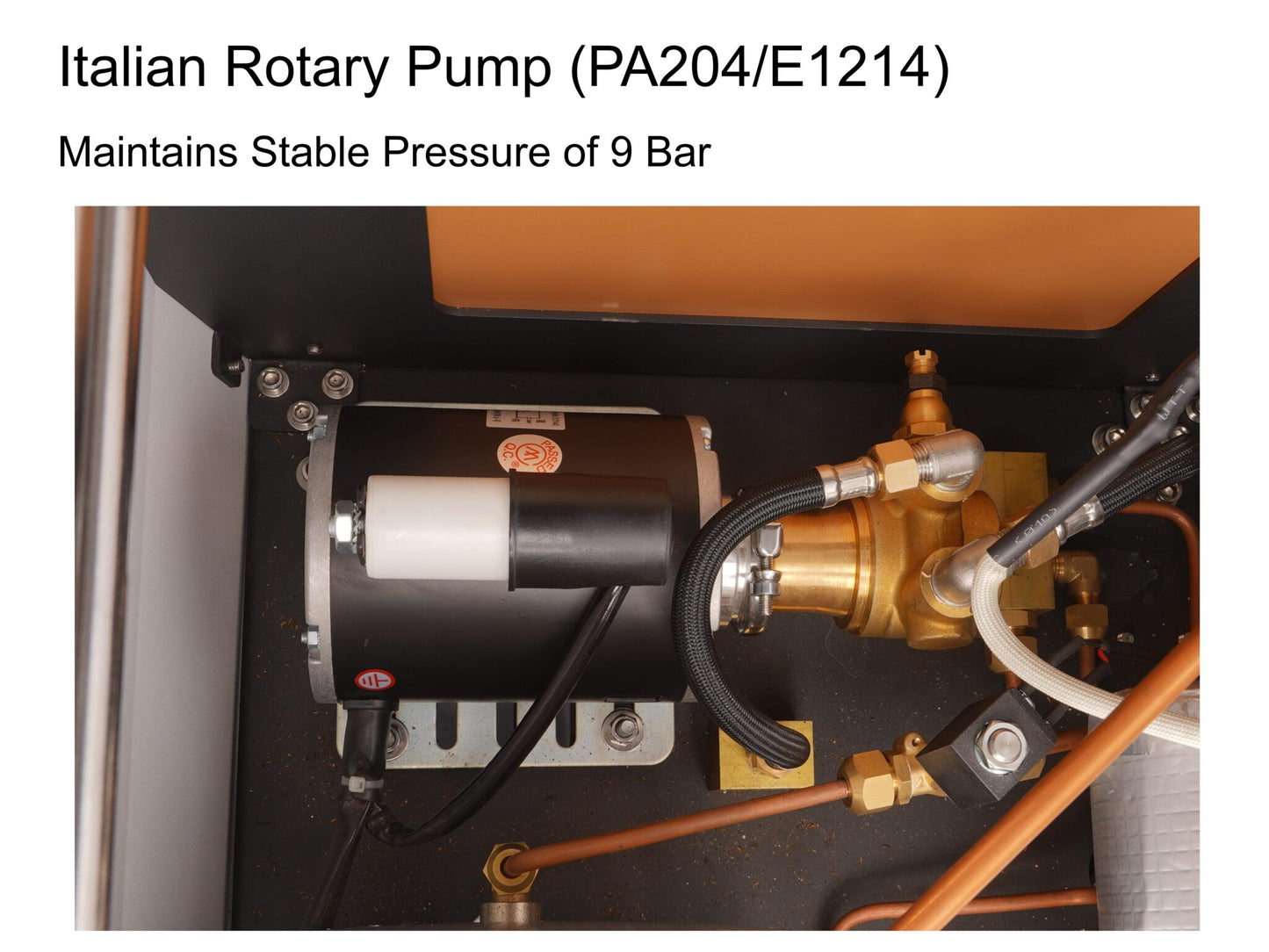
The pump primes and stabilises its operating pressure over the first operating week. On volumetric machines, flow rates through the group may vary slightly in the first 20–30 operating hours before the pump reaches its settled operating state. A rotary pump — as found on mid-to-upper commercial machines including the Izensso Raptor — reaches stable pressure faster and with less variance during this period than a vibration pump, which is one of the practical reasons rotary pump architecture is recommended for cafés where day-one output consistency matters.
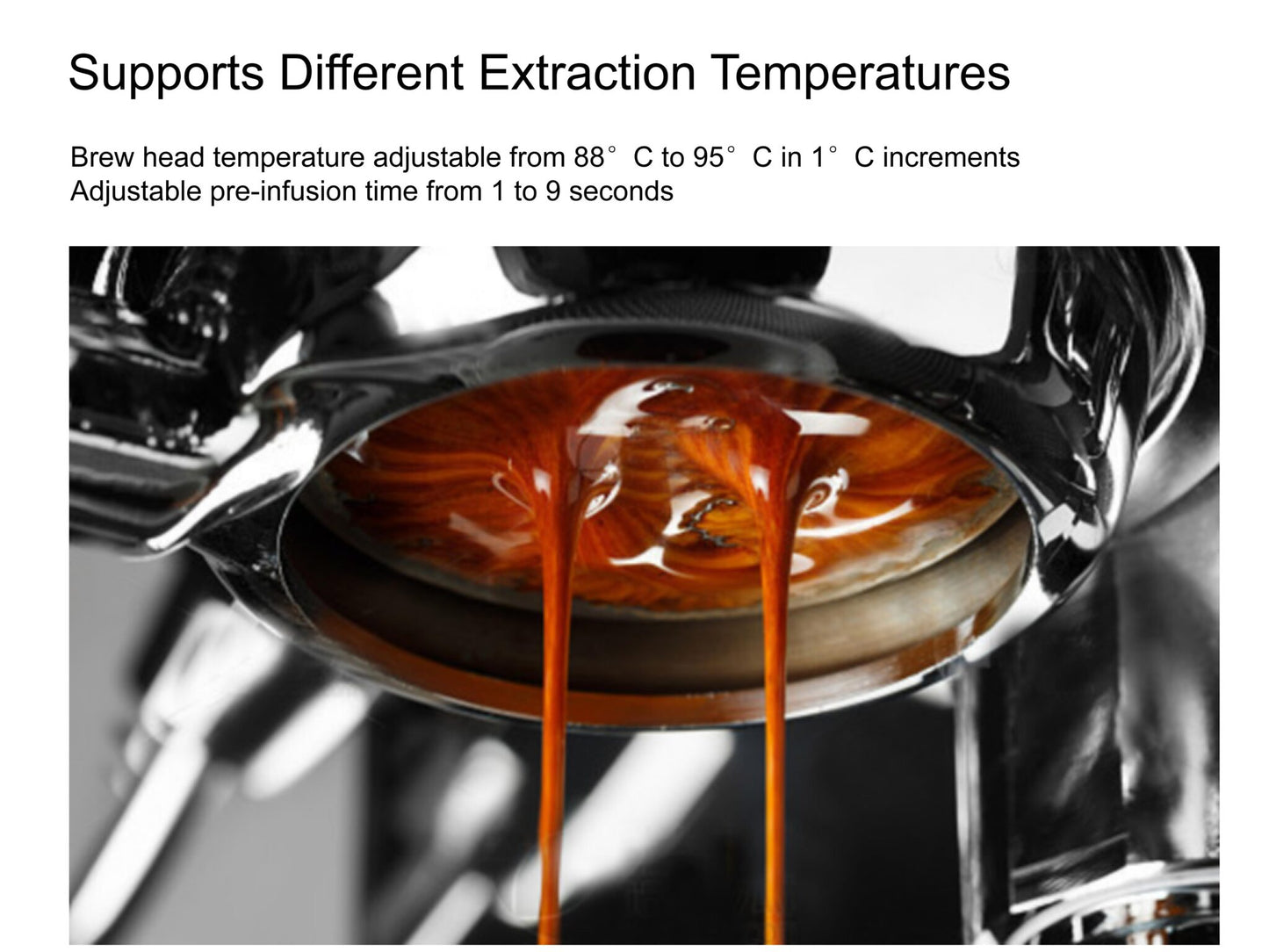
PID calibration and temperature stabilisation refine themselves over the first week of real use at your specific ambient temperature and water conditions. A machine installed in a hill station café at 12°C ambient temperature will behave differently in its first thermal cycle than the same machine installed in a coastal Mumbai kitchen at 32°C. This is not a machine problem — it is the PID finding its equilibrium in your specific environment. By day 5–7, the machine's thermal behaviour will be predictable and repeatable.
What to do: Run the machine through its full daily operation — warm-up, extraction sessions, steaming — for a full week before drawing any conclusions about extraction consistency. Document your grind setting, dose weight, and extraction time each day. The trend toward consistency will be visible across the week.
The Grinder Dial-In Phase: Why Days 1–7 Are About the Grinder, Not the Machine
The most common misread in the first week is attributing inconsistent shots to the espresso machine when the problem is entirely in the grinder. A new commercial espresso machine does not produce consistent extraction if the grinder feeding it has not been properly dialled in to the specific bean batch, roast date, and ambient humidity conditions of that environment.
Grinder dial-in for a new commercial setup typically takes 3–7 full operating days for an experienced barista and up to 10–14 days if the team is newer to commercial workflows. During this period, your target extraction window — 25–30 seconds for a standard 18g dose at 1:2 ratio — will be hit inconsistently. This is the expected and correct state for a new setup. It means the calibration process is working.
The Ceado E7 — paired frequently with commercial Espressa machines in mid-volume café setups — has a Steady Lock Grinder system that holds the calibrated setting between sessions, which significantly reduces daily re-dialling time once the initial setting is found. Without this feature, a grinder can drift between barista shifts and make the machine appear inconsistent when the actual variable is the grinder losing its calibrated position. If your team is re-dialling every morning by more than 2–3 steps in the first two weeks, check whether the grinder's adjustment mechanism is secure — not the machine's calibration.
For cafés running lighter specialty roasts — increasingly common in Bengaluru, Pune, and other tier 1 specialty markets — the Espressa Firenze grinder with its flat burr architecture produces a particle distribution suited to longer extraction windows that light roasts require. Dialling in a light roast on a grinder calibrated for darker blends extends the first-week learning period. Account for this in your opening timeline.
The Staff Learning Curve: Weeks 1–2
A commercial espresso machine with installation and training in India is not the same as a machine that has been in daily operation for six months. The human variable is as significant as the mechanical one in the first 30 days.
Staff learning on a new machine follows a predictable arc. In the first week, every drink takes longer — the team is reading the interface, adjusting to the workflow, and building the muscle memory that makes a commercial bar flow efficiently. On a machine like the Espressa Falcon with its 7-inch touchscreen and stored pre-infusion recipes, the learning curve is compressed because the interface is intuitive and recipes are repeatable from button presses rather than manual judgement. On a manual machine without programmed dose control, the team learning period is longer and the quality variance during that period is wider.
Practical guidance for operators during weeks 1–2:
-
Run a dedicated training hour each morning before service opens — 20–30 shots dialled in before the first paying customer
-
Designate one lead barista as the calibration owner for the first two weeks
-
Do not expect full commercial output speed in week one. Build the service window by 20% to account for slower drink cycles
-
Track extraction time and cup quality on a simple daily log — the trend matters more than any single session
For teams on a dual boiler espresso machine for a café in India — whether the Izensso Raptor or Espressa Falcon — the specific training requirement is understanding when to use each boiler's output and how to run parallel steam and brew workflows without thermal interference. This is a skill that develops in weeks 2–3, not day one.
Week 2–3: What Good Looks Like
By the end of week two, the following should be true for a properly installed and calibrated commercial setup:
-
Extraction times are hitting the target window (25–30 seconds at standard dose and yield) on more than 70% of pulls without adjustment
-
The grinder's dial-in setting is stable across shifts and requires only minor correction when bean batches change
-
Staff are producing drinks at close to target workflow pace — not full commercial speed yet, but directionally correct
-
The machine is warming up to stable operating temperature within the expected window (15–20 minutes for thermosyphon machines like the Espressa Base or Espressa ES.One, 10–15 minutes for multi-boiler machines like the Izensso Raptor)
If extraction times are consistently outside the target window and daily grinder adjustment is not closing the gap, the problem is almost always one of three things: water TDS outside the recommended range, a bean batch that needs a different calibration profile, or a grinder burr that was not correctly aligned during installation. None of these are machine failures. All of them have straightforward fixes.
Week 3–4: Approaching Full Commercial Readiness
The benchmark for full commercial readiness — the point at which a machine and team should be operating at designed throughput — is typically day 21–30 for most commercial setups. Here is what that benchmark looks like by machine tier:
These timelines assume a professional installation, correct grinder pairing, filtered water within recommended TDS range, and a trained barista leading the calibration process. Cafés with newer teams should add 5–7 days to each estimate.
When to Actually Call Service: The Signals That Are Not Normal
Understanding what is normal during break-in makes it equally important to know what is not. These are the indicators that genuinely warrant a service contact — not panic, but a proactive call to your installation team:
-
Water leaking from the group head continuously after week one — minor seepage in days 1–3 is normal; persistent leaking after day 7 is a gasket or seal issue that needs inspection
-
Pump pressure reading below 8 Bar or above 11 Bar at steady state — pressure outside this range after the first operating week indicates a pump or OPV (over-pressure valve) calibration issue
-
Boiler not reaching temperature within the expected warm-up window — a machine that is still not at target temperature after 30 minutes has a PID or heating element issue
-
Steam wand with significantly reduced pressure after cleaning — a blocked steam tip is a cleaning issue; a steam wand with full pressure loss after clearing the tip is a solenoid or boiler pressure issue
-
Shot extraction stopping mid-pull consistently — indicates a pump failure or blockage, not a calibration issue
The distinction matters because most café owners in India, operating in tier 2 and tier 3 cities without immediate access to technicians, tend to either over-report normal break-in behaviour or under-report genuine issues by assuming everything is a calibration problem. The list above draws that line clearly.
Mistakes to Avoid: The First-Month Decision That Sets the Entire Lifecycle
Mistake: Opening at full commercial capacity on day one without a staged ramp-up.
The most expensive first-month mistake is not allowing the machine, grinder, and team to develop together before committing to full service load. A café that opens with 100-cup Saturday service on day three of operation, with a team that has had two days on the machine and a grinder still being dialled in, is not giving its equipment investment a fair operating start. The quality variance during that period creates a negative first impression with customers that takes weeks to undo — not because the machine is incapable, but because the setup was never given its proper calibration window.
Build a soft-launch week into your opening plan. Run the machine at 50–60% capacity for the first 5–7 days. Use the extra time between orders to dial in, clean thoroughly, and let the team build confidence on the workflow. By day 10, the machine will be closer to its designed performance level and the team will be pulling consistent drinks with actual speed.
At Coffee.Plus, the installation and training package that comes with every commercial espresso machine is specifically structured to compress this break-in phase. Our technicians calibrate the machine to your specific water profile and bean batch on installation day, and barista training covers the dial-in workflow, cleaning protocol, and common first-month scenarios before we leave the site. Pan-India technician support means that any genuine issue during the first 30 days — wherever your café is located — has a real response path, not just a phone number. AMC programs cover the machine from its first preventive maintenance visit through its full commercial lifespan. If you want to understand what the first-month workflow looks like on the actual machine before making the investment decision, our Experience Centre in Delhi at 14 Regency, Asola is the right place to spend a few hours — with the machines running at operational pace and our team walking through exactly what to expect.