








Choosing Between 1-Group and 2-Group Machines for Small Indian Cafés in 2026
For a small café, bakery, or kiosk, the real decision is not “one group or two” in isolation — it is whether your machine can keep up with your busiest hour without slowing service or overcomplicating training. A 1-group commercial espresso machine can be the right business choice for 30–70 cups per day, but once you push into 70–150 cups per day, a 2-group setup often becomes the more profitable option because it protects speed, consistency, and staff sanity.
A bakery owner in Jaipur once told us the machine was “working fine” until Saturday brunch exposed the problem. On weekdays, the single-group setup handled lattes and cappuccinos without drama. On weekends, the queue doubled, the same machine suddenly felt slow, and the barista started rushing shots to clear orders. The coffee was still coming out, but the bar was no longer running as a business system — it was running as a bottleneck. That is usually when small café owners begin searching for an espresso machine price for cafe in India and asking whether they really need to step up to a 2-group machine.
What A 1-Group Actually Handles
A compact 1-group commercial machine is enough when your daily volume is controlled and your menu is not heavily milk-driven. It works well for kiosks, boutique cafés, small bakeries, and hotel corners that serve espresso drinks but do not need two staff members pulling and steaming in parallel. If you are in the 30–60 cups per day range, a 1-group can be the smartest use of capital because it lowers upfront investment, simplifies training, and fits tighter counters.
That is why machines like the Espressa Nimbus Pro, available with Coffee.Plus pan-India technician support, are relevant for this segment. The Nimbus is designed for small-format commercial work where consistency matters more than raw capacity. The same logic applies to the Espressa Aviator, also available with Coffee.Plus pan-India technician support, and entry commercial options like the Casadio Nettuno A/1, which gives a compact 1-group layout with commercial steam and brew stability. These are practical choices when you want a commercial espresso machine for small cafe in India without paying for idle capacity you will not use.
A 1-group also suits businesses where the espresso menu is supportive rather than central. If coffee is one of ten categories on the menu, the machine only needs to cover predictable demand. In that case, a 1-group with good thermal stability is often the best machine for a small café because it keeps the counter simple and the team focused.
When A 2-Group Becomes Essential
The moment you cross into 70–150 cups per day, the math changes. A 2-group machine is not just about speed; it is about protecting quality under pressure. One group can be pulling espresso while the other is ready for the next ticket. One barista can steam while the other extracts. That parallel workflow is what keeps a café from collapsing during a Saturday rush or a holiday spike.
For many owners, the decision point is the best espresso machine for 50 seat cafe India question. At that size, the machine is no longer a background asset. It becomes part of revenue protection. If you have a 50-seat café with milk-heavy demand, a 1-group machine can be technically enough on paper and still fail operationally in reality. A 2-group lets you absorb peak demand without turning the team into firefighters.
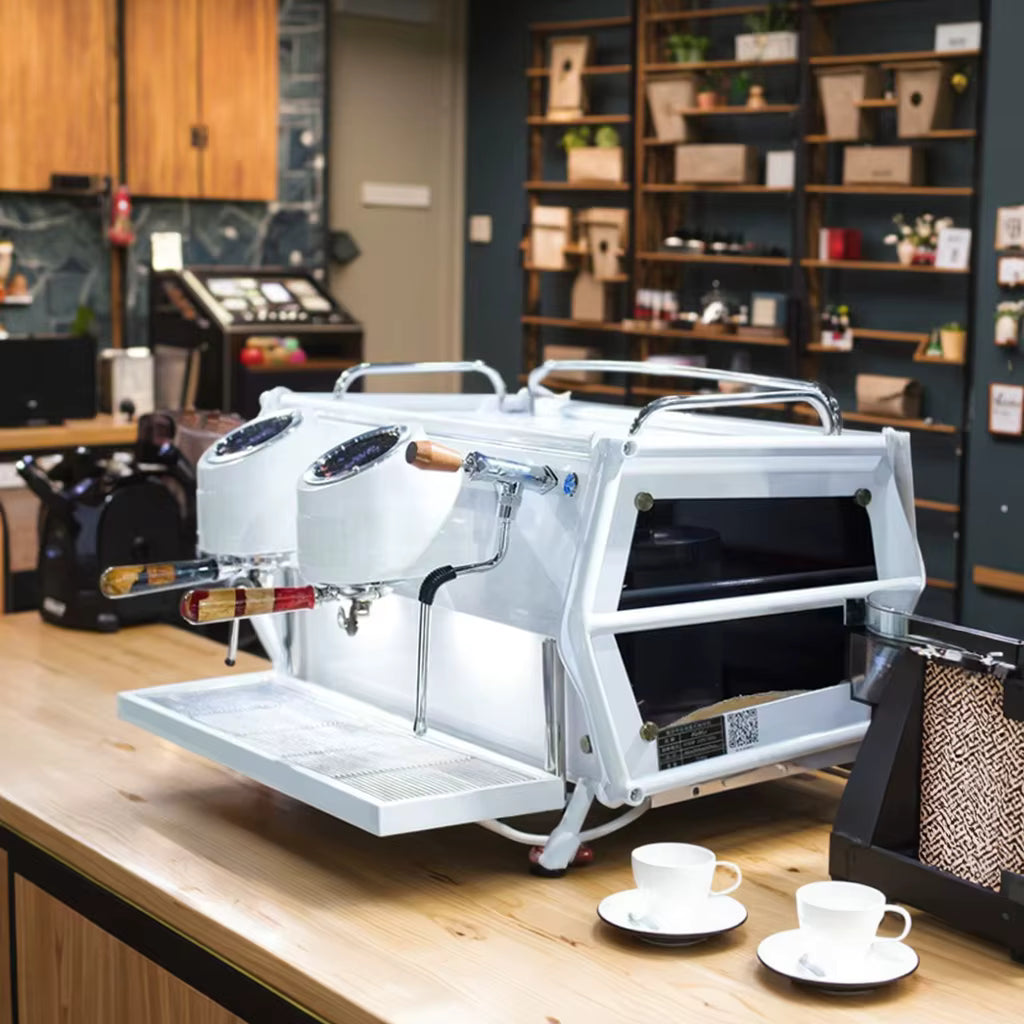
This is where models like the Espressa Atlantic 2 G, available with Coffee.Plus pan-India technician support, and the Espressa ES One - 2 Gr, also available with Coffee.Plus pan-India technician support, make sense. They are built for cafés that want a dual boiler espresso machine for cafe India style stability without jumping into oversized premium equipment. The Espressa Atlantic 2 G is especially relevant for operators who want a commercial setup with a stronger thermal buffer and more forgiving workflow. For buyers considering a 2-group machine at the BOFU stage, the Espressa Atlantic 2 G price India conversation usually comes down to whether the café wants a compact commercial system that can still handle real-world volume.
How To Decide By Daily Volume
If your demand is still uncertain, compare the daily peak rather than average weekday volume. A café doing 55 cups on weekdays and 110 on Sundays is already behaving like a 2-group business even if its average looks small. That is the difference between a machine that feels sufficient and a machine that actually protects revenue.
Grinder Pairing Matters As Much As Group Count
The machine decision is only half the story. A 1-group setup paired with the wrong grinder becomes difficult to manage, and a 2-group setup with an undersized grinder creates a different bottleneck. For small cafés, the grinder should match the pace and consistency of the machine, not just the budget.
For 1-group operations, the Espressa grinder range and compact commercial models from Coffee.Plus are suited to lower daily volumes where precision and retention control matter more than high-speed output. For 2-group cafés, the Ceado range available with Coffee.Plus pan-India technician support becomes more relevant because faster output and more stable grind quality matter during rush periods. A model like the Ceado REV Steel is especially useful when the café wants better weight-based dosing and steadier grind temperature under sustained use.
This matters because a 2-group machine only earns its keep if the grinder can feed it. A café asking for the best espresso machine for 50 seat cafe India should be asking the same question about the grinder — otherwise the machine upgrade solves one problem and creates another.
Which Setup Fits Which Café Type
Mistakes To Avoid
Mistake: Buying a 1-group because the café is small today, then discovering six months later that the team has outgrown it.
This is one of the most expensive planning errors in café equipment buying. Small does not always mean low-volume, and a compact counter does not always mean a low-demand service model. A bakery with weekend footfall can need a 2-group before a 40-seat café does. A kiosk in a premium mall can outpull a neighbourhood café twice its size.
The other mistake is buying a 2-group just because it feels “more professional.” If your real demand is 35–45 cups per day, a 2-group can create unnecessary complexity, higher service costs, and more training burden than you need. The right answer comes from volume, peak timing, and team structure — not vanity.
At Coffee.Plus, we help operators choose equipment the way café owners should think about it: by workflow, recovery time, and service support. Whether you are comparing an Espressa Nimbus Pro, Espressa Aviator, Casadio Nettuno A/1, Espressa Atlantic 2 G, or Espressa ES One - 2 Gr, the decision is easier when the machine is matched to your real customer flow. Our installation and training India support, AMC planning, and genuine spare parts network are built to keep your setup running after the opening excitement fades. If you are still deciding between a commercial espresso machine for small cafe in India and a 2-group upgrade, our Experience Centre in Delhi at 14 Regency, Asola lets you test the machines in a real commercial setting before you commit.