









Group Head Temperature Stability in Commercial Espresso Machines: The Spec That Separates Budget from Professional (India 2026 Guide)
The temperature printed on a commercial espresso machine's spec sheet is the boiler temperature — not the temperature at the group head, where water actually contacts coffee. That gap between the two numbers is where extraction quality lives or dies. This guide explains how different group head architectures manage thermal stability, why budget machines lose 3–5°C between shots during a rush, and which design matches your café's volume and menu.

What Group Head Temperature Actually Means for Espresso Extraction
When hot water enters the group head and passes through the coffee puck, it transfers energy to the ground coffee as it extracts soluble compounds. The temperature at this point — not inside the boiler — is what determines which compounds dissolve and in what proportions.
Espresso extraction is temperature-sensitive within a narrow window. At 88–90°C, lighter roasts under-extract, producing sour, flat shots. At 94–96°C, darker roasts can over-extract, producing bitter, harsh ones. The optimal range for most commercial blends and specialty roasts sits between 91–94°C at the group head — and holding that range consistently across 100 back-to-back drinks in a busy service is the real technical challenge.
A machine that holds 93°C on its first shot but delivers 89°C on the eighth shot during a rush has a thermal stability problem — even if the PID is functioning perfectly and the boiler reads exactly 93°C throughout. The group head is the thermal environment that the boiler feeds, and group head design determines how faithfully the boiler's temperature is translated into the water that actually brews the espresso.
The Three Group Head Architectures: How Each Manages Temperature
Thermosyphon: The Entry Standard
A thermosyphon group head circulates hot water from the boiler through the group head by passive convection — warmer water rises, cooler water falls, creating a continuous slow circulation that keeps the group head warm.
The advantage is simplicity: no active components, no electrical control in the group head itself, relatively low manufacturing cost. The thermosyphon works well at low volume and under stable ambient conditions.
The limitation becomes visible under commercial load. When consecutive shots are pulled rapidly, cool water from the fill cycle temporarily breaks the thermosyphon circulation pattern. The group head cools by 2–4°C between shots during a rush — not dramatically, but enough to shift extraction character across a service window. In Indian café environments where ambient kitchen temperature can rise significantly during summer service, thermosyphon stability degrades further because the temperature differential driving convection becomes less reliable.
Machines like the Casadio Nettuno and the Espressa ES.One operate at this tier — thermosyphon group heads with PID-controlled boilers. They are genuine commercial machines capable of sustained daily output, and for cafés running a milk-forward menu at moderate pace where shot-to-shot temperature precision is not the primary variable, they perform reliably. The coffee knowledge here is important: a skilled barista on a thermosyphon machine can compensate through technique — flushing the group head before each shot to stabilise temperature — but this adds 5–7 seconds per drink and requires consistent execution across every barista on every shift.
E61 Group Head: Thermal Mass as a Stability Mechanism
The E61 group head — originally designed in 1961 by Faema, now one of the most widely used group head architectures in commercial and prosumer machines — takes a fundamentally different approach to thermal stability. Rather than relying on the thermosyphon's passive convection alone, the E61 uses a combination of thermosyphon circulation and significant thermal mass.
The group head is a large, heavy machined brass body. Brass holds heat effectively and releases it slowly — it acts as a thermal buffer between the boiler and the brew water. When cool water from a fresh dose enters the group, it heats quickly from contact with the mass of the brass group body rather than depending entirely on the boiler's response speed.
The practical result: Shot-to-shot temperature recovery is faster and more consistent than a simple thermosyphon design. The E61 also includes a built-in pre-infusion mechanism — the cam-operated lever allows water to gently wet the coffee puck at low pressure before full extraction pressure is applied. This pre-infusion is not programmable on traditional E61 designs, but its presence improves consistency on coffees prone to channelling.
The limitation of the E61 is that the thermal mass requires a long warm-up time — typically 20–30 minutes — before the brass reaches stable operating temperature. A café that turns the machine on 10 minutes before service is not pulling consistent shots from an E61 machine, regardless of boiler temperature.
Saturated Group Head: Direct Boiler Connection for Maximum Stability
A saturated group head removes the thermosyphon intermediary entirely. The group head is directly connected to the boiler — it is literally flooded with boiler water at all times. Boiler temperature is group head temperature, continuously and directly.
The thermal stability of a saturated group head under commercial load is significantly better than either thermosyphon or E61 designs because there is no temperature gradient to manage between the boiler and the group. When a shot is pulled, fresh boiler water immediately replaces what was used. When the next shot starts, the group head is already at boiler temperature — there is no cool-down recovery period to compensate for.
The tradeoff: saturated group heads require the boiler to be large enough and thermally capable enough to supply the group head directly without its own temperature dropping during high-output sequences. This is why saturated group head designs almost always appear on machines with more substantial boiler architecture.
How PID Control Helps — and Where It Reaches Its Limit
A PID controller (Proportional-Integral-Derivative) is a digital temperature management system that monitors boiler temperature in real time and adjusts the heating element to correct for deviations. Before PID controllers became standard, commercial machines relied on pressurestat control — a simpler mechanism that allowed wider temperature swings.
PID control is a genuine improvement over pressurestat in terms of boiler temperature accuracy. A well-calibrated PID holds boiler temperature within ±0.5°C rather than the ±2–3°C typical of a pressurestat. That accuracy is meaningful for extraction quality.
What a PID cannot do is compensate for group head thermal mass loss between shots, cool water entering the group from the supply line, or ambient temperature effects on the group head exterior. A PID is a boiler management tool. It does not directly manage group head temperature. This is why a machine can have precise PID control and still show shot-to-shot temperature variation in the cup — the boiler is stable, but the group head between it and the coffee is the variable.
This distinction is critical for commercial buyers evaluating espresso machine prices for cafés in India. A PID is necessary but not sufficient for thermal stability in a high-output commercial environment.
Choosing a Commercial Espresso Machine in India: Matching Group Head Architecture to Your Volume
Understanding group head design translates directly into which machine tier matches which commercial environment.
Entry Commercial: Thermosyphon with PID
For a commercial espresso machine for a small café in India running 30–60 cups per day with a blend-forward menu and moderate service pace, thermosyphon group head machines with good PID control are appropriate and cost-effective. The Casadio Nettuno — with a compact commercial body and thermosyphon group — and the Espressa ES.One both sit here. At a sensible espresso machine price for a café in India, they handle consistent commercial output when the workflow supports them. The key is correct group head management: flush before each shot, allow proper warm-up, maintain clean group head gaskets.
The Espressa Base follows the same thermal architecture at entry level — thermosyphon-fed, PID-controlled boiler, straightforward commercial operation. It is the honest starting point for a first commercial bar where volume is controlled and the menu does not demand shot-to-shot temperature precision.
Mid-Commercial: Multi-Boiler Thermal Management
The step change from thermosyphon to multi-boiler architecture is where commercial performance meaningfully separates from entry commercial.
A multi-boiler machine — like the Izensso Raptor with its T3 multi-boiler system — dedicates independent boilers to brewing and steaming, each managed by its own PID. The brew boiler maintains the group head at the correct temperature regardless of steam demand, because the two systems are thermally isolated. This eliminates the temperature drop that affects heat exchanger machines when steam and brew cycles overlap, which is the dominant failure mode during a busy service window.
The Espressa Falcon, with its thermomatic heating system and independent group temperature control, operates at the same architectural logic — each group's thermal environment is managed independently, allowing the staggered parallel workflow that high-volume commercial bars require without thermal compromise between groups.
For cafés running the best espresso machine setup for a 50-seat café in India — where 80–100 drinks per hour is the peak window — multi-boiler architecture is not a premium feature. It is the minimum viable specification for delivering consistent extraction quality throughout the service, not just at the start of it.
Premium Commercial: The Dalla Corte Approach
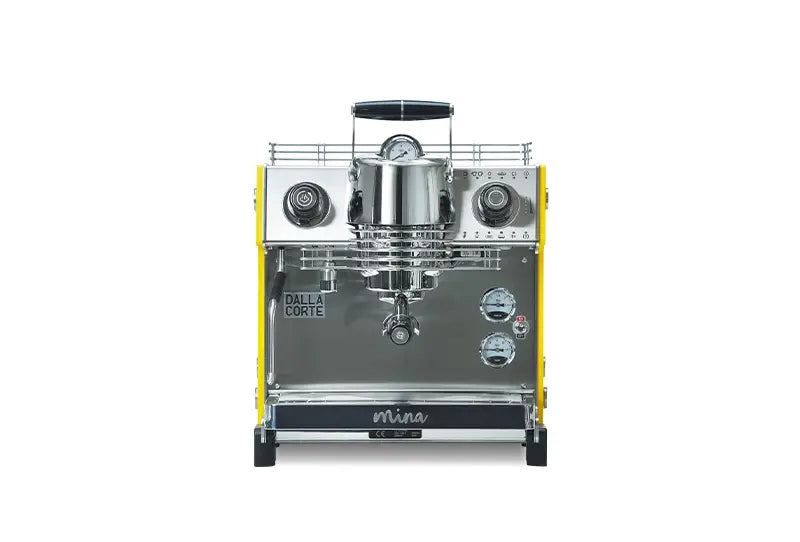
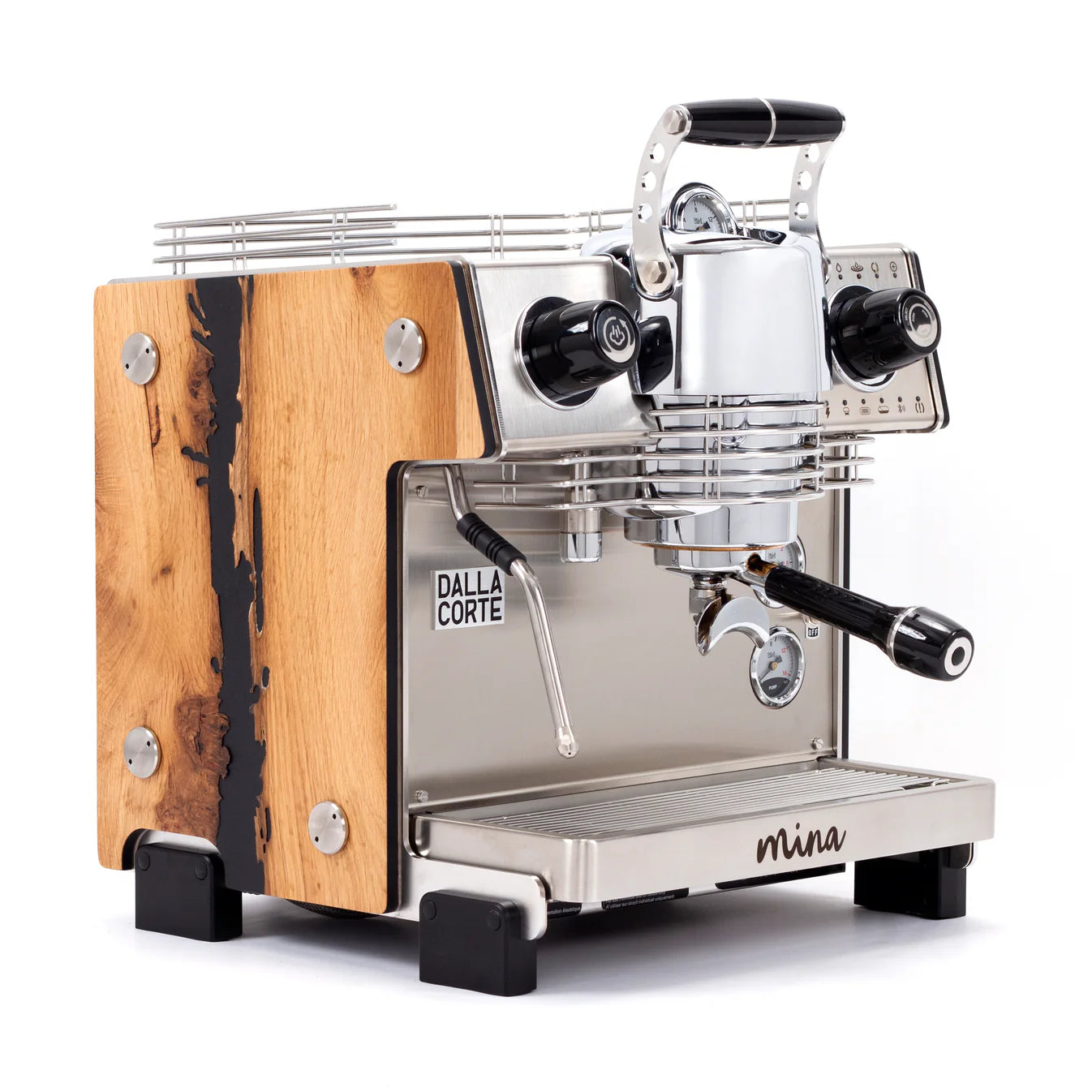
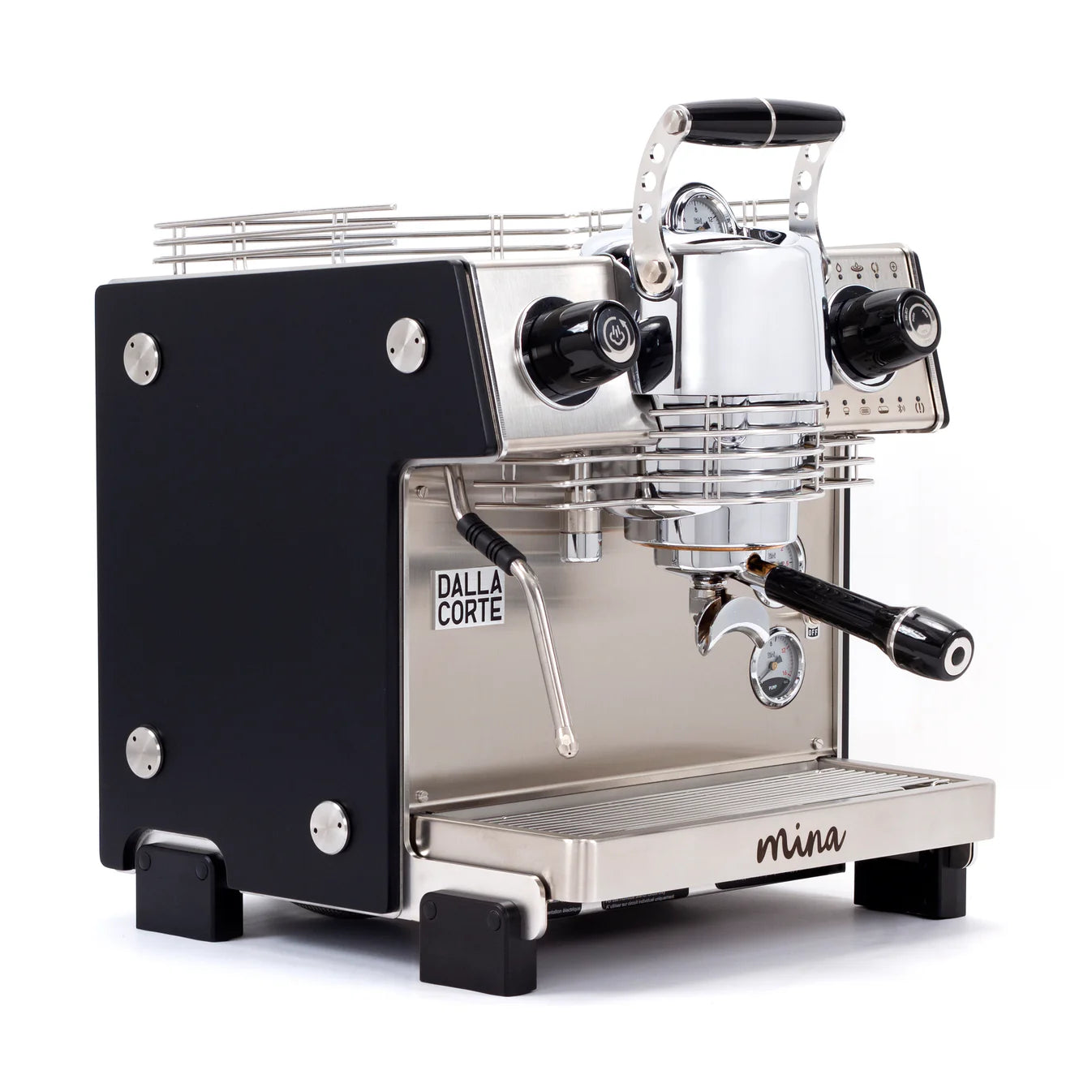
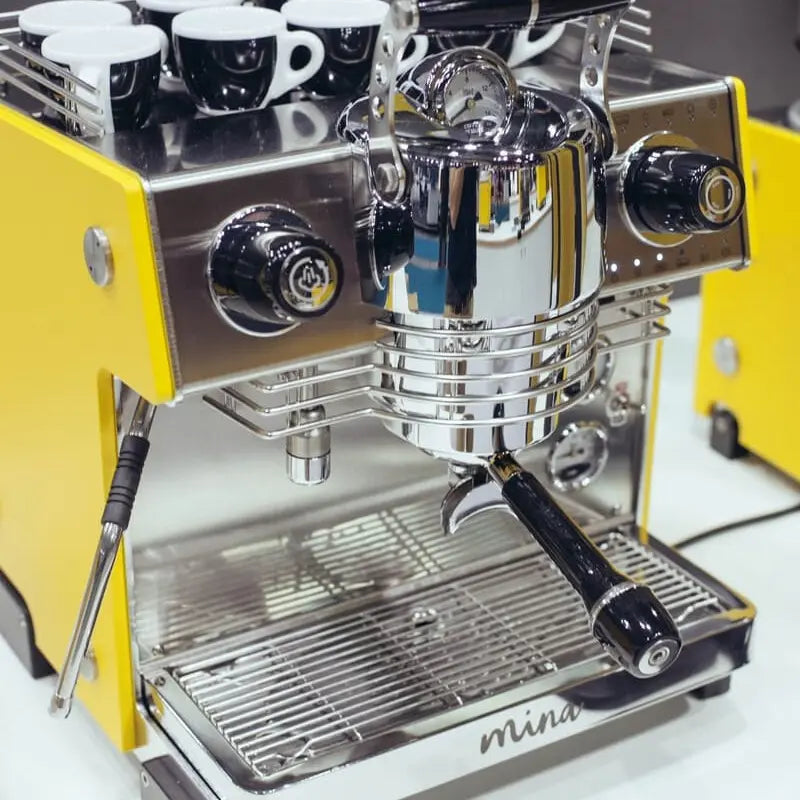
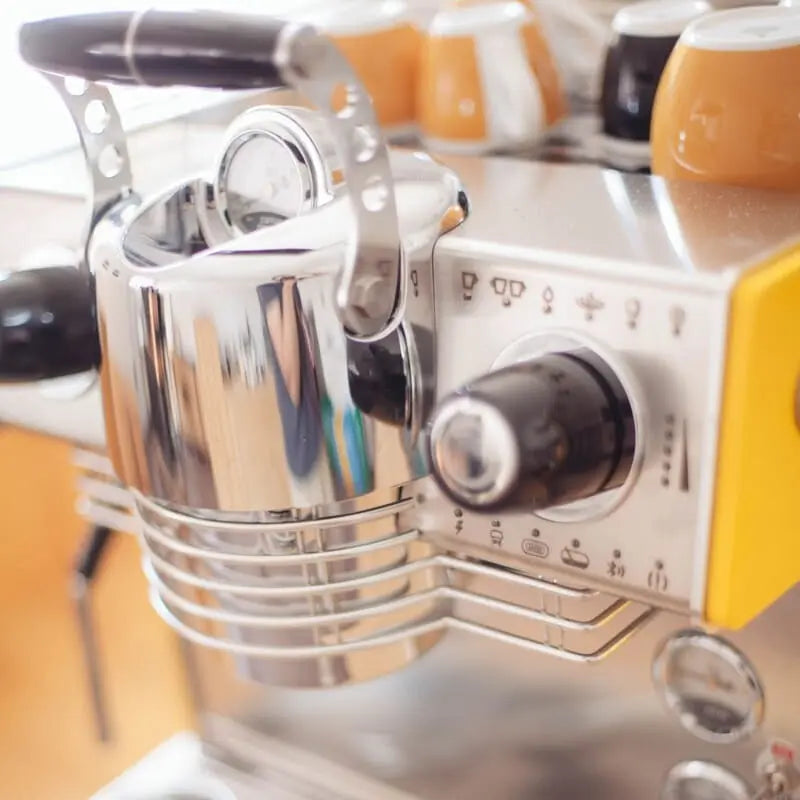
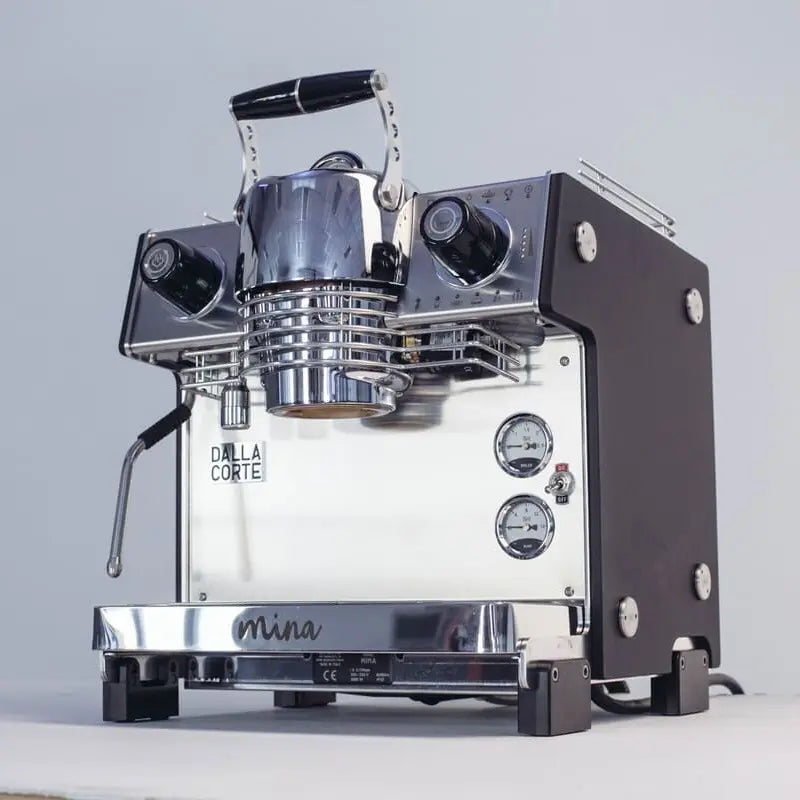
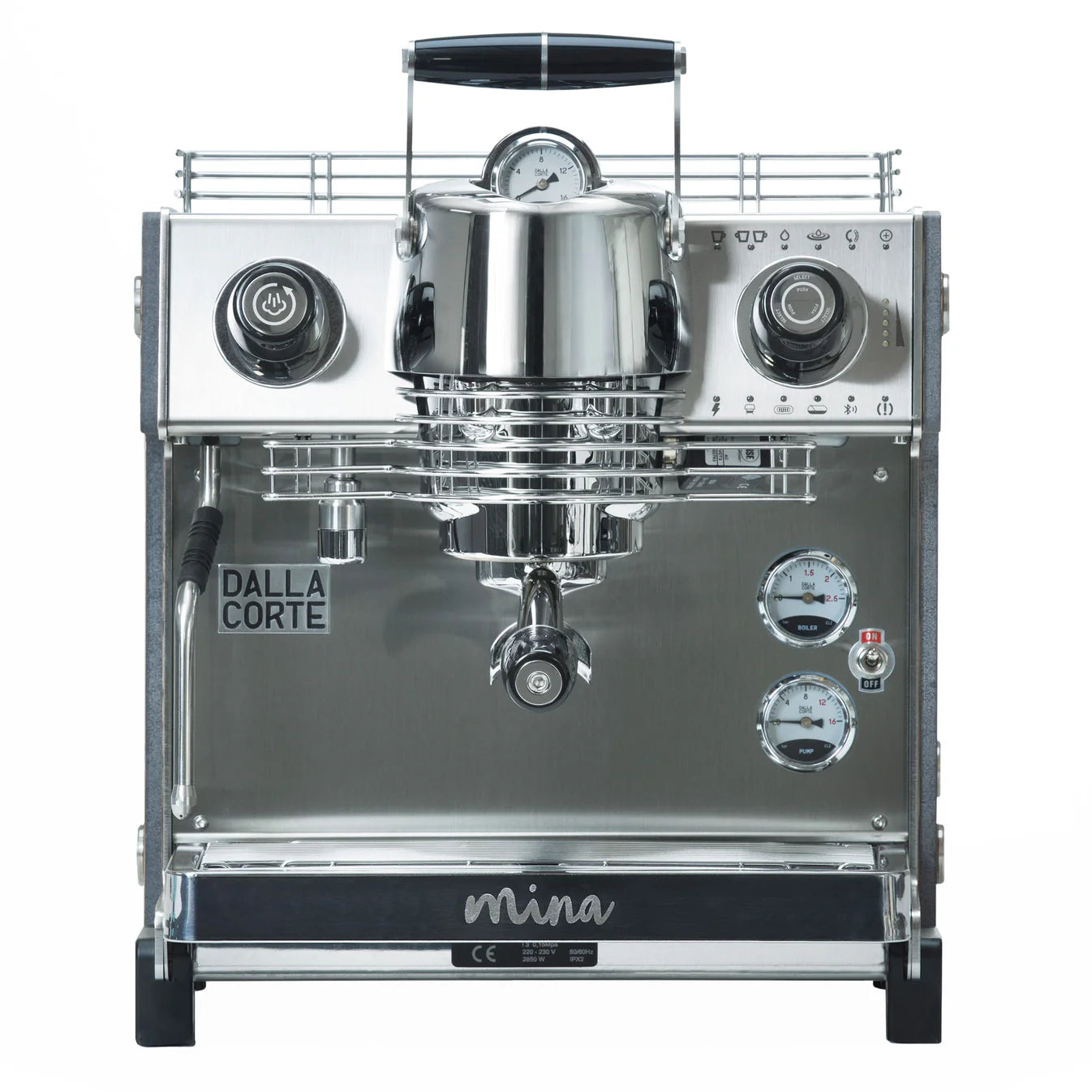
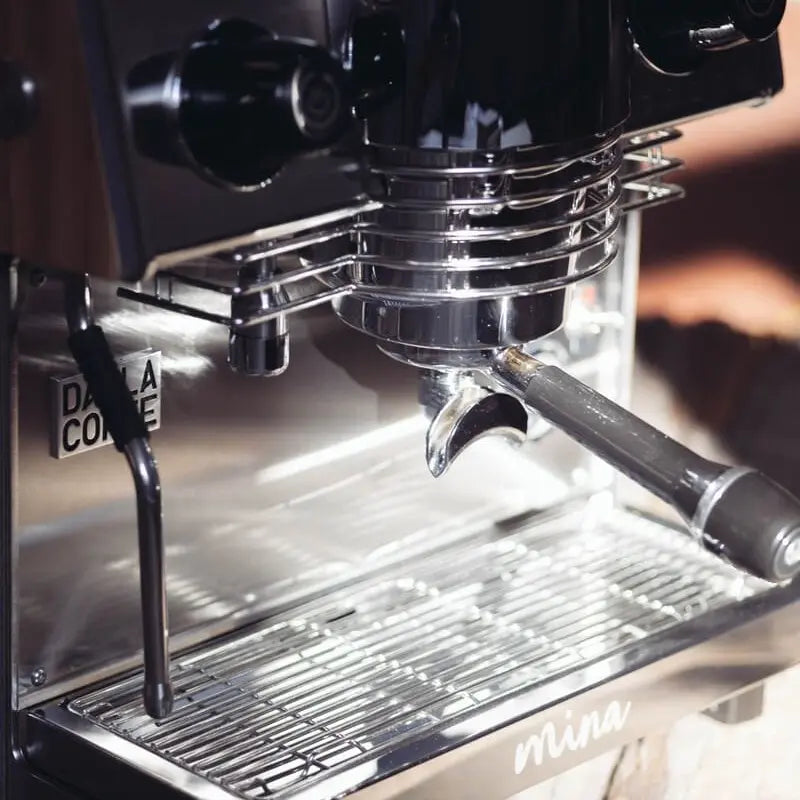
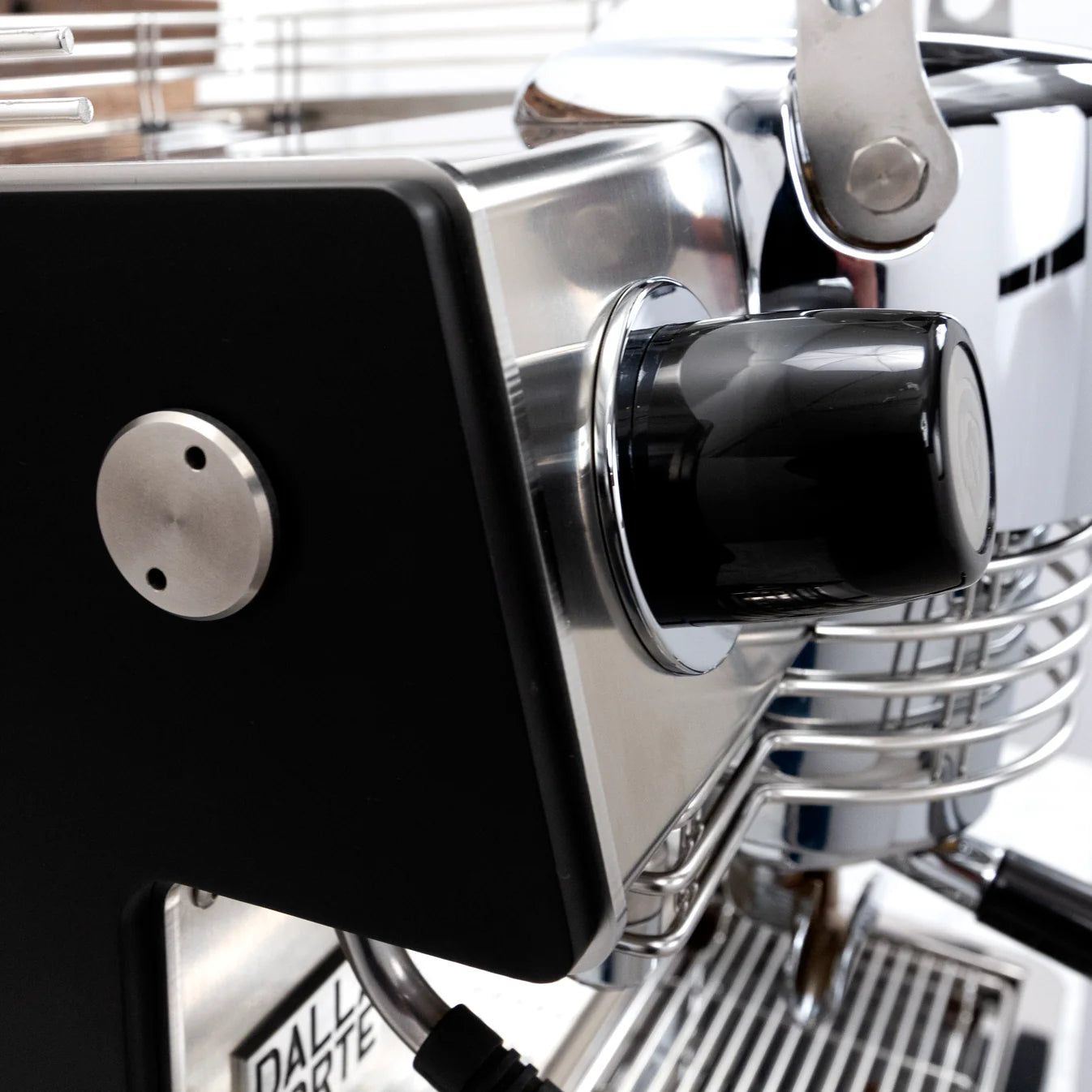
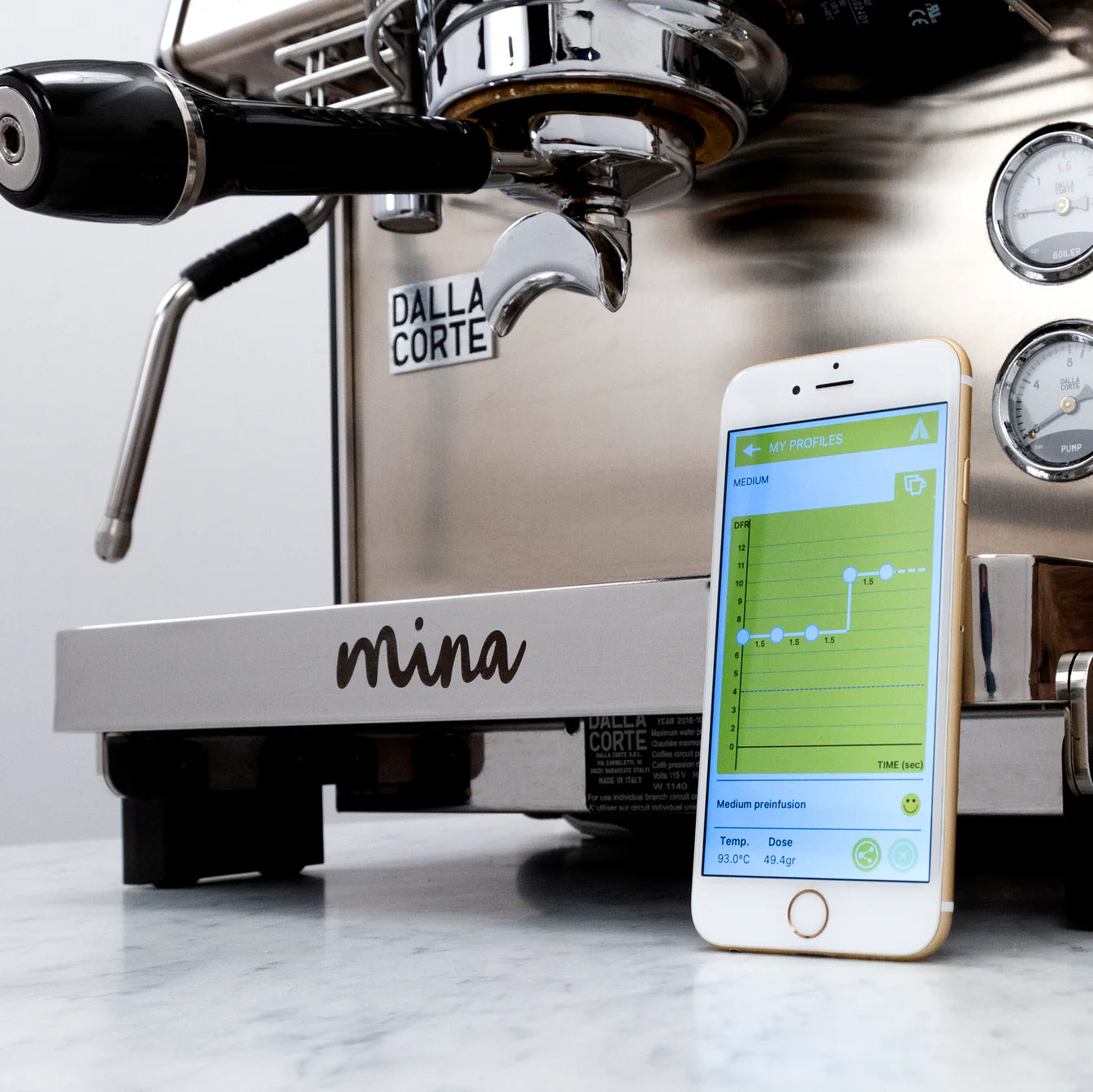
At the premium tier, Dalla Corte machines — including the Mina and Studio — take group head temperature management to its furthest development through Digital Flow Regulation (DFR) and independent multi-boiler control per group. Each group head has its own dedicated boiler with independent PID management, and DFR allows real-time adjustment of both water flow rate and temperature during extraction.
The commercial implication of this architecture: group head temperature is not just stable — it is an active extraction parameter that the barista or operator controls per recipe. Light-roast Ethiopians and dark-roast commercial blends can be programmed to extract at different temperatures on different groups simultaneously, with the thermal management system maintaining each independently. For a specialty café or roastery bar where the entire menu is built around extraction precision, this is the architecture that makes that precision repeatable at commercial volume.
Group Head Architecture vs. Commercial Environment: The Decision Matrix
Mistakes to Avoid: The Two Group Head Assumptions That Cost Indian Cafés Quality
Mistake 1: Assuming PID equals thermal stability. Many buyers see "PID-controlled" in a spec sheet and treat it as a quality ceiling marker. PID is a boiler management tool, not a group head stability guarantee. Always ask: what is the group head design, and how does it manage temperature between consecutive shots under commercial load? The answer to that question tells you more about real-world extraction consistency than the PID specification alone.
Mistake 2: Skipping the warm-up window. Every group head architecture requires a defined warm-up period before extraction temperatures are stable. E61 machines need the most — 25–30 minutes. Thermosyphon machines need 15–20 minutes. Starting service before the group head has fully stabilised produces the first 20–30 minutes of inconsistent shots that get attributed to grind, beans, or barista skill — when the cause is simply a group head that has not yet reached thermal equilibrium. Build the warm-up window into your opening schedule as a fixed, non-negotiable step.
At Coffee.Plus, every machine recommendation begins with a clear understanding of what the group head architecture will actually deliver in your specific service environment — not just what the boiler specification promises on a data sheet. Whether you are evaluating the Casadio Nettuno or Espressa ES.One for a new commercial espresso setup, the Izensso Raptor for a dual boiler espresso machine for a café in India at mid-commercial volume, or the Dalla Corte Mina for a precision-first specialty bar, we help you understand the thermal architecture and what it means for your daily cup quality before you commit. Every machine we supply comes with professional installation and calibration, barista training that includes group head management and correct warm-up protocols, and pan-India technician support through our service network. Visit our Experience Centre in Delhi at 14 Regency, Asola — the machines run daily, and you can evaluate group head performance under real extraction conditions before making the decision.