






Pressure profiling vs flow profiling is not a simple contest between two “better” technologies. Pressure profiling changes the force applied to the coffee puck, while flow profiling controls how quickly water is delivered; the better choice depends on the coffees, recipes, baristas and repeatability your café actually needs.
For a café serving one commercial blend at a steady pace, a stable fixed-pressure machine may be more useful than advanced profiling. For a specialty bar developing light-roast recipes, serving multiple single origins or training baristas, additional espresso flow control can provide meaningful room to experiment, but only if the machine makes those adjustments measurable and repeatable.
What Is Pressure Profiling in Espresso?
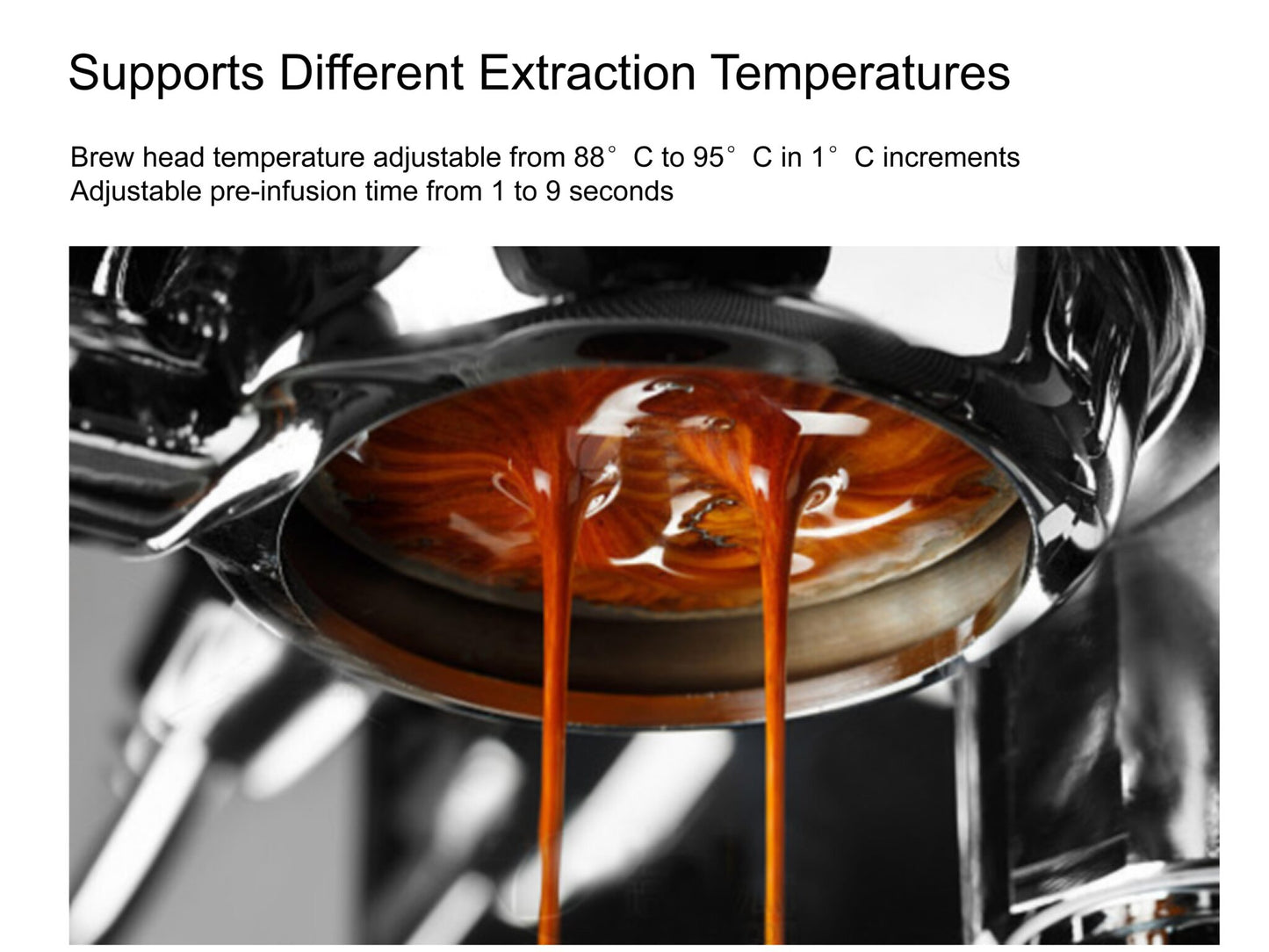
Pressure profiling changes brew pressure during different stages of an extraction. Instead of applying one broadly fixed pressure from start to finish, the machine may begin gently, build pressure, hold a target and reduce pressure near the end.
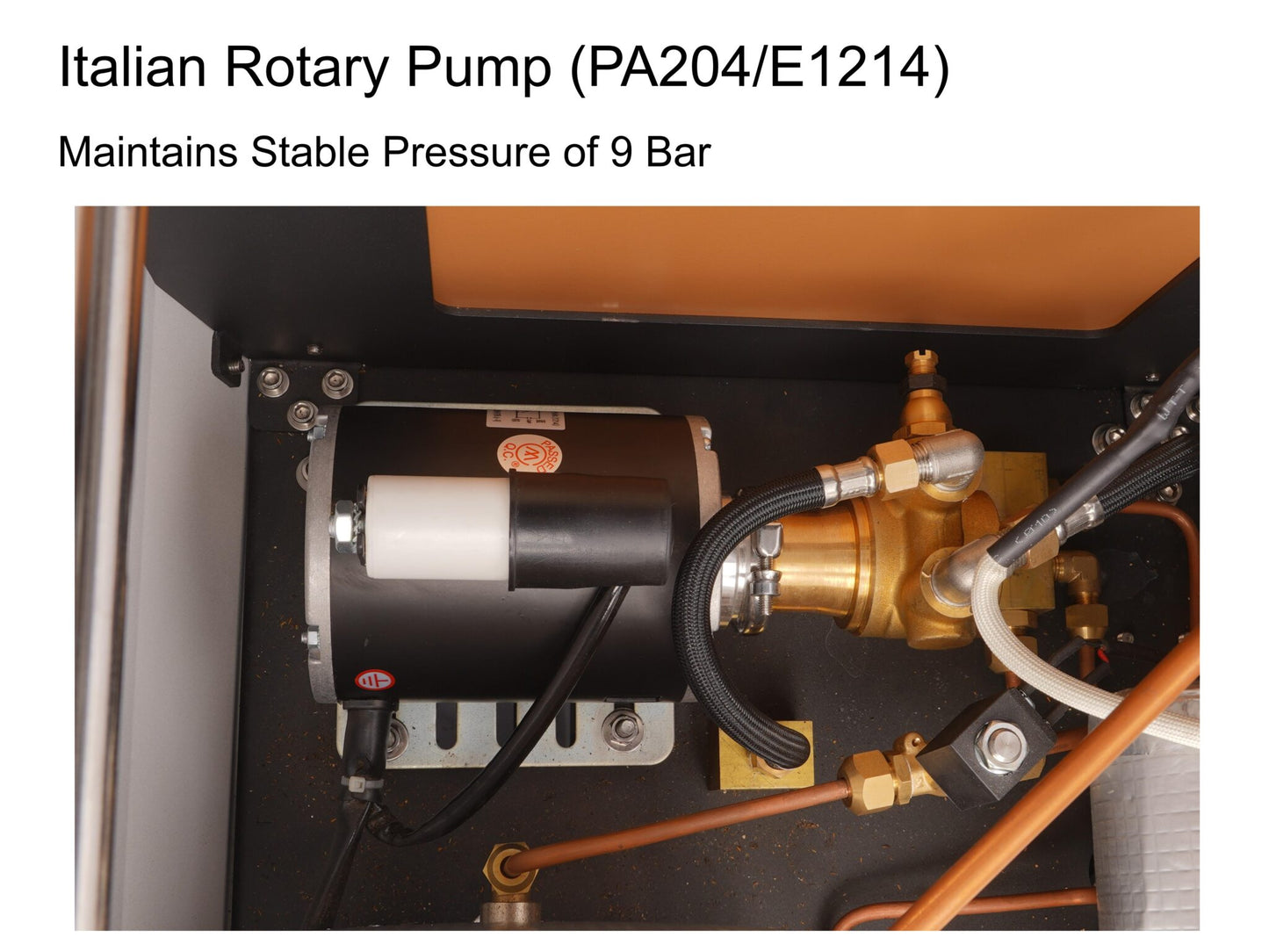
Pressure is the force pushing water through the coffee puck. As the puck saturates and its resistance changes, pressure influences flow, puck movement and the risk of channel formation. If you want a stronger foundation before comparing advanced machines, Coffee.Plus’s guide to 9 Bar espresso pressure in commercial cafés helps frame what a standard extraction is doing before profiling enters the discussion.
Common pressure-profile stages include:
- Low-pressure pre-infusion to wet the puck gradually
- A ramp towards the main extraction pressure
- A stable middle stage
- A declining finish to reduce late-shot acceleration
Pressure profiling does not automatically improve espresso. It adds another variable to a process already affected by dose, grind distribution, roast development, water temperature, puck preparation and coffee freshness.
What Is Flow Profiling?
Flow profiling controls the rate at which water enters the coffee puck during extraction. Depending on the machine, this may be done through a needle valve, paddle, lever, digital flow regulator or programmable restriction system.
Flow is usually discussed in grams or millilitres per second. Pressure is measured in Bar. They are connected, but they are not the same control:
- If the puck resists water strongly, a given flow target may require higher pressure.
- If the puck offers less resistance, the same flow setting may require less pressure.
- As the coffee bed changes during extraction, pressure and flow can move in different directions.
Dalla Corte describes its Digital Flow Regulation system as a way to shape water flow across the extraction, while its Mina platform combines lever-based control with digital profiling. That makes flow control especially relevant where recipe development is part of the café’s identity rather than just a rare adjustment.
Pressure Profiling vs Flow Profiling: What Is the Difference?
| Control approach | What the operator changes | What the machine responds to | Main practical use | Limitation |
|---|---|---|---|---|
| Fixed pressure | One target pressure | Flow changes as puck resistance changes | Fast, repeatable blend service | Less control over changing coffees |
| Pressure profiling | Pressure across shot stages | Flow changes in response to puck resistance | Gentle saturation, pressure ramps and recipe development | Pressure alone does not tell you actual water flow |
| Flow profiling | Water delivery rate across shot stages | Pressure changes as puck resistance changes | Precise water delivery and advanced extraction curves | Poor puck preparation can still create pressure problems |
| Combined or programmable profiling | Pressure, flow or both, depending on machine | Machine follows saved stages or operator input | Repeatable specialty recipes | Requires testing, training and clear recipe documentation |
The table describes control logic, not guaranteed cup quality. Two machines advertised with “profiling” may offer very different levels of adjustment, display, automation, data logging and profile storage.
Is Flow Profiling the Same as Pressure Profiling?
No. A machine can alter flow and produce a changing pressure curve without offering independent control of pressure. Equally, a machine can vary pump pressure while leaving the water-delivery path less directly controlled.
This distinction matters when evaluating commercial espresso extraction control. Ask the supplier:
- Is the operator changing pressure, flow or both?
- Is the adjustment manual, programmable or both?
- Can the profile be saved and recalled?
- Is it saved per group, per recipe or globally?
- Can the barista see pressure and flow during the shot?
- Does the machine record shot volume or only time?
- What happens if the puck resistance differs from the test recipe?
A product page that says “pressure profiling” may refer only to programmable pre-infusion. Another machine may provide full flow control throughout the shot. These should not be treated as equivalent capabilities.
What Can a Café Actually Adjust?
The most useful buying question is not “Which machine has the most control?” It is “Which variables can the team adjust, observe and repeat?”
Pressure Can Influence
- Puck saturation at the start of the shot
- How aggressively water enters a dry coffee bed
- Peak force during the central extraction phase
- The pressure decline near the end
- The way a recipe responds to roast and grind changes
Flow Can Influence
- The speed of wetting and saturation
- Water delivery during the main extraction
- The rate at which the shot progresses as the puck loses resistance
- The shape of the extraction curve independent of a fixed pressure target
Other Controls Still Matter
Neither pressure nor flow replaces:
- Burr alignment and grind consistency
- Dose accuracy
- Distribution and tamping
- Brew temperature
- Water chemistry
- Basket selection
- Coffee freshness
- Barista observation
A highly adjustable machine cannot compensate for a grinder that produces an unstable particle distribution or a team that changes three variables at once. It also cannot compensate for poor thermal design, which is why Coffee.Plus’s article on group head temperature stability in commercial espresso machines is an important companion read before investing in advanced profiling.
What Can Be Saved and Repeated?
Advanced control becomes commercially useful when a successful experiment can become a staff recipe.
The machine should be assessed for:
| Capability | Why it matters in a café |
|---|---|
| Saved profiles | Reduces dependence on one barista remembering a manual sequence |
| Profile naming | Links an extraction curve to a coffee or menu recipe |
| Per-group settings | Allows different coffees or workflows on separate groups |
| Manual override | Lets an experienced barista respond to a coffee in real time |
| Shot-volume control | Helps repeat beverage yield |
| Pressure and flow display | Makes training and diagnosis easier |
| Recipe access control | Prevents accidental changes during service |
The Espressa Base Multiboiler is relevant here because it comes with Digital Flow Regulation, and stored profile capability. Those functions matter when the café intends to develop and repeat multiple recipes, not merely because a longer feature list sounds more premium.
The Espressa Tank Multiboiler is a more focused example of a machine where manual control and recipe development are central to the proposition. Its single-group format makes it more naturally suited to a specialty counter, training bar or slower, quality-led service environment than to every high-throughput café.
The Izensso Raptor2 becomes more relevant when multiple baristas need group-level control in a commercial setting. Even then, the café still needs recipe discipline; programmable control is only useful when the workflow around it is consistent.
Which Coffee Program Benefits Most?
A Fixed Blend and Milk-Heavy Menu
A stable pressure machine may be the rational choice when most drinks use one medium or darker espresso blend, recipes change infrequently and speed matters more than flavour experimentation.
In this setting, advanced profiling may add cost and training requirements without improving the customer’s experience enough to justify them. Strong grinder calibration, water treatment, thermal stability and staff consistency usually deserve attention first.
A Rotating Specialty Menu
Additional control becomes more valuable when the café serves light roasts, different processing styles or coffees with noticeably different density and solubility.
Gentler saturation or a controlled flow ramp can become part of the recipe-development process. However, the recipe must be validated through tasting and repeatability, not selected because a particular curve is fashionable.
A Roastery or Training Bar
For a roastery, coffee lab or café that treats espresso development as part of its identity, profiling can help compare extraction approaches and demonstrate how one coffee responds to different water-delivery patterns.
The operational requirement is documentation. Record the coffee, roast date, dose, grind setting, water temperature, profile, yield and sensory result. Without that record, advanced control becomes a manual performance rather than a transferable café process.
How Should a Café Choose Between Pressure and Flow Control?
Use this framework before requesting quotations.
Choose Stable Fixed Pressure When
- The menu is blend-led
- Staff turnover is high
- Recipes must be simple and fast
- The café has limited time for calibration
- Most drinks are milk-based
- Budget is better allocated to grinder, water and service support
Consider Pressure Profiling When
- Pre-infusion behaviour is important
- The team has the skills to compare pressure curves
- You want controlled pressure ramps or declines
- Recipes differ materially between coffees
- The machine can save or repeat the required profiles
Consider Flow Profiling When
- The café wants direct control of water delivery
- The team develops light-roast or single-origin espresso
- A manual lever or paddle fits the service style
- The machine provides a repeatable digital workflow
- Baristas understand how puck resistance changes pressure
Consider Combined Control When
- Espresso development is central to the business
- There is a trained head barista or coffee director
- The investment supports multiple groups or recipes
- Staff can follow profile documentation
- The café has a plan to measure whether the extra control improves the menu
Café Considerations
Cafés need to evaluate profiling alongside practical operating conditions.
Voltage stability, water quality, inlet filtration, ambient heat, service access and staff training can affect reliability and extraction consistency. A technically sophisticated machine still requires suitable installation, correct electrical planning, water management and preventive maintenance.
Also consider the location of the machine. A specialty bar in Bengaluru with a rotating menu may use profiling differently from a hotel breakfast operation in Delhi, a high-volume café in Mumbai or a seasonal café in a hill station. The control method should match the menu and workflow, not the prestige of the equipment.
Once the workflow need is clear, it makes sense to compare options within Coffee.Plus’s commercial espresso machine collection. The collection is most useful after defining whether the café needs stable fixed-pressure consistency, programmable pressure profiling espresso machine features, or deeper flow-based recipe control.
Mistakes to Avoid
Confusing Pre-Infusion with Full Profiling
A machine may offer a programmable low-pressure start without giving the barista control over the entire shot. Ask where the adjustment begins and ends.
Assuming Every Model in a Brand Has the Same Control
Profiling systems can differ between models, variants and groups. Verify the specific machine’s manual, interface and profile-storage functions.
Buying Control Before Developing Recipes
If the café has no coffee-development process, extra control can make dial-in slower and staff training harder. Establish who will create, test and maintain the recipes.
Ignoring the Grinder
Flow or pressure changes cannot repair inconsistent grinding, poor distribution or worn burrs. The grinder remains one of the primary determinants of puck resistance.
Promising Consistency Without Training
A saved profile can repeat machine settings; it cannot ensure identical dose, distribution, tamping or coffee freshness. Staff workflow still determines much of the result.
FAQs
Is Flow Profiling Better Than Pressure Profiling?
Neither is universally better. Flow profiling gives more direct control over water delivery, while pressure profiling gives direct control over applied force. The suitable option depends on recipe goals, staff capability and how the machine displays and stores the adjustment.
Does Pressure Profiling Guarantee Better Espresso?
No. It provides another way to shape extraction. The result still depends on coffee, grind, dose, water, temperature and puck preparation.
Is 9 Bar Still Relevant on a Profiling Machine?
Yes, often as a reference point or central stage in a recipe. A profiling machine does not make conventional pressure targets irrelevant; it gives the operator more options around them.
Does Every Dalla Corte Machine Offer the Same Flow Control?
No. Verify the exact model and variant. The available Coffee.Plus product pages show different control formats and profile functions across models, so the purchasing decision should be model-specific.
Buy the Control Your Team Can Use
The right question is not whether a café can purchase the most advanced extraction technology. It is whether the business can turn that technology into a tested recipe, a repeatable workflow and a better cup.
For a fixed-menu operation, stable temperature, pressure, grinding and service may deliver more value than extra variables. For a specialty café or roastery, pressure profiling vs flow profiling deserves a deeper evaluation based on the coffees being served, the profiles that can be saved and the team’s ability to reproduce them.
Coffee Plus can help cafés compare the required control architecture with menu, volume and staff capability.