





The coffee you pour behind your espresso machine says more about your café than almost any other menu decision, and most Indian café owners choose their beans the way they inherited them - by habit, not by strategy. If you are building or refreshing a café menu this year, understanding Chikmagalur coffee beans for café use, alongside Coorg, Araku, and Nilgiri origins, is the difference between a menu that tastes the same as everyone else's and one that gives your café its own identity. This also ties directly into your bigger equipment decisions, since the beans you choose shape the extraction demands you place on your espresso machine price for cafe in india budget and your grinder.
A café owner in Hyderabad once told us a story that stuck with us for years. He had opened his café with a single supplier relationship, inherited from a friend who ran a roastery. Every bean on his menu, from the house blend to the single-origin pour-over, came from the same estate in Chikmagalur. It was good coffee. But three years in, his menu looked identical to four other cafés within walking distance, because they had all taken the same shortcut. The coffee was not the problem. The absence of a deliberate sourcing decision was.
This is the quiet mistake many Indian cafés make. They treat origin selection as a supplier relationship rather than a menu strategy. Understanding what Chikmagalur, Coorg, and other Indian growing regions actually offer — and matching that to espresso, milk drinks, and filter service separately — is what turns a generic coffee list into a considered one.
Why Chikmagalur Still Anchors the Indian Specialty Conversation
Chikmagalur is often called the birthplace of coffee in India, and that heritage is not just a marketing line — legend credits a 17th-century Sufi saint, Baba Budan, with smuggling seven coffee seeds into these hills from Yemen, and the region has been the spiritual home of Indian coffee ever since. The region's elevation, shade-grown tradition, and long-established arabica cultivation give it a flavor signature that most Indian specialty roasters still treat as a reference point. Chikmagalur coffee beans for café use are commonly associated with chocolate, nutty, and mild fruit notes, with a body that holds up well in milk-based drinks without disappearing.
This matters practically for café owners because Chikmagalur coffee tends to be forgiving across multiple preparation styles. A barista working with a 1-group commercial machine like the Espressa Nimbus Pro, available with Coffee.Plus pan-India technician support, can pull a balanced shot from a Chikmagalur-origin blend without needing constant recalibration between espresso and milk-drink service, because the bean's natural sweetness and body translate reasonably well across both.
If you want to taste this heritage directly rather than just read about it, Erebor is a single-estate Chikmagalur coffee from the M.S. Estate, grown organically at 800 to 1,430 metres and processed through natural fermentation, aqua washing, and slow multi-stage drying — the kind of traceable, estate-specific story that gives a café's specialty menu real substance instead of a vague "Indian origin" label.
Chikmagalur vs Coorg Coffee for Café: What Actually Changes on the Menu
This is one of the most common comparison questions café owners ask, and it deserves a direct answer rather than a vague origin story. Chikmagalur vs Coorg coffee for café decisions usually come down to acidity and body, not just geography.
Coorg-grown coffee, particularly from higher-altitude estates, often carries brighter acidity and more pronounced fruit character compared to Chikmagalur's rounder, chocolate-forward profile. For a café building a filter coffee or pour-over program meant to showcase origin character, Coorg can offer more distinct cup clarity. For a café whose primary volume is milk-based espresso drinks, Chikmagalur's heavier body and lower acidity tend to integrate more smoothly with steamed milk, which is why many commercial blends built for Indian cafés lean on Chikmagalur as a base.
This is not a case of one origin being objectively better. It is a case of matching origin character to what the drink is actually meant to do on your menu.
Matching Origin and Process to Drink Type
Straight Espresso Service
For cafés running a dedicated single-origin Indian coffee for espresso option, processing method matters as much as origin. Washed Chikmagalur or Coorg beans tend to produce cleaner, more balanced shots that work well as a straight espresso offering, giving customers a clear sense of what Indian origin coffee tastes like without the added sweetness of natural processing overwhelming the cup.
Naturally processed lots, increasingly available from both regions, bring more pronounced fruit and fermentation notes that can work beautifully as a specialty single-origin espresso, but they require a barista who understands how to dial in grind and extraction time to avoid overpowering bitterness. This is where a precision grinder becomes essential rather than optional. A grinder like the Eureka Atom, available with Coffee.Plus pan-India technician support, with its micrometric adjustment, gives baristas the control needed to find the narrow extraction window that naturally processed beans often demand.
Milk-Based Drinks
For lattes, cappuccinos, and the flat white style drinks that dominate most Indian café menus, body and sweetness matter more than acidity. A washed or honey-processed Chikmagalur blend, or a thoughtfully built house blend combining Chikmagalur with a small percentage of robusta for crema and body, tends to perform more consistently across high volume milk service. This is also where machine consistency becomes critical. A café running back-to-back milk drinks during a morning rush benefits from a machine with stable group temperature, such as the Espressa ES.One, available with Coffee.Plus pan-India technician support, whose thermomatic stability helps maintain consistent extraction even as the bar gets busy.
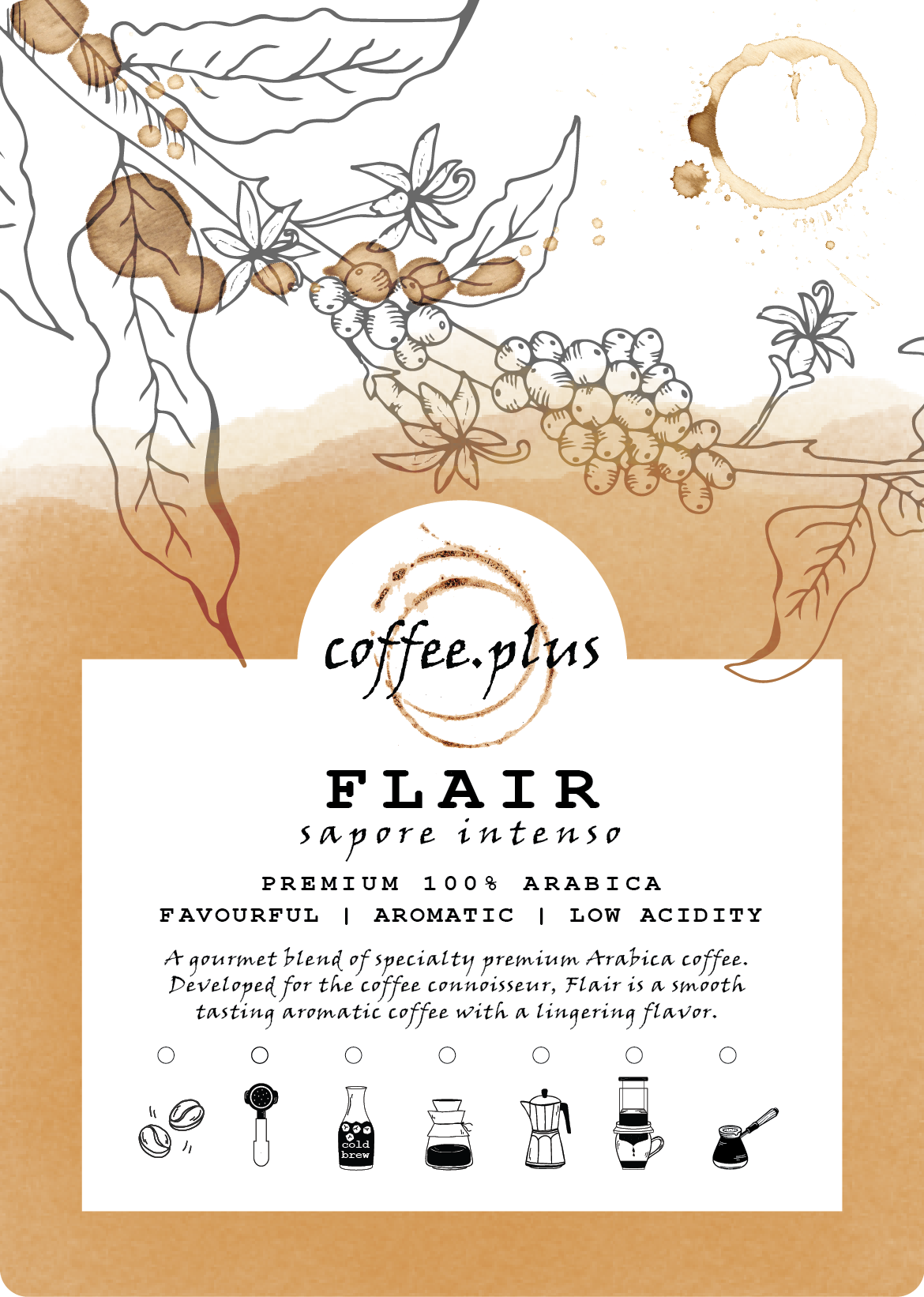
Coffee.Plus's Flair blend is a practical example of this kind of milk-drink-forward build, giving cafés a dependable, approachable cup for high-volume cappuccino and latte service without the day-to-day calibration fuss that lighter, single-origin lots demand.
Filter and Brewed Coffee
Indian filter coffee culture already has deep roots, but specialty filter service built around single-origin Indian beans is a growing menu category, especially in cafés targeting a more exploratory customer base. Here, origin character should be allowed to shine without the interference of milk, which makes higher-altitude Coorg or Araku lots a strong choice for a dedicated pour-over or batch brew menu item.
For a genuinely different filter offering, Monsooned Bloom is worth a spot on any menu looking to stand out. Sourced from India's Malabar Coast and monsoon-processed over 12 to 16 weeks, it develops a low-acid, earthy, buttery cup with notes of spice and nut — a conversation-starter filter coffee that very few competing Indian cafés currently offer. Pair it on the same menu card with Misty Mountain, a dense, high-grown Arabica with a smooth, chocolaty, spiced character, and you have two distinct filter stories instead of one generic "house filter coffee" line.
Building a Menu-Ready Origin Strategy
Specialty coffee for commercial café India decisions should not be made bean by bean. A well-structured menu usually works with two to three origin-driven options rather than a single supplier relationship inherited by accident. A practical structure many Indian cafés use looks like this: one Chikmagalur-based house blend built for milk drinks and daily volume, one Coorg or Araku single-origin for a seasonal filter or pour-over feature, and one rotating naturally processed microlot for an espresso specialty offering that changes every few months.
This structure also supports better wholesale planning. Café owners sourcing single-origin Indian coffee for espresso in commercial volume need a supplier relationship that can guarantee consistency across batches, not just a one-time specialty purchase. This is where working directly with Coffee.Plus's beans and wholesale beans collection becomes valuable, since it allows cafés to source Chikmagalur, Coorg, and other Indian origins at commercial volume with consistent quality control batch to batch.
If you want a deeper, equipment-side view of how Indian-grown arabicas are reshaping specialty espresso menus across Bengaluru, Delhi, and Pune, our existing piece on the specialty coffee espresso equipment guide walks through exactly why a washed Araku arabica or a Chikmagalur natural now needs a different kind of machine than a standard commercial blend ever did.
Comparing Indian Origins for Café Menu Planning
| Origin / Bean | Process | Flavor Profile | Best Drink Application | Acidity Level |
|---|---|---|---|---|
| Chikmagalur (Erebor) | Washed, cultured fermentation | Chocolate, nutty, clean | Milk drinks, house espresso blend | Low to medium |
| Coorg | Washed or natural | Bright, fruit-forward, clean | Filter coffee, single-origin espresso | Medium to high |
| Malabar (Monsooned Bloom) | Monsooned, dry-processed | Earthy, spiced, buttery, low acid | Filter coffee, specialty feature | Low |
| Misty Mountain | High-grown Arabica | Chocolaty, spiced, heavy body | Blend component, filter coffee | Low to medium |
| Araku | Washed | Floral, delicate, tea-like | Specialty filter, lighter espresso | Medium |
| Flair (House Blend) | Blended, roast-balanced | Approachable, smooth | High-volume milk drinks | Medium |
Mistakes to Avoid When Choosing Café Coffee by Origin
Mistake: Choosing an origin because it sounds premium, without testing how it performs under your actual machine and volume.
A single-origin bean that tastes exceptional as a slow pour-over can taste completely different when pulled as an espresso shot through a high-volume commercial machine during a rush. Café owners frequently make purchasing decisions based on a cupping session or a small sample batch, without accounting for how that same bean behaves at scale, under time pressure, with a less experienced barista on a Saturday morning.
The safer approach is to test any new origin across your actual service conditions before committing to a wholesale volume. If you are running a dual boiler espresso machine for cafe india setup with high throughput, confirm the bean holds its character across dozens of consecutive shots, not just the first careful one.
Choosing the Right Setup for Your Café's Coffee Program
Origin selection and equipment selection are not separate decisions. A café building a menu around naturally processed, lighter-roast Indian origins needs a grinder and machine combination capable of precision extraction, which is why pairing beans with commercial espresso machines for cafés in India that offer independent temperature control is worth considering early in the planning process. Similarly, a café leaning heavily on Chikmagalur-based blends for high milk-drink volume should prioritize commercial coffee grinders for cafés in India that offer consistent dosing under sustained use, since grind consistency affects extraction as much as bean selection does.
For café owners exploring Indian coffee beans for café with pan-India delivery, Coffee.Plus offers both the sourcing relationship and the equipment expertise to build a menu that actually performs under real commercial conditions, not just in a tasting room.
At Coffee.Plus, our team works with café owners to connect origin selection, roast style, and equipment pairing into one coherent menu strategy rather than treating beans and machines as separate purchases. Whether you are sourcing wholesale Chikmagalur coffee beans India for your house blend or evaluating a grinder upgrade to support a new single-origin espresso feature, our pan-India service network, installation and training india support, and AMC and preventive maintenance planning ensure your equipment keeps pace with your coffee program as it grows. Visit our Experience Center in Delhi to taste how different Indian origins perform across our commercial machine and grinder lineup before you finalize your next menu decision.
FAQs: Chikmagalur, Coorg and Araku Coffee for Cafés
Is Chikmagalur coffee good for café espresso?
Yes. Chikmagalur arabica works well for café espresso, especially in a balanced house blend. Its chocolate, nut, and body-forward profile stays smooth in both black coffee and milk drinks.
Chikmagalur or Coorg coffee: which is better for lattes?
Chikmagalur is usually better for high-volume lattes because its body and chocolate-nut sweetness hold up well in milk. Coorg can also work, depending on the lot and roast.
Can I use a single-origin Indian coffee for espresso?
Yes. Washed Chikmagalur or Coorg coffees are usually easier to dial in. Natural or honey-process lots can taste more distinctive but need more precise grinding and extraction control.
What Indian origins should a café menu include?
Start with one Chikmagalur-based house blend, one Coorg or Araku filter coffee, and one rotating natural-process microlot. This keeps the menu simple but interesting.
Which Indian coffee is best for filter coffee and pour-over?
Coorg, Araku, and high-grown Chikmagalur are strong filter options. For a low-acid, earthy filter feature, choose Monsooned Malabar.
Is Araku coffee better than Chikmagalur coffee?
Neither is universally better. Araku suits premium filter and rotating specialty lots; Chikmagalur is more dependable for espresso blends and milk drinks.
Should a café use Arabica, Robusta, or a blend?
Use arabica for specialty flavour clarity. A small amount of robusta can add crema and body, but only if it improves the blend without making the cup bitter.